Maintain Your Historic Home’s Character With the Right Floors in RVA
Owning a historic home in North Richmond comes with a certain responsibility to preserve the character and history of the building. If you’ve been putting off a flooring decision because you’re worried about doing wrong by the house, you’re not alone. The truth is, Richmond, VA, historical home flooring doesn’t need to be perfect, but it does require understanding the home’s history, its current flooring conditions, and what it needs for the future.
Once you know what you’re working with, it’s easier to see the next step. Let’s evaluate what type of flooring you likely have, explore when it’s best to refinish or replace, and what respectful updates you can choose for your historic home renovation in Richmond, VA.
Ready to share your project with seasoned professionals and get customized recommendations for your specific situation? Floor Coverings International of North Richmond, VA® has a team specialized in saving floors in historic homes throughout North Richmond. We’ll help you evaluate the condition of your floors and find the best solution for your home.
Start With What You Have
Many of Richmond’s historic homes are hiding original heart pine or oak under carpet, linoleum, or a few layers of old paint. Repairing those hidden floors is often the most authentic, cost-effective option available.
Figuring out what kind of wood you're standing on is the natural first step in any historic project. Richmond homes span nearly three centuries of construction, and the wood varies depending on the type of home.
Is Your Home in One of Richmond’s Historic Districts?
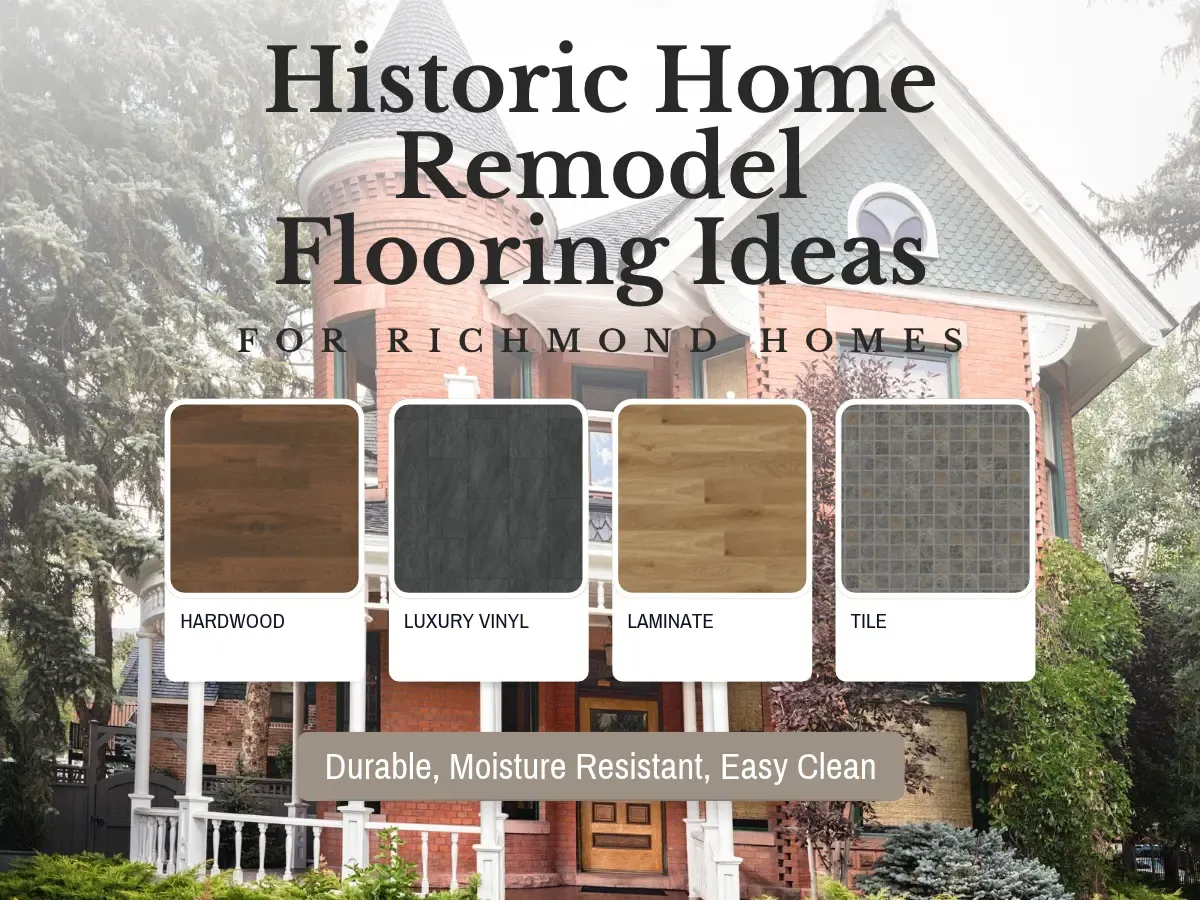
First, you’ll want to determine whether your house is in a historic district – which you can look up on Virginia's historic site register. The City of Richmond indicates that updating flooring doesn’t often require a building permit, but if you find the subfloor needs extensive work or joist repair, it may be wise to contact the Commission of Architectural Review. Review can take up to 10 days, but many requests only take a day.
When you schedule a free in-home consultation with us, you get peace of mind as we perform a thorough subfloor inspection to ensure there’s no moisture intrusion or damage beneath the surface. We’ll also provide a free down-to-the-penny quote so you know what the final cost of materials and labor will be for your Richmond historical home flooring project, before any work begins.
Identifying Flooring for Historic Homes
Before deciding whether you refinish, repair, or replace the floors in your North Richmond historic property, it’s important to know what you’re starting with. Historic Richmond homes most often contain one of a handful of wood species, each with its own grain, tone, and quirks.
Here’s what to look for as you start identifying your floors:
Antique Heart Pine
This is the signature flooring of older Virginia and Richmond homes. It’s especially common in homes from pre-Civil War through the late 18th and 19th centuries. The wood is from old-growth longleaf or southern pine trees and features a rich amber-to-reddish patina.
Old-growth heart pine is often recognized by its amber color, tight, dense grain, and resin-infused wood that makes the floors remarkably durable.
White and Red Oak
You can find oak floors in many Richmond historic homes, from Craftsman bungalows to early 20th-century colonials and revival-style homes, and throughout multiple Richmond neighborhoods, including Museum District, Ginter Park, and Westover Hills.
Red oak provides a warm, slightly pinkish-tan undertone with prominent grain swirls, while white oak offers superior water resistance, a subtle golden-brown tone, and a harder surface.
Maple
Maple shows up in select turn-of-the-century or industrial-influenced spaces, like kitchens or secondary rooms. The wood has a tight, clean grain that has high dent resistance. Some would argue it looks relatively contemporary.
Flooring by Room in a Historic Home
While it’s simpler to point to one or two types of wood for different types of homes, that’s not how a lot of historic homes were built. In fact, it’s common for historic homes to have different flooring in different rooms. They often reserved higher-quality woods for more visible parts of the home, and simpler, sturdy woods for busy utility areas.
Here’s what you might find room-by-room:
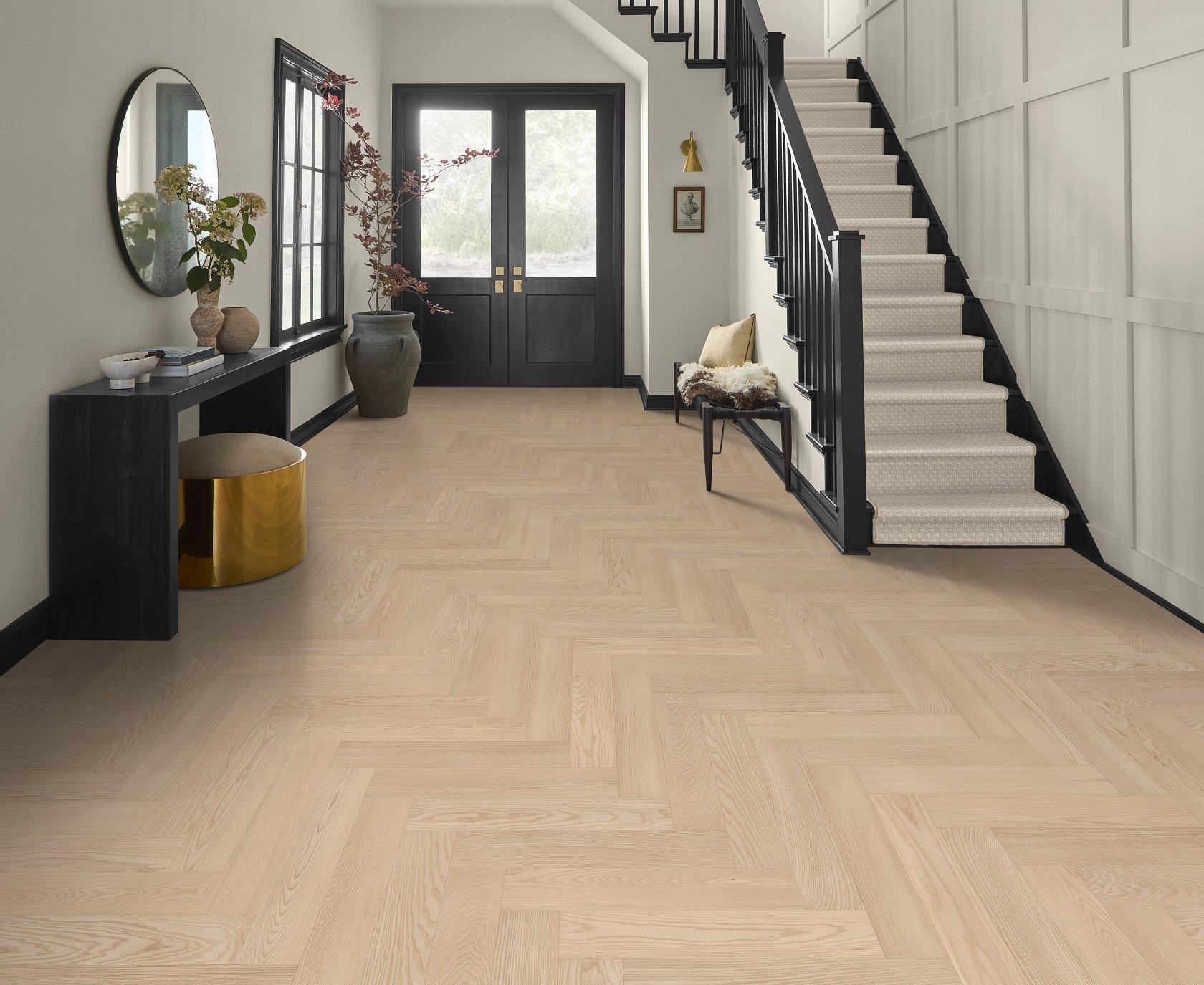
- Grand entryways and foyers: As parts of the home that would have been used for welcoming guests, wealthier homes may have more decorative floors, like parquet wood patterns or geometric encaustic tile.
- Parlors and dining rooms: Often used for entertaining, parlors and dining rooms can feature high-end heart pine, oak, or maple hardwood. Depending on the era, the floors might be wide plank, which were common for Federal and Greek Revival styles, or narrower strip floors that were popular in later Victorian and colonial revival builds.
- Kitchens and pantries: These spaces were originally hidden from guests’ view, which means practical utility would have mattered more than style. This is why historic kitchens often prioritize durability and fire resistance with heavy flagstone, quarry tile, or worn elm boards. In early 20th century updates, the rooms may feature natural linoleum, which had become standard for kitchens and butler pantries.
- Upper-level bedrooms and home offices: While premium woods were used downstairs, upstairs was typically lower-quality pine stained darker to look like more premium mahogany. Though early 20th century updates introduced cork floors that were warmer and quieter for bedroom spaces.
Refinish or Replace?
When you’re evaluating whether to refinish or replace flooring in historical homes, you’ll want to determine whether the floors are thick enough to refinish. Solid wood can be refinished and sanded several times; however, once the material runs out above the tongue-and-groove joint, refinishing can actually cause more damage.
A flooring professional can measure the remaining thickness and tell you whether another sanding is safe. If there’s enough material left, refinishing is almost always the more authentic and cost-effective route. It keeps the original wood, patina, and character built over decades.
Historic Home Flooring Options
Sometimes original floors are too far gone. Issues can range from water damage or insect damage to simply not having enough thickness to refinish. For some homeowners, it may feel wrong to replace your floors, but sometimes that’s your best option to protect and preserve your home.
Let’s talk about some of the most authentic historic home flooring options:
Engineered Hardwood
We know engineered wood can feel like a compromise in a historic home, but in practice it’s often the choice that lets you keep the look without fighting your home’s humidity. Let’s start with how the floors are made. The flooring is constructed with a real wood surface bound to a stable plywood core.
The layered structure means engineered wood flooring can have:
- Better humidity tolerance: Where solid wood cups and warps as humidity changes from season to season, engineered wood has a cross-ply core that pulls the wood in opposite directions as it swells so the surface stays flat.
- Flexible installation: Older homes rarely have flat, uniform subfloors. Thanks to modern click-lock systems, engineered planks are slightly less demanding than solid floors. That said, uneven, patched, or mixed substrates that are common under historic Richmond floors will still need detailed prep work.
- Wide planks: Solid wood planks wider than 5 inches are highly prone to warping under humidity fluctuations, whereas engineered construction safely accommodates wider dimensions to fit widths that feel authentic for many older homes in the area.
- Modern upgrades: If your historic renovation includes adding modern in-floor heating systems, engineered wood handles the thermal and temperature fluctuations better than traditional solid timber.
To get the best engineered flooring for historic homes in Richmond, look for wide or narrow planks (depending on your home’s era), wood species that match your home’s timeframe, and a matte or hand-scraped finish. It also helps to ask about refinishing options. Quality engineered floors can usually be sanded once or twice, which matters when you’re planning long-term stewardship.
Reclaimed Wood
Reclaimed wood is often salvaged from other older buildings and offers a similar tight-grain structure as your original floors. This is ideal when you want to match or extend original flooring. Local suppliers sometimes carry reclaimed heart pine that blends seamlessly with what’s already in your home.
Staining: Refinishing or Matching New Floors
Whether you're refinishing or matching new floors, stain on historical home wood flooring rarely behaves the way homeowners expect. Older floors have spent decades oxidizing, drying, and developing strong density. This typically makes stains absorb unevenly and sometimes blotch.
Here are a few tips to help you confidently choose hardwood floor stains for historic homes:
- Sample the color on a small corner of your floors. This lets you see how the stain absorbs into the wood and how the tone looks under your natural light.
- Lean into warm tones. Rich browns, natural clear finishes, and honey tones enhance historic character. Trendy cool grays and washed-out tones tend to fight with period architecture and can date quickly.
- Ask about finish type. Oil-based finishes warm up and amber over time while water-based finishes stay clear. Either could be the right choice for your home. What matters is that you know what to expect.
Dealing With Lead or Asbestos?
Many homes built before 1978 have lead-based paint on floors or trim, or old linoleum with asbestos in the felt backing and adhesive. Before refinishing or removing old floors, arrange for lead paint and asbestos testing. If the testing is positive, ensure your contractor is certified in lead-safe or asbestos abatement practices (depending on what your home needs) or bring in someone who is to ensure your property is handled safely.
Richmond, VA, Historic Home Flooring: Frequently Asked Questions
North Richmond’s historic neighborhoods, including The Fan, Church Hill, Jackson Ward, and the Museum District, feature homes with unique flooring considerations. Here are some of the questions homeowners commonly ask when updating flooring in older Richmond area homes.
Can Original Hardwood Floors in a Historic Richmond Home be Refinished?
Often yes. If the boards are in good condition and have enough wear layer remaining, refinishing may be an option. A flooring professional can inspect the wood for issues such as deep damage, excessive wear, or previous finishing that could affect whether restoration is practical.
What Flooring Works Best in Older Homes with Uneven Subfloors?
Engineered hardwood is a popular choice because it’s generally more stable than solid wood floors and is suited to accommodate minor variations and natural movement, making it a practical choice for uneven subfloors in Richmond homes.
Can I Restore Water Damaged Floors in Historical Richmond Properties?
Sometimes. If the damage is minor and the original hardwood remains structurally sound, drying, repairs, and refinishing may be enough to restore the floor. However, severe water damage can require partial or full board replacement and you’ll need flooded floor replacement services if the flooring has experienced prolonged water exposure, significant warping or buckling, mold growth, and damage that extends into the subfloor.
Does My Historical Richmond, VA, Estate Need Waterproof Flooring?
Whether or not you need waterproof flooring depends. Historic Richmond homes perform well with traditional hardwood flooring, especially in living rooms, dining rooms, and bedrooms. However, waterproof flooring may be worth considering in basements, mudrooms, and laundry rooms, or other areas with a higher risk of moisture exposure.
What’s the Best Bathroom Flooring for a Historic Richmond Home?
Bathroom tile is often a popular choice for historic home bathroom flooring in North Richmond because of its durable and water-resistant construction, coupled with design styles that complement traditional architecture.
Ready to Find Flooring That Honors the History of Your RVA Home?
Whether you want to refinish original heart pine or choose a replacement that honors the era, with the right approach, you’ll have flooring that feels like it belongs.
If you’re unsure where to begin, reach out to flooring professionals who work in Richmond’s historic neighborhoods. Floor Coverings International of North Richmond, VA® has a team that specializes in working with historic hardwood. We’ll help you assess the condition of your floors and map out a solution that respects the history of your home.
Call Floor Coverings International of North Richmond, VA® or set up your free in-home consultation today.