When water unexpectedly enters your home, flooring can be one of the first areas to show signs of damage. Whether the cause is a burst pipe, appliance leak, storm-related flooding, or an overflowing fixture, standing water can quickly affect more than just the visible surface. Moisture may seep beneath flooring materials, damage the subfloor, and create conditions that make prompt action especially important.
If your Richmond-area home has experienced water damage, understanding what happens next can make the flooring replacement process feel less overwhelming. From assessing the extent of the damage to selecting new materials, a professional flooring team can help you determine the right path forward.
What Happens to Flooring After a Flood?
The extent of flooring damage depends on how much water entered the home, how long the materials were exposed, and what type of flooring is installed.
Carpet and padding can absorb substantial amounts of water. Once saturated, carpet may be difficult to dry completely, especially when moisture reaches the padding or subfloor. Hardwood can also react to water exposure, with boards potentially swelling, cupping, or buckling as moisture moves into the material.
Hard-surface flooring isn't automatically unaffected, either. Even materials designed to resist water can have seams, edges, joints, or areas of compromised installation where moisture can travel underneath. Tile, for example, is water-resistant at the surface, but moisture can still reach the layers below through grout joints or damaged areas. Some laminate products are also more moisture-sensitive than their appearance may suggest.
Because the visible flooring doesn't always tell the whole story, assessing the material and the surface underneath it can help determine whether restoration or replacement makes more sense.
Does Water-Damaged Flooring Always Need to Be Replaced?
Not necessarily. The right solution depends on the material, the severity and duration of water exposure, and the condition of the flooring and the layers beneath it.
Some flooring can be dried and restored after limited water exposure. In other situations, however, replacement may be recommended because the material has absorbed substantial moisture or sustained enough physical damage to compromise its structural integrity and long-term performance.
When dealing with flooded carpet, Richmond homeowners should avoid making assumptions based solely on the surface’s physical appearance. The condition of the padding and subfloor matters, especially when deciding whether restoration is practical, because these materials are particularly effective at trapping moisture below. Removing affected materials can provide a better view of what's happening below and whether the existing floor can be preserved.
When rebuilding after a flood, the goal isn't necessarily to replace everything that encountered water. It's to understand which materials were affected and their condition before deciding what comes next.
Don’t Overlook the Subfloor
The subfloor sits beneath the finished flooring and provides the stable surface needed for a new installation. If water has reached it, that layer deserves attention before new flooring goes down.
This is particularly relevant in Richmond, where water can reach homes through several different routes. The City notes that heavy rainfall and large storms can contribute to flooding, while portions of central Richmond are served by an older combined sewer system that carries both stormwater and wastewater. During heavy rainfall, that system can exceed its capacity. Richmond also has designated floodplain areas along its waterways, including areas influenced by the James River.
For a homeowner, the practical takeaway is simple: the source of the water and the path it took into the house can both affect what needs to be addressed. Carpet and padding can make it difficult to see whether moisture reached the subfloor, while wood-based subflooring may swell or deteriorate after prolonged exposure.
If the underlying surface has warped, softened, or otherwise been compromised, subfloor repair may be a necessary step in your Richmond home’s recovery process. Addressing the foundation first gives the finished flooring a solid surface to be installed over.
Choosing Replacement Flooring After Water Damage
Once the affected materials have been removed and the subfloor is repaired, you can turn your attention to choosing new flooring. Water exposure doesn't necessarily mean you need to choose a completely different material; the best fit still depends on how the room is used, your household, your design preferences, and how the space is used.
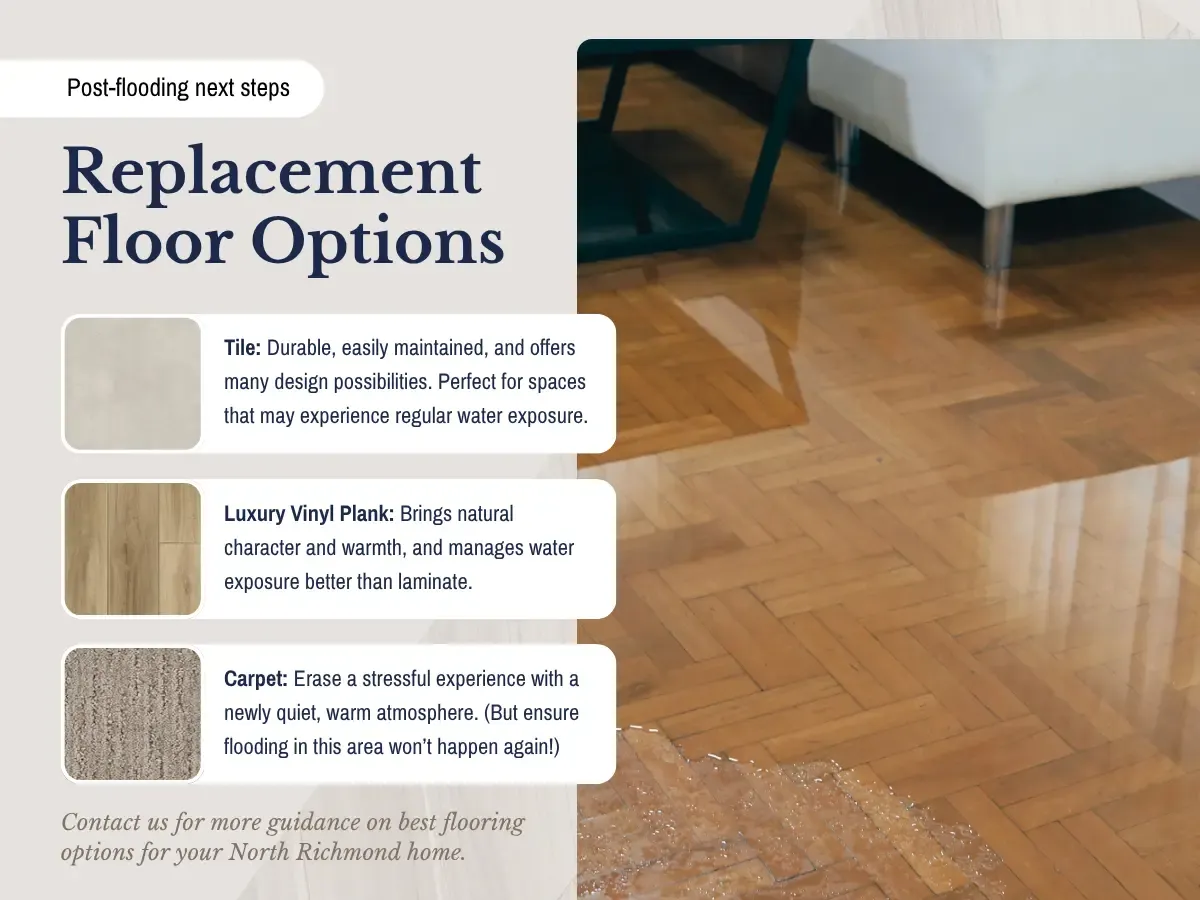
Luxury vinyl and tile can be practical options in areas where moisture is a recurring consideration. Luxury vinyl comes in a broad range of colors and patterns, while tile offers durability and is commonly used in kitchens, bathrooms, entryways, and other areas where water is more likely to be present.
Carpet can remain a comfortable choice for bedrooms, living rooms, and other spaces where softness and warmth are priorities. If you're considering carpet replacement for your Richmond home, the dedicated Design Associates at Floor Coverings International of North Richmond, VA® can explore a wide range of colors, textures, and styles to create a comfortable finished space.
Hardwood also brings warmth, elegance, and timeless character to any space. If the original floor sustained water damage, the condition of the boards and the underlying surface will help determine whether refinishing, restoration, or replacement is the more practical solution.
Floor Coverings International of North Richmond, VA® is Here to Help You Recover from Water Damage
For homeowners facing the aftermath of water damage, enlisting the help of a knowledgeable local flooring team can accelerate your road to recovery. If replacement is necessary, Floor Coverings International of North Richmond, VA® is here to guide you in comparing flooring options and planning your replacement project within the context of your home’s needs and your budget.
Our Mobile Flooring Showroom® brings samples directly to your home, allowing you to see different materials, colors, and styles in the rooms where they'll ultimately be installed. Whether you're replacing a single damaged area or updating multiple rooms, having the opportunity to consider your options at home can make the process feel more manageable.
Recovering from water damage? Call (804) 719-4057 or schedule online to book your free, in-home consultation today.