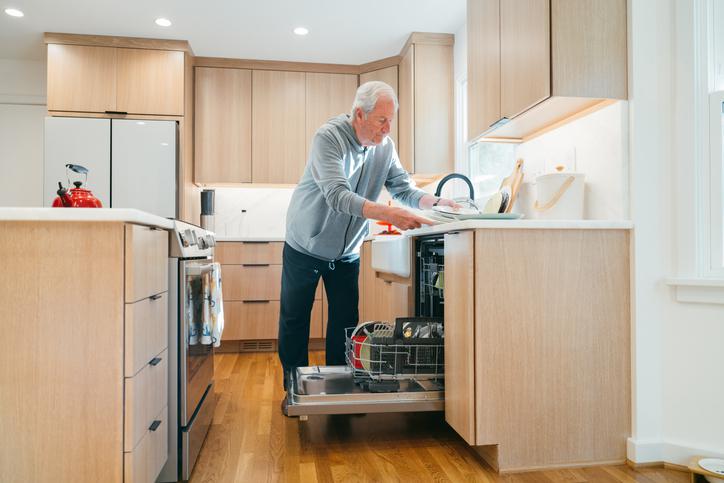
For most of us, home is more than four walls and a roof. So, it's no surprise that when asked, the overwhelming majority of older adults say they want to stay right where they are. That wish has a name: aging in place.
Yet staying home safely rarely happens by chance. As we grow older, our needs shift, sometimes gradually and sometimes overnight. A little stiffness in the knees can turn stairs into a daily challenge. A slippery bathroom floor can become a real hazard. But not all homes support independent living for people with mobility challenges.
This guide bridges the gap between what people want and what their homes can offer. We'll walk you through ways to adapt a home as accessibility needs evolve, from simple, low-cost changes to larger projects worth planning for in the future. We'll also share facts and figures around accessibility and the aging population, so you understand the scale of the need and the solutions that work.
Whether you're planning ahead or responding to a change that's already here, this guide will help you turn a beloved home into one that supports independence, safety, and comfort for years to come.
1. The rise of aging in place
What is aging in place?
Aging in place refers to seniors staying in their own homes as they get older. For individuals, this means staying in comfortable, familiar surroundings and maintaining some independence, even if they need more assistance than before. But aging in place can worry family members, who may fear their loved one doesn’t have the support they need. Many people can find a balance with some careful planning – we'll explore the steps you can take throughout this guide.
Key statistics on the aging population
The number of seniors keeps growing
In 2010, there were 40.3 million US adults over 65. By 2030, all Baby Boomers will be 65 or older, and the US Census Bureau projects there will be 77 million adults aged 65 and older by 2034. Reasons for this include the Baby Boomer generation aging and declining birth rates, which increase the share of older adults compared with younger generations.
Older Americans want to stay in their own homes rather than move into assisted living or care facilities
The number of seniors living in nursing homes has decreased over the past 20 years, while the number of adults living in traditional housing has increased. A 2026 report found that 93% of US adults aged 65 or older live in their own house or apartment. 9% of this group said someone provides care for them in their home.
When the adults who live in their own home but don’t receive care were asked what they’d want if they could no longer do so:
- 60% said they’d want to stay in their home and have someone care for them.
- 18% would want to move into an assisted living facility.
- 11% would want to move in with a family member.
- 1% would want to move into a nursing home.
- 8% would want another, unspecified arrangement.
Research from the University of Michigan supports these findings: 88% of adults felt it was very or somewhat important to remain in their homes for as long as they could.
Seniors see aging in place as a positive thing
Studies have shown that seniors associate aging in place with:
- Maintaining their autonomy and independence.
- Community and social connections, including with neighbors and friends.
- Access to services they use and need.
- A sense of familiarity and being surrounded by personal belongings and mementos.
Being able to keep and maintain their social network was highlighted as hugely beneficial. Research suggests that feeling satisfied with your social connections can decrease feelings of loneliness, something seniors are at risk of, particularly if they live alone; are divorced, separated or widowed; have never married; have a disability or find it difficult to live independently; or live in poverty. 24% of community-dwelling US adults aged 65 and over are considered to be socially isolated.
Not all homes are equipped for this transition
Research reported in 2022 estimated that only 10% of US homes are “aging ready”, which means they have step-free access, a bedroom and bathroom on the first floor, and at least one bathroom accessibility feature.
Other research has shown that 34% of adults aged 50-80 think their home definitely has features that would allow them to age in place. 47% said it probably does, while 19% said it doesn’t.
The same study found that some older adults prepare by changing their living situation rather than modifying their current home. 21% of those surveyed had moved within the past five years, with 52% moving to a home that was easier to get around, 49% downsizing, 34% moving closer to relatives, and 11% either moving in with relatives or having relatives move in with them.
Not everyone thinks about home modifications before they need them
A report by the University of Michigan found:
- 15% of older adults said they’d given a lot of consideration to home modifications they might need.
- 38% said they’d given some consideration.
- 26% said they’d given a little consideration.
- 21% said they’d given no consideration.
Age and health both had an impact on how much consideration a person had given:
- 59% of 65-80-year-olds had given a lot or some consideration to home modifications.
- 48% of 50-64-year-olds had given a lot or some consideration.
- 62% of people who have a disability, impairment or chronic health condition had given a lot or some consideration.
- 48% of people who don’t have a disability, impairment or chronic health condition had given a lot or some consideration.
The most common home modifications
- A main floor bathroom: 88%
- A main floor bedroom: 78%
- Door frames wide enough for wheelchair access: 54%
- Shower chairs or benches: 36%
- Raised-height toilet seats: 36%
- Lever-style door handles: 32%
- Grab bars: 32%
- Entryways with ramps or no stairs: 19%
- Barrier-free showers: 7%
(source: University of Michigan)
Why home adaptation matters
Adapting a home to meet older adults' changing needs is one of the most meaningful ways to support them as they age. The benefits are both physical and emotional – yes, home modifications can help reduce the risk of falls and injuries, but they also give seniors a level of independence for longer, without having to leave their own home comforts. Staying in familiar surroundings, surrounded by neighbors, community, and the comfort of a space of their own, helps older adults maintain their identity and dignity. Although home modifications cost money, a well-adapted home may delay or reduce the need for costly residential care, which can mean significant savings over time.
2. Accessibility in the home
What is accessibility?
In general terms, accessibility is how accessible something is – is it easy to use, see, deal with, reach or understand? In relation to homes, an accessible home is easily accessed and lived in by people with disabilities or mobility issues.
What is universal design?
Universal design is “design that is usable by all people, to the greatest extent possible, without need for adaptation or specialized design”, according to Ronald Mace, who coined the term.
There are seven principles of universal design, as reported by The UD Project:
- Equitable use: The design is useful and marketable, providing the same means of use for all users.
- Flexibility in use: The design accommodates a wide range of preferences and abilities.
- Simple and intuitive use: The design is easy to use and understand.
- Perceptible information: The design effectively communicates essential information to the user in different modes, so they can access it no matter what their needs are.
- Tolerance for error: The design minimizes hazards and provides clear warnings.
- Low physical effort: The design can be used efficiently and comfortably.
- Size and space for approach and use: The design provides the appropriate size and space for the user, regardless of their body size, posture, or mobility.
As the name suggests, universal design is for absolutely everyone of all ages and abilities, not only seniors, people with disabilities, or people with mobility issues.
Universal design is different from targeted accessibility retrofits. Universal design considers accessibility for all from the start, while targeted accessibility retrofits adapt existing designs to become accessible.
Common accessibility challenges for seniors
While everyone’s needs are different, seniors tend to share some accessibility challenges. Research shows that 78% of US adults over 55 have a chronic health condition, rising to 85% in US adults over 65.
These challenges often affect everyday activities, so seniors and their friends and relatives need to recognize the signs and seek help. Dealing with the issue can improve quality of life and reduce the risk of accidents.
Mobility limitations and fall risks
Mobility limitations and disabilities are very common, and in fact, mobility disabilities are the most common type of disability, affecting about 1 in 8 US adults.
These impairments may be caused by conditions like:
- Arthritis, which comes in different forms but often causes stiff, swollen, painful joints. About 1 in 5 US adults (21%) have been diagnosed with arthritis, according to the CDC.
- Osteoporosis, where bone density decreases, weakening the bones and making them more likely to break. People over 50, especially women, are more likely to experience it.
- The natural muscle weakness that comes with age.
Mobility limitations and disabilities can make it difficult to carry out daily tasks, climb stairs, or walk unaided or for long distances, and can increase the risk of falls.
Falls are the leading cause of injury in adults aged 65 or older. Around 33% of adults over 65 experience a fall each year, with up to 66% of these taking place in and around the home, showing how important managing mobility and adapting the home can be in reducing the risk.
Ways to manage mobility limitations and disabilities include:
- Mobility aids like canes, walkers, wheelchairs and scooters give extra support and stability.
- Physical therapy can help, as physical therapists can tailor exercises to each individual to improve strength, flexibility, and balance.
- Home adaptations like ramps and stair lifts can also help seniors maintain independence for longer – we'll cover these in more detail later in this guide.
- Community programs such as senior transportation services and paratransit, which help adults with mobility issues and disabilities travel around the local area.
Reduced grip strength and dexterity
We need grip strength and dexterity for plenty of everyday tasks, from opening jars to using utensils at mealtimes. Both tend to decline with age, due to the natural muscle weakening that happens over time. Higher grip strength is associated with better health and a stronger immune system, and can be maintained and improved with hand exercises like squeezing a stress ball, as well as engaging in regular exercise.
Vision changes
Vision impairment affects over 25% of adults aged 71 or older in the US. Common conditions that can develop due to aging include:
- Cataracts, where the lens of the eye goes cloudy.
- Glaucoma, a disease that damages the optic nerve.
- Macular degeneration, a disease where the macula, part of the retina, is damaged.
Regular visits to an eye doctor can help catch these changes early, so they can be treated as they arise. The American Academy of Ophthalmology recommends seniors get a complete eye exam every year.
There are several ways to adapt to life with visual impairments, including magnifying glasses, large-print books, and voice assistants. Occupational therapists can also teach you how to adjust so you can still carry out everyday tasks like cooking and laundry.
Hearing loss
Hearing loss affects nearly 50% of adults over 60 and nearly all adults over 90. Some of it happens as your auditory system ages, while other hearing loss can happen after prolonged noise exposure and is more preventable.
Hearing loss can make it difficult to engage in conversation – some people start to rely on lip reading – or enjoy hobbies like listening to music, going to the theater or the movies, or watching TV. More seriously, it means people can miss threats, warnings or announcements. Luckily, you can use devices like hearing aids and hearing assistive technology (HAT) to improve your hearing.
Cognitive changes
Cognitive changes and impairments affect memory, problem-solving and decision-making, which can impact quality of life. Around 66% of US adults will experience a level of cognitive impairment around 70 years old. Spotting cognitive changes early can help you or a loved one get the care you need to manage the symptoms. Signs of cognitive change include memory lapses, losing train of thought, struggling to follow a conversation, and finding it difficult to make decisions.
Depression and anxiety
It’s not just physical health that’s affected by age – it can have an impact on mental health too. Depression (a mood disorder that causes persistent feelings of sadness) and anxiety disorders (characterized by frequent and persistent worrying) can both occur in seniors. It’s thought that a number of reasons factor into this:
- Aging and the changes and challenges it can bring.
- Physical health issues, particularly if someone was generally healthy before.
- Life events, such as losing a partner or adult children moving away.
- Expectations differing between generations.
- Feelings of loneliness and isolation – over 33% of adults over 45 report feeling lonely.
Mental health conditions are often addressed using a combination of medication and therapy, such as cognitive behavioral therapy or counseling. Medication can reduce the symptoms, while therapy can help you identify and change unhelpful thoughts and behaviors.
Building and maintaining a social network can help too. In a poll, people who described their mental health as fair or poor were more likely to report feeling isolated (77%) compared to those who described their mental health as excellent, very good, or good (29%). Community resources like libraries or senior centers are a great starting point.
The importance of planning ahead
Thinking ahead is one of the smartest things you can do to make a home work for later life. A little planning in advance means a safer, more comfortable home for years to come.
Homes for long-term living
The most cost-effective approach is to incorporate the principles of universal design into new builds, taking accessibility into account from day one. New builds offer a blank canvas for features like wider doorways, step-free entryways, and walk-in showers. However, if seniors want to adapt an existing home, it’s best to start thinking about what they might need sooner rather than later.
Even a layout change can make a real difference in everyday life. For example, having everything you need on one level removes the daily hurdle of stairs, while open floor plans leave plenty of space to move around safely with a walker or wheelchair.
Assessing a home for accessibility
Before committing to any changes, arrange a professional home assessment. An occupational therapist can walk through the property with you, spot risks you might miss, and suggest practical solutions tailored to your needs. Their expert eye helps you spend money where it genuinely improves safety and independence.
It helps to sort improvements into two groups. Quick wins like grab bars, better lighting, or slip-resistant mats tend to cost less and can be done quickly. Bigger jobs such as a walk-in shower, new flooring, or a downstairs bedroom need more budget and planning, so mapping them out early lets you prioritize at a pace that suits you.
3. A room-by-room guide to common home modifications
Home modifications can support accessibility and safety in all areas of the home, inside and out. In this section we’ll cover the modifications that can be made in every room, plus how flooring, furniture, and technology can support someone who wants to age in place.
Entryways and access
The entryway is one of the busiest spots in any home. It can also be the first place where getting around becomes tricky as we grow older. Front steps, raised doorsteps, and uneven thresholds can turn a walk to the door into a hazard for anyone dealing with mobility or balance issues. A misjudged step can lead to a trip or fall, and these areas see so much daily traffic that the risk quickly adds up.
The good news is that a few thoughtful changes can make a world of difference. There are plenty of practical modifications that help keep entryways safe, welcoming, and easy.
Ramps
Wheelchair ramps and threshold ramps provide a gentle slope for seniors to ascend or descend when entering or exiting their home, instead of steps. They also allow wheelchair users to access the property without friction when level access isn’t possible, especially when paired with a widened doorway. Ramps should be made from slip-resistant materials to enhance safety, something that’s especially important during inclement weather.
Non-slip pathways
The pathways outside your home should carry you safely from one place to the next, not trip you up along the way.
- Start by leveling any uneven surfaces, since a raised paver or a sunken patch of concrete can catch a foot or a wheel in an instant.
- Choose firm, slip-resistant materials like poured concrete or tightly set pavers that stay steady in rain and won't shift underfoot.
- Aim to make paths at least 36 inches wide so a wheelchair or walker can pass through comfortably, and go a little wider where you can.
- Take a slow walk of the property and clear away tripping hazards such as loose stones, overgrown roots, or cracked pavement.
Grab bars
Grab bars are handles designed for a person to hold onto for support and balance. When properly anchored, they’re strong enough to support a person’s weight and are often seen outside accessible buildings, but they can also be installed throughout the home, for example, in bathrooms. You can position them at the heights and angles that work best, making them a great customizable option for seniors, whose needs may change as they get older.
There are different types of grab bars, including:
- Straight grab bars, which are horizontal bars. You can install them at different heights and lengths.
- Angled grab bars, which are bars positioned diagonally or at another angle.
- Floor-to-ceiling grab bars, which are vertical pillars that provide leverage for sitting or standing.
- Foldable grab bars, which can be stored away when not in use. They’re useful for homes that can’t have a permanent grab bar installed.
Outdoor lighting
The right lighting can significantly improve a home's accessibility, especially for seniors with visual impairments. Motion-detecting outdoor lighting lets residents navigate outside their home safely at night, improving visibility and reducing the risk of falls. It may also help deter potential criminals, creating a greater sense of security.
Stairs and level changes
Stairs are such a normal part of most homes that we rarely give them a second thought until they become a problem. As we grow older, changes in mobility, muscle strength, balance, and stiff or aching joints can turn a flight of steps into a daily struggle. Even a single step between rooms or a small level change in a hallway can catch you off guard.
These challenges increase the risk of trips and falls and can chip away at the confidence and independence that make a home feel like yours. Let's explore ways to make stairs and level changes safer, easier, and less daunting as the years go by.
Stairlifts
Stairlifts are motorized seats that glide along a track securely fixed to the stairway. The user sits on the seat and presses a button to ride up or down the flight of stairs – no climbing necessary. By carrying an older adult safely between floors, stair lifts greatly reduce the risk of falls on the stairs.
There are several types to suit different homes and needs:
- Straight stairlifts are the most common choice, designed for staircases that run in one straight line without any bends, and they tend to be the quickest and most affordable to install.
- Curved stairlifts are custom-built to follow staircases that twist, turn, or include landings, so the rail is tailored to the exact shape of your stairs.
- Outdoor stairlifts do the same job outside the home, with weather-resistant materials and protective covers that stand up to rain, humidity, and changing temperatures on outdoor steps or walkways.
- Standing or perching stairlifts offer a helpful alternative for anyone who finds it difficult to bend their knees or sit fully down. These let you travel in a supported, secure, semi-standing position, which can be ideal for narrower staircases.
Through-floor elevators
A through-floor elevator is a compact home elevator that carries you smoothly between the first and upper floors of your house. Unlike the elevators you might have used in public spaces, it typically doesn't need a full elevator shaft and usually involves less construction than a traditional elevator. Instead, it travels through a neat opening created in the ceiling of the room below and the floor of the room above, gliding gently up and down at the touch of a button. Many models are self-supporting and surprisingly discreet, fitting comfortably into a corner of a living room or bedroom without taking over your space.
They’re a good alternative to stairlifts for wheelchair users because the user doesn’t have to transfer, and they can also be a practical alternative to selling your home and moving to a single-story one.
Handrails
Handrails are an affordable modification that offer something sturdy to hold onto, providing steady physical support on the stairs, along hallways, in the bathroom, and around any tricky steps or level changes. This extra stability makes a real difference for anyone dealing with reduced mobility, weaker muscles, or balance issues, cutting the risk of trips and falls. For the best results, it helps to install handrails on both sides of staircases, run them along corridors, and place them near steps or entrances where footing can be uncertain.
Contrast markings
Contrast markings work by using bold, eye-catching color differences to highlight the edges of steps, thresholds, and any change in level. A strip of bright tape along the lip of each stair, or a contrasting border at a doorway, makes these tricky spots stand out clearly against their surroundings. This is especially helpful for older adults whose vision or depth perception has started to fade, as it can be hard to judge exactly where one step ends and the next begins. When those edges are easy to spot, the risk of a misstep, trip, or fall drops.
Bathroom adaptations
The bathroom can also be one of the trickiest rooms as we grow older. Wet, slippery surfaces, awkward reaching, and the effort of stepping in and out of the tub can all increase the risk of a fall, but you can make changes. Here are the modifications that can help.
Grab bars and support rails
Grab bars can be installed on the wall near the toilet, shower, and tub, giving you something sturdy to hold onto exactly where you need it most. This steady support helps with sitting down, standing up, and keeping your balance on slippery surfaces, all of which cuts the risk of a nasty slip or fall.
Walk-in and roll-in (curbless) showers
Climbing over the high side of a tub or stepping over a shower curb is difficult, if not impossible, for someone with mobility or balance issues. A curbless walk-in shower has a level entrance, so there’s nothing to trip over. Some homeowners go a step further with a wet room, where the whole bathroom is waterproofed and step-free. These roll-in designs are especially helpful for anyone who uses a wheelchair or walker, since they allow smooth, easy access without any barriers.
Raised toilets
A standard toilet can sit surprisingly low, making it hard work to lower yourself down and push back up again, particularly if your knees, hips, or joints ache. A raised toilet, or a simple riser added to your existing one, closes that gap by adding a few inches of height. This reduces the strain on your joints and muscles, so sitting and standing take far less effort. Paired with nearby grab bars, a raised toilet makes one of life's most routine tasks comfortable and manageable once more.
Slip-resistant flooring
Bathroom floors are almost always damp, and wet tiles can quickly become treacherous underfoot. Slip-resistant flooring helps by giving your feet better grip, even when the surface is splashed or soapy. Options include slip-resistant vinyl and textured tile. Slip resistance varies by product and finish, so ask about it when you choose a floor, and keep a bath mat with a non-slip backing by the tub or shower.
Anti-scald valves and faucets
As we grow older, our skin can become less sensitive to heat, and our reactions can slow, so a burst of hot water can cause a scald before we realize what’s happening. Anti-scald valves (thermostatic or pressure-balancing) help keep shower and faucet water at a steady, safer temperature, and some reduce or shut off the flow if the water gets too hot. A plumber can tell you what your current fixtures have. Setting your water heater to 120°F, as the US Consumer Product Safety Commission recommends, adds another layer of protection.
Kitchen modifications
The kitchen can also be one of the most demanding rooms to use as we grow older. Cooking and preparing food often means standing for long stretches, reaching into high cabinets, bending down to low shelves, gripping small, hard-to-turn knobs, and working close to hot pans and sharp tools. These tasks can begin to feel awkward or risky for anyone dealing with stiff joints, reduced strength, poor balance, or fading eyesight. A few well-chosen changes can make the whole space safer, easier, and far more enjoyable to use.
Adjustable-height countertops and cabinets
Adjustable-height countertops and cabinets can be raised or lowered to match your needs, whether you prefer to work sitting down or need clear space beneath the counter for a wheelchair. Being able to prepare food while seated takes the strain off tired legs and helps you conserve energy for the things you enjoy. This flexibility also means the kitchen can adapt with you over time, so it keeps working even as your needs change.
Lever faucets and easy-grip handles
Twisting a stiff faucet handle or gripping a small, round knob can be genuinely painful for anyone with arthritis or reduced grip strength. Lever faucets solve this neatly, as they can be turned on and off with a gentle push of the wrist, elbow, or forearm, no tight gripping required. Easy-grip handles on drawers and cabinets work in much the same way, offering a larger, more comfortable hold that’s easy to pull.
Pull-out shelving and accessible storage
Reaching to the back of a deep cabinet or bending down to a low shelf can be uncomfortable and unsteady work. Pull-out shelving brings your belongings out to you, so everything slides forward into easy view and reach. Combined with accessible storage such as drawers at waist height, pull-down racks, and clearly organized cabinets, it removes much of the bending, stretching, and rummaging that can throw you off balance.
Safety features
It only takes a moment of distraction to leave a stove or oven running, and for older adults this can pose a serious fire risk. Appliances with automatic shut-off features add a reassuring layer of protection by switching themselves off after a set time or when they sense no activity. Other helpful touches include induction cooktops, which stay cooler to the touch than traditional burners, timers with clear alerts, and smoke alarms placed nearby.
Bedrooms and living spaces
The bedroom and living room are where we rest, relax, and spend some of the happiest, quietest hours of the day. Yet as we grow older, these comfortable spaces can bring their own challenges. Getting in and out of a low bed, moving safely around furniture, or reaching a light switch in the dark can all become harder when strength, balance, and mobility start to change. A few simple adjustments can make these rooms far safer and easier to enjoy.
Bed height and transfer aids
A bed that sits too low or too high makes lowering down and getting back up hard work, especially on stiff hips and knees. An adjustable bed solves this by letting you raise or lower the height and tilt to suit your body, so climbing in and out feels easier.
Transfer aids offer another layer of support. Bed rails give you something sturdy to hold onto as you shift position or steady yourself, while a bed assist handle provides a firm handhold to push against when you sit up or stand.
Furniture layout
How you arrange a room matters just as much as what you put in it. A cluttered space with narrow gaps can be difficult and even dangerous to move through, particularly if you use a walker or wheelchair. Start by creating wide, clear pathways between key spots, such as the bed, the door, and a favorite chair, so there’s always plenty of room to pass through safely. Keep the routes you use most completely free of obstacles, and think about lifting loose rugs, tucking away trailing cables, and moving low tables or footstools that are easy to trip over. Choosing sturdy, stable furniture that offers good support when you lean on it also helps.
Accessible light switches and controls
Good lighting is one of the simplest ways to stay safe at home, yet ordinary switches aren’t always easy to reach or see. Lowering light switches to a comfortable height means you can turn them on without stretching or straining, which is especially helpful from a seated position. Motion-activated lighting takes the effort away altogether, switching on as you enter a room or make your way to the bathroom at night, so you’re never left fumbling in the dark.
Room-to-room transitions
Where one floor meets another (carpet in the bedroom, hardwood in the hall, tile in the bathroom), there’s usually a transition piece covering the seam. These spots are easy to overlook, but a raised threshold or a worn, loose strip is exactly the kind of small edge that can catch a toe, a cane tip, or a walker wheel. A few things to keep in mind:
- Aim for a level path. When new floors go in, ask how the finished height of each floor will line up with the rooms next to it. Planning floor heights and subfloor prep together makes it easier to keep transitions low and smooth.
- Use the right transition piece. A T-molding joins two hard floors at the same height. A reducer creates a gentle slope where one floor sits higher than the other. A carpet reducer (sometimes called a baby threshold or end cap) finishes the edge where a hard floor meets carpet. Many flooring manufacturers make matching transitions for their products, and their installation instructions should be followed.
- Keep height changes small and beveled. As a helpful benchmark, the ADA accessibility standards for public buildings allow a vertical change of up to 1/4 inch, a beveled change of up to 1/2 inch, and call for a ramp beyond that. These standards don’t govern private homes, but they show what wheelchair and walker users can manage comfortably.
- Rethink raised thresholds. Older homes often have raised wood or marble thresholds in doorways. Replacing them with a flush or low-profile transition can make it easier to walk or roll between rooms.
- Check them over time. Transition strips can loosen or lift with wear. Secure or replace any that wobble, and consider a contrasting color so the edge is easy to see (see contrast markings, above).
Smart home technology
Smart home technology takes the effort out of everyday tasks, and many are simple to use and easy to set up. They’re a popular choice: research by the University of Michigan found that 49% of older adults had at least one smart home device, such as voice-controlled assistive devices (21%), smart thermostats (18%), and doorbell cameras (16%).
Voice-activated assistants and smart lighting
Getting up to flick a switch, adjust the thermostat, or check the time might sound minor, but these small movements add up, and each one carries a little risk when balance or mobility is not what it used to be. Voice-activated assistants change that. With a spoken request, you can turn on the lights, set a reminder, play the radio, or ask for the weather, all without leaving your chair. Paired with smart lighting, you can brighten a room, dim it for the evening, or light a path to the bathroom just by asking. This means less shuffling around in the dark and fewer trips across the house, keeping you comfortable and steady exactly where you are.
Medical alert systems and fall detection
A fall or sudden illness can be frightening, especially when help feels out of reach. Medical alert systems let you call for help at the press of a button, connecting you straight to a response center or a loved one. They’re unobtrusive too – they're usually worn as a pendant, wristband, or clip.
Many modern devices go further with automatic fall detection, sensing a heavy tumble and raising the alarm even if you can’t press the button yourself. Knowing help is always within reach lets you carry on with your day with confidence.
Automated door locks and video doorbells
Answering the door can be an effort and a worry, particularly when it means hurrying across the house or opening up to someone you can’t see. Automated door locks and video doorbells make this far simpler and much safer. A video doorbell lets you see and speak to whoever’s there from your phone or a screen inside, so you can check who’s at the door before deciding whether to let them in. Automated locks mean you can secure or open the door without fumbling for keys, and you can grant trusted visitors access remotely.
Remote monitoring for family and caregivers
Family members and caregivers often want to know their loved one is safe, but nobody wants to feel watched over every minute of the day. Remote monitoring can be a good compromise. Discreet sensors can track everyday patterns, such as movement around the home or whether the refrigerator has been opened, and alert a relative if something seems out of the ordinary. Because these systems focus on reassurance rather than constant surveillance, they can respect your privacy and dignity while still keeping loved ones informed.
Prioritizing modifications
Making a home safer and easier to live in as we age is important. But with so many changes to choose from, where do you begin? You don’t have to do everything at once – you can tackle the most important updates first and add the rest over time.
Start with the greatest safety impact
- Grab bars are affordable, quick to install, and make a real difference in areas like entryways and bathrooms.
- Handrails on both sides of a staircase offer stability wherever needed.
- Bright, even lighting that turns on automatically stops familiar places from becoming hazards.
- A walk-in shower, raised toilet seat, and slip-resistant flooring make a bathroom much safer.
- Ramps are easier to navigate than steps and prepare a home for a wheelchair or walker down the line.
- Stair lifts keep the whole home accessible, even if you struggle with stairs. They’re a bigger investment, so they might sit further down the priority list, but are worth keeping in mind in case you ever need them.
Choose wheelchair-friendly flooring
Flooring matters more than most people realize, especially if balance is a concern, or a wheelchair or walker is part of daily life (or may be in the future). The right surface handles concentrated weight, resists wear from wheels, and lets you move easily and smoothly. The wrong one dents, wears through, or creates resistance that makes every trip exhausting. Here's how the most common options compare.
| Floor Type | Pros | Cons |
| Low-pile carpet |
|
|
| Luxury vinyl plank (LVP) |
|
|
| Hardwood |
|
|
| Tile |
|
|
Whatever you choose, keep transitions between rooms flat and even. Level thresholds help prevent trips and let wheels glide smoothly from space to space (see room-to-room transitions, above).
Phasing projects over time
You don't need to renovate the whole home all at once. Spreading work across phases keeps costs manageable and reduces the disruption of living through construction. Here's a sensible way to stage things.
- Phase one: urgent safety. Start with the quick, high-impact fixes. Grab bars, better lighting, non-slip mats, and handrails can often be done in a weekend and cost relatively little. These deliver protection straight away.
- Phase two: key access points. Next, tackle the bathroom and main entrance. A walk-in shower and an entry ramp are moderate projects that dramatically improve daily safety and independence.
- Phase three: larger investments. Save the bigger, costlier work for last, such as stair lifts, widening doorways, or replacing flooring throughout. By this stage you'll have a clearer picture of long-term needs.
A few tips to make phasing work:
- Plan the full vision first. Even if you build in stages, map out the whole plan early so you don't have to undo early work later.
- Group related jobs. If you're already opening up a wall for grab bars, consider what else in that room could be done at the same time.
- Check for funding. Grants, community programs, and disability support programs may cover part of the cost. It's worth researching before you begin – we'll cover financial considerations in the next section.
Balancing function with comfort and aesthetics
Here's something many families worry about: will these changes make the home feel clinical or institutional? They don't have to. Modern accessible design has come a long way, and you can create a space that's both safe and genuinely lovely to live in.
- Choose stylish fittings. Grab bars now come in multiple materials and finishes, so you can find something that suits your space. Ramps can be built with materials that blend into the landscaping.
- Keep it personal. Familiar furniture, family photos, and favorite belongings are what make a home feel like yours. Plan accessibility updates around them rather than replacing them.
- Prioritize good design, not just gadgets. Lever door handles, rocker light switches, and pull-out shelves are easy to use and look perfectly at home in any modern kitchen or bathroom.
- Let in natural light. Bright, airy spaces feel welcoming and help with vision and mood. Well-placed lighting does double duty, adding warmth while improving safety.
- Think about warmth and texture. Soft furnishings, rugs with non-slip backing, and cozy colors keep a home feeling like a home rather than a care facility.
4. Financial considerations
Home modifications come with a price tag, so many people wonder how they can pay for them. In this section, we’ll walk you through typical costs for common home modifications, so you know what to budget for, plus an overview of grants, tax considerations, financing, and insurance worth asking about. We’re not financial, tax, or legal advisors, so use this section as a starting point and confirm the details with the right professional before making decisions.
The cost of home modifications
Typical price ranges for common projects
While prices will always vary from project to project, here are some ballpark figures for common home modifications. Costs in your area may be higher or lower.
| Modification | Price range |
| Grab bars | $100-$350 per bar |
| Lever-handle door hardware | $100-$250 per door |
| Wheelchair ramp | $1,121-$3,596 |
| Widened doorway | $300-$2,500 per door |
| Pocket door installation | $1,400-$3,000 for a retrofit |
| Stair lift (straight) | $2,500-$5,000 |
| Stair lift (curved/custom) | $8,000-$15,000+ |
| Through-floor lift | $12,000-$30,000 |
| Raised toilet | $500-$1,350 |
| Roll-in shower | $2,900-$6,600 |
| Walk-in bathtub | $6,000-$13,100 |
| Accessible kitchen modification (partial: lowered counters, pull-outs, lever faucets) | $5,000-$20,000 |
| Accessible kitchen modification (full remodel) | $20,000-$60,000+ |
| Smart home voice-control package | $500-$3,000 |
Factors that influence overall cost
- The scope of the work: Simple fixes like installing grab bars or swapping door handles cost far less than major structural changes, such as widening doorways for a wheelchair or reworking a bathroom from the ground up.
- Where you live: Labor rates and permit fees can differ from one region to another.
- The age and condition of your home: Older houses may hide outdated wiring, plumbing, or framing that needs attention before the real work can begin.
- Who you hire: Licensed, insured professionals may cost more than a handyman, but they help protect the quality and safety of the work (licensing requirements vary by state and trade). An occupational therapist’s assessment is also worth budgeting for, since it shapes the whole plan.
- The materials and products you choose: The difference between a basic and premium model can vary considerably.
- The number of changes: A whole-home approach costs more than tackling one room at a time.
Budgeting for both immediate and future needs
Start with what you need now, or in the near future, and figure out how much that will cost so you have a savings goal to aim for if you don’t have all the funds yet. Get a few written quotes before you commit, make sure you understand exactly what each one includes, and tackle the highest-risk areas first, so you’re getting the most out of your investment.
Situations can change, so map out the modifications you may need over time, then set aside a little each month toward them so the costs don't land all at once. Build in a contingency fund of around 10-20% to cover surprises. And treat your budget as a living document rather than a one-time task. Revisit it every year or after any change in health, adjust your priorities, and check whether new grants or programs have become available.
Grants you may qualify for
Grants usually don’t need to be paid back, so they’re worth exploring before you borrow. Programs, funding, and eligibility rules change often and vary by location, so treat the options below as starting points and confirm the details directly with each program. A few places to start:
- HUD Community Development Block Grants (CDBG): HUD provides these funds to state and local governments, and some communities use them for home repair or accessibility programs, often for lower-income households. What’s available varies by community, so contact your city or county housing or community development office to ask.
- USDA Section 504 Home Repair Program: If you live in an eligible rural area and have a low household income, this program offers loans and grants to repair, improve, or modernize a home. Grants are limited to homeowners aged 62 and older with very low incomes and must be used to remove health and safety hazards. USDA lists the current maximums (up to $10,000 in lifetime grants and up to $40,000 in loans) on its website; your local USDA Rural Development office can confirm eligibility.
- State and local resources: Many states and local Area Agencies on Aging offer or can point you to assistance programs, and some nonprofits and veterans’ organizations help too. Veterans with certain service-connected disabilities may qualify for VA grants such as Specially Adapted Housing (SAH) or Home Improvements and Structural Alterations (HISA); the VA can confirm eligibility.
A call to your local Area Agency on Aging is a good first step. You can find yours through the Eldercare Locator. They can point you toward programs in your area that you might not find on your own.
Tax deductions for medical modifications
Certain home modifications may count as deductible medical expenses, but the rules are specific and depend on your situation. We’re not tax advisors, so treat this as background and talk with a qualified tax professional before counting on a deduction. A few things worth knowing, based on IRS Publication 502: medical expenses, including qualifying home improvements, are generally deductible only if you itemize, and only the portion of your total medical expenses that exceeds 7.5% of your adjusted gross income counts.
Improvements made mainly for medical care, such as entrance ramps, widened doorways, grab bars, and handrails, may qualify. The IRS notes that many of these generally don’t increase a home’s value, so their full cost may count. If an improvement does increase your home’s value, generally only the cost above that increase counts.
Keep every receipt and record, and ask your doctor whether documenting the medical need would help. A tax professional can confirm what qualifies for your situation.
Financing options
Financing can bridge the gap when grants and savings don’t cover everything. Every option has costs and risks, so compare offers and talk with a financial advisor or lender before you borrow. A few common paths include:
- Home equity loan: This lets you borrow a lump sum against the equity in your home, usually at a fixed interest rate. It works well when you know the total cost upfront. Your home secures the loan, so missed payments put it at risk.
- Home equity line of credit (HELOC): A HELOC gives you a revolving line of credit to draw from as needed. It’s handy for phased projects where costs come in stages. Rates are often variable, and like a home equity loan, it’s secured by your home.
- Reverse mortgage: Available to homeowners 62 and older, this converts part of your home equity into cash without monthly mortgage payments. You still need to pay property taxes, homeowners insurance, and upkeep, and the loan generally comes due when the last borrower sells, moves out permanently, or passes away. Federally insured reverse mortgages require a session with a HUD-approved counselor first, and fees and long-term effects on your estate are worth discussing carefully.
- Personal loan: For smaller projects, an unsecured personal loan can be quick to arrange and isn’t secured by your home, though interest rates tend to be higher.
Compare terms carefully and choose the option that fits your budget and comfort level.
Insurance coverage
Insurance coverage for home modifications is limited, but a few avenues can help. Coverage rules change and vary by plan and state, so confirm the details with your plan or agency directly.
- Medicare: Original Medicare generally doesn’t pay for home modifications, since it views them as home improvements rather than medical care. It may, however, cover certain durable medical equipment, like a hospital bed or a commode, when a doctor prescribes it. Some Medicare Advantage plans may offer supplemental benefits that include grab bars or bathroom safety devices, so check your specific plan.
- Medicaid HCBS waivers: For people who qualify, these can be one of the more helpful options. Medicaid’s Home and Community-Based Services (HCBS) waivers are designed to help people stay at home rather than move into a facility. Many states’ waivers can cover ramps, grab bars, and other accessibility changes. Eligibility, covered services, and waitlists vary by state, so contact your state or local Medicaid office.
- Long-term care insurance: If your loved one has a long-term care policy, review it closely or ask the insurer. Some policies include benefits for home modifications that help someone remain safely at home.
The return on your investment
- Modifications that help delay or prevent a move to an assisted living facility or nursing home can mean significant savings, since the cost of these can run into thousands of dollars a month.
- Safety upgrades can help prevent costly injuries. A single fall can lead to a hospital stay, surgery, and a long recovery, along with steep medical bills.
- Some improvements may also appeal to future buyers. Features like a walk-in shower, wider doorways, and a step-free entryway can be attractive to buyers who are planning ahead, though how much they affect resale depends on your home and local market.
If there's one lesson worth carrying forward, it's that planning early pays off. Making changes before you need them gives you time to compare quotes, choose quality materials, and phase the work at a comfortable pace. You avoid rushed decisions and unexpected bills, and you gain something priceless along the way: peace of mind.
5. Aging-in-place checklist
| Assess your home and your health to identify modifications that will be most beneficial. Seek a professional opinion if possible. | ✅ |
| Plan out everything before you begin so you can prepare, check what funding’s available, and budget accordingly. | ✅ |
| Start with quick fixes that have a big impact, like grab bars and lighting. | ✅ |
| Tackle the bathroom, which is an area of high risk. | ✅ |
| Make your entryways more accessible. | ✅ |
| Save bigger, costlier work for last, when you have a clearer picture of long-term needs. | ✅ |