Richmond summers bring more than heat. Humidity can linger for weeks, and while your air conditioner helps keep indoor conditions comfortable, flooring still has to adjust to changes in moisture throughout the year.
That doesn’t mean you have to eliminate entire flooring categories. It does mean that construction, moisture resistance, installation, and indoor climate control deserve a closer look. Some floors are less affected by changing humidity, while others naturally expand and contract as conditions shift.
Before choosing a floor based on appearance alone, it helps to understand how different materials respond to moisture and which factors matter most in your home. Floor Coverings International of North Richmond, VA® can help you compare flooring options with Richmond's humid climate and the conditions in your specific rooms in mind.
Schedule An In-Home Consultation
What Humidity Actually Does to Your Floors
Flooring materials respond to moisture in different ways. Wood and other plant-based materials can absorb moisture from the air and expand. When indoor air becomes drier, they may contract again. Too much movement can contribute to gaps, cupping, or other changes in the floor.
The best floor for a humid climate isn't necessarily the material that never reacts to moisture. Proper installation and acclimation can make a significant difference, especially for products that naturally expand and contract.
Before choosing flooring, consider:
- How much direct moisture the room is likely to encounter.
- Whether the space is consistently climate-controlled.
- What type of subfloor is beneath the new flooring.
- How stable the flooring material is when humidity changes.
- Whether the manufacturer has specific installation or acclimation requirements.
Those details help explain why the same flooring may perform differently in two homes.
Which Materials Handle Humidity Well?
If moisture resistance is a high priority, luxury vinyl and tile are natural places to start. Both are available in a wide range of looks, including styles that resemble hardwood, stone, and other materials.
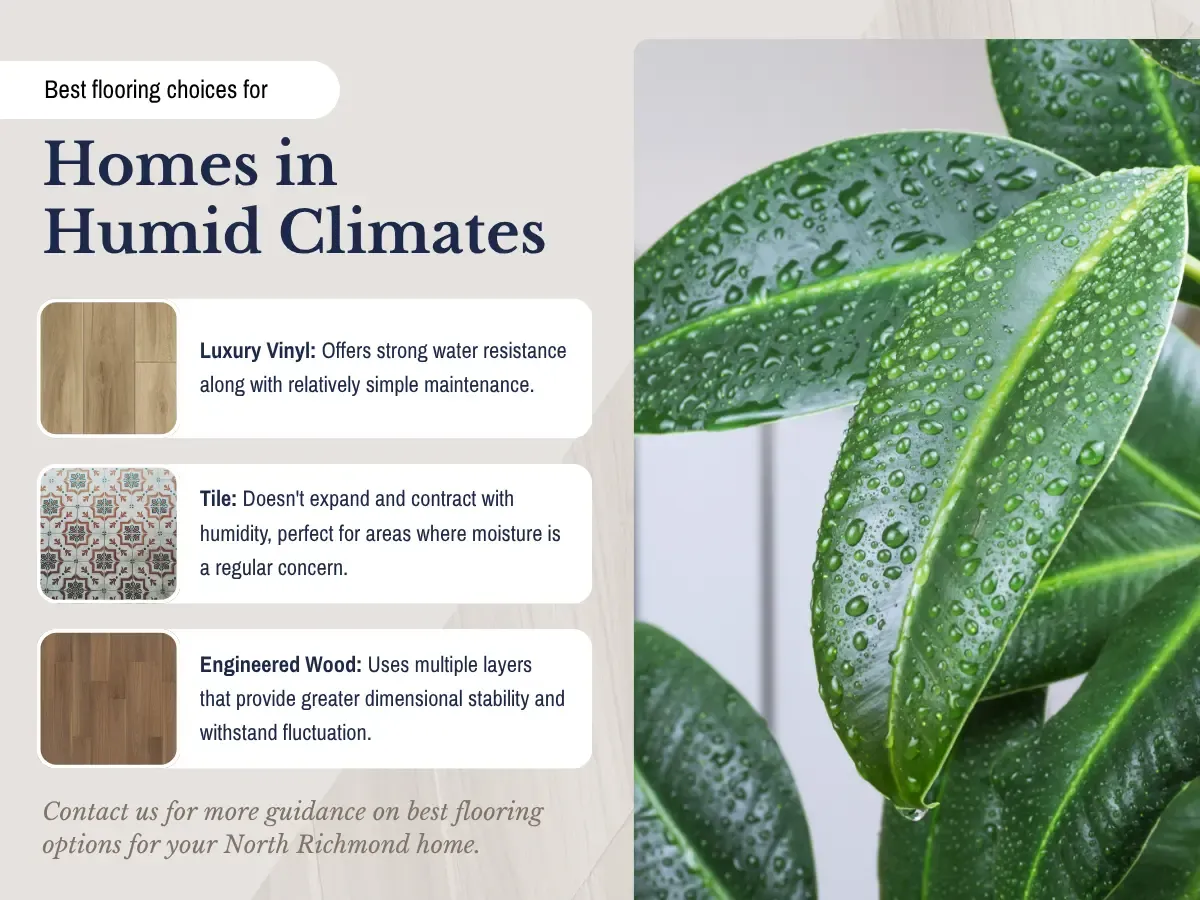
Luxury vinyl is popular for busy households because many products offer strong water resistance along with relatively simple maintenance. Tile doesn't expand and contract with humidity the way wood can, making porcelain and ceramic tile especially useful in areas where moisture is a regular concern.
For homeowners comparing the best flooring for humid areas, these materials often deserve consideration because their performance is less dependent on maintaining narrow indoor humidity levels.
That doesn't automatically make them right for every room. Comfort, appearance, subfloor conditions, installation requirements, and how you use the space still matter.
Can You Have Wood Floors in a Humid Climate?
Yes. Humidity doesn't automatically rule out wood flooring. The more important question is what type of wood floor you're considering.
Solid hardwood is made from a single piece of wood, so seasonal moisture changes can cause it to expand and contract. Engineered hardwood uses multiple layers beneath a real hardwood surface. That layered construction generally provides greater dimensional stability, which can make engineered products worth considering in homes where humidity fluctuates.
For that reason, the best wood flooring for humid climate conditions is often an engineered product selected for the specific room and installation rather than simply a particular wood species.
Installation matters, too. Wood may need time to acclimate inside the home before installation, and maintaining reasonable indoor humidity can help limit excessive seasonal movement.
Choosing Hardwood When Richmond Summers Get Muggy
Homeowners who love traditional hardwood don't necessarily need to give it up because Richmond gets humid. When evaluating hardwood floors in humid climates, look beyond color, plank width, and species to the construction of the product and the manufacturer's recommendations.
If you're specifically searching for the best hardwood flooring for humid weather, engineered hardwood may offer an advantage because its layered construction is designed to reduce some of the movement associated with changing moisture levels.
That doesn't mean every engineered hardwood product performs identically. Your Design Associate can help you compare construction, installation methods, warranties, and manufacturer guidelines before you choose.
What About Laminate?
Today's laminate flooring has changed considerably, and some products offer better moisture protection than older versions. Still, product specifications matter.
When considering laminate flooring in humid climates, check whether the specific flooring is water-resistant or waterproof and where the manufacturer recommends installing it. Moisture that reaches seams, edges, or the core of a product that isn't designed for wet conditions can cause swelling or damage.
For living rooms, bedrooms, hallways, and other climate-controlled areas, the right laminate may be a practical option. Rooms with frequent splashes or standing water call for closer consideration.
Where Does Bamboo Fit In?
Bamboo is sometimes grouped with hardwood because it has a similar appearance, but it's technically a grass. Like wood, it can react to moisture in the surrounding environment.
Performance varies considerably by product and construction. If you're considering bamboo flooring in humid climates, pay attention to the manufacturer's humidity guidelines, how the flooring is constructed, and whether it's recommended for your particular room.
Rather than assuming bamboo is either ideal or unsuitable for Richmond, compare individual products and their installation requirements.
Bathrooms Need a Different Moisture Strategy
Household humidity and direct water exposure aren't the same problem. A living room may experience humid summer air, while a bathroom has splashes, wet feet, steam, and the possibility of standing water.
That makes bathroom flooring in humid climates a separate decision. Porcelain and ceramic tile are common choices because they tolerate wet conditions well when properly installed. Waterproof luxury vinyl products may also provide the appearance of wood or stone with less concern about everyday splashes.
Even in a humid region, the room itself should guide the decision as much as the climate outside.
Choose Floors Ready for Richmond's Humidity
There's no single flooring material that's right for every humid home. The room, subfloor, moisture exposure, product construction, and your preferred flooring style can all influence which option makes the most sense.
With a free in-home consultation from Floor Coverings International of North Richmond, VA®, you can compare flooring samples in the rooms where they'll actually be installed. Our Mobile Flooring Showroom® brings options to your home, while your Design Associate can help you compare both appearance and performance based on your space.
Once you've selected your flooring, you'll receive a free, down-to-the-penny quote so you know what to expect before installation begins.
Call (804) 719-4057 or schedule your free in-home consultation to find flooring that makes sense for your Richmond-area home.