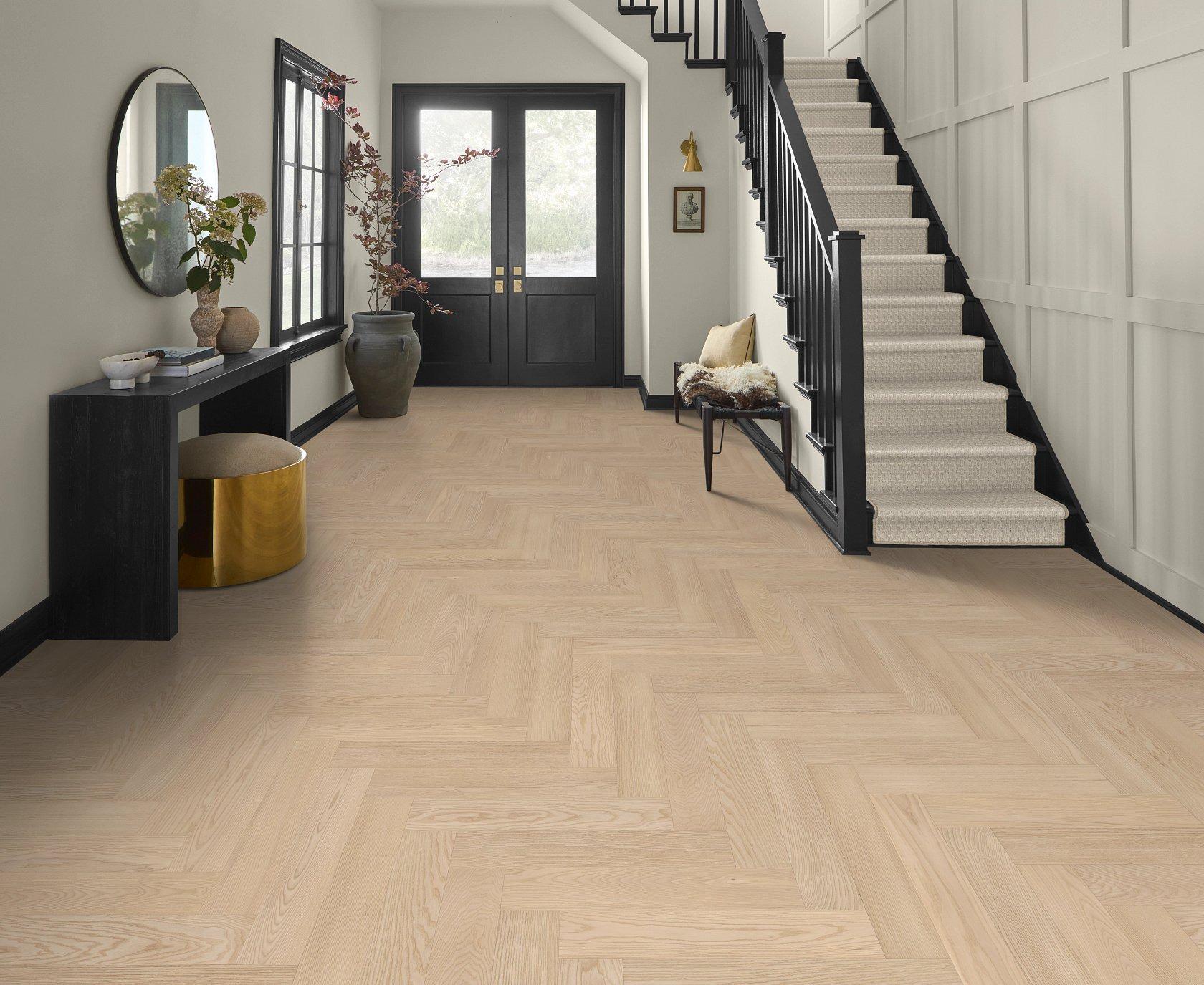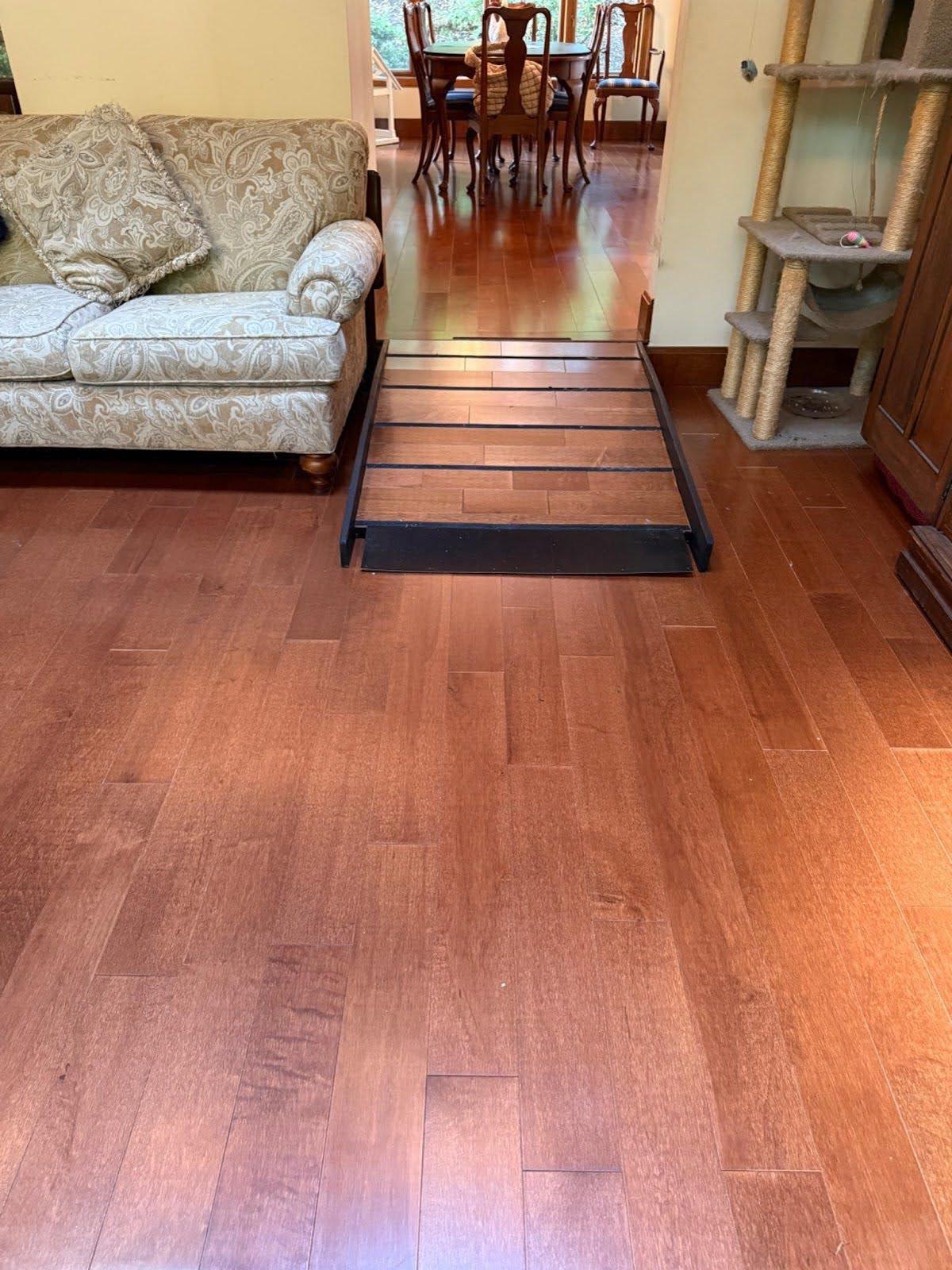
At first glance, solid hardwood and engineered hardwood can look remarkably similar. Once they're installed, many homeowners can't tell the difference by appearance alone. The real differences come down to how each floor is built, where it performs best, and what you expect from it over time.
This guide will help you compare the factors that matter most so you can feel confident in your decision. If you'd like to see samples in person, the team at Floor Coverings International of Northwest Columbus, OH® can bring a variety of hardwood options directly to your home and help you compare them in your own space.
Schedule An In-Home Consultation
Your Priorities Shape the Right Choice
When homeowners begin researching engineered vs. solid hardwood flooring, it's easy to focus on the products themselves. Thinking about your everyday routine helps you identify what matters most before selecting flooring materials.
Floor Coverings International of Northwest Columbus, OH® owner Matthew Relyea explains that "Ohio's changing seasons can play a big role in how hardwood flooring performs over time. That's why we help homeowners choose between solid and engineered hardwood based on their home's conditions, not just appearance. When you understand the benefits of each, it's much easier to make the right decision.”
A few of the most common things to consider:
- Will this flooring be installed throughout the home or only in certain rooms?
- Do you expect to stay in your home for many years?
- Is easy maintenance more important than refinishing potential?
- Does your home experience changes in humidity throughout the year?
- Are you planning to remodel additional rooms in the future?
Your answers will often narrow the options before you ever compare colors or wood species.
Which Rooms Are You Updating?
Every room places different demands on flooring. A formal dining room doesn't experience the same daily activity as a busy kitchen or family room, and a finished basement has different environmental conditions than a second-floor bedroom.
This is one reason homeowners often ask about engineered vs. solid hardwood in kitchen spaces. Kitchens are exposed to occasional spills, fluctuating humidity, and heavy foot traffic. While either material may work depending on the home's conditions, engineered hardwood is often considered in these areas because its layered construction provides greater dimensional stability.
In many Columbus-area homes, it's also common to see different flooring choices used throughout the house rather than relying on a single material everywhere.
How Long Do You Plan to Stay?
Your long-term plans can influence which flooring makes the most sense. Someone planning to stay in the same house for 20 years may value different features than a homeowner preparing to sell in five. Because solid hardwood can typically be refinished multiple times, some homeowners value its long lifespan.
If you expect to live with your floors for decades, the ability to refinish them may become increasingly valuable. If your timeline is shorter, ease of installation, appearance, and day-to-day performance may carry more weight.
Engineered flooring can also provide many years of dependable use, although the number of times it can be refinished depends on the thickness of its hardwood wear layer.
If you're considering engineered vs. solid hardwood resale value, remember that buyers typically look at the overall condition and appearance of the floors rather than the construction alone. Well-maintained wood flooring of either type can contribute positively to a home's appeal.
How Much Moisture Does Your Columbus Home Experience?
Ohio homeowners experience changing seasons, from humid summers to dry winter months when furnaces run regularly. Those shifts can affect natural wood.
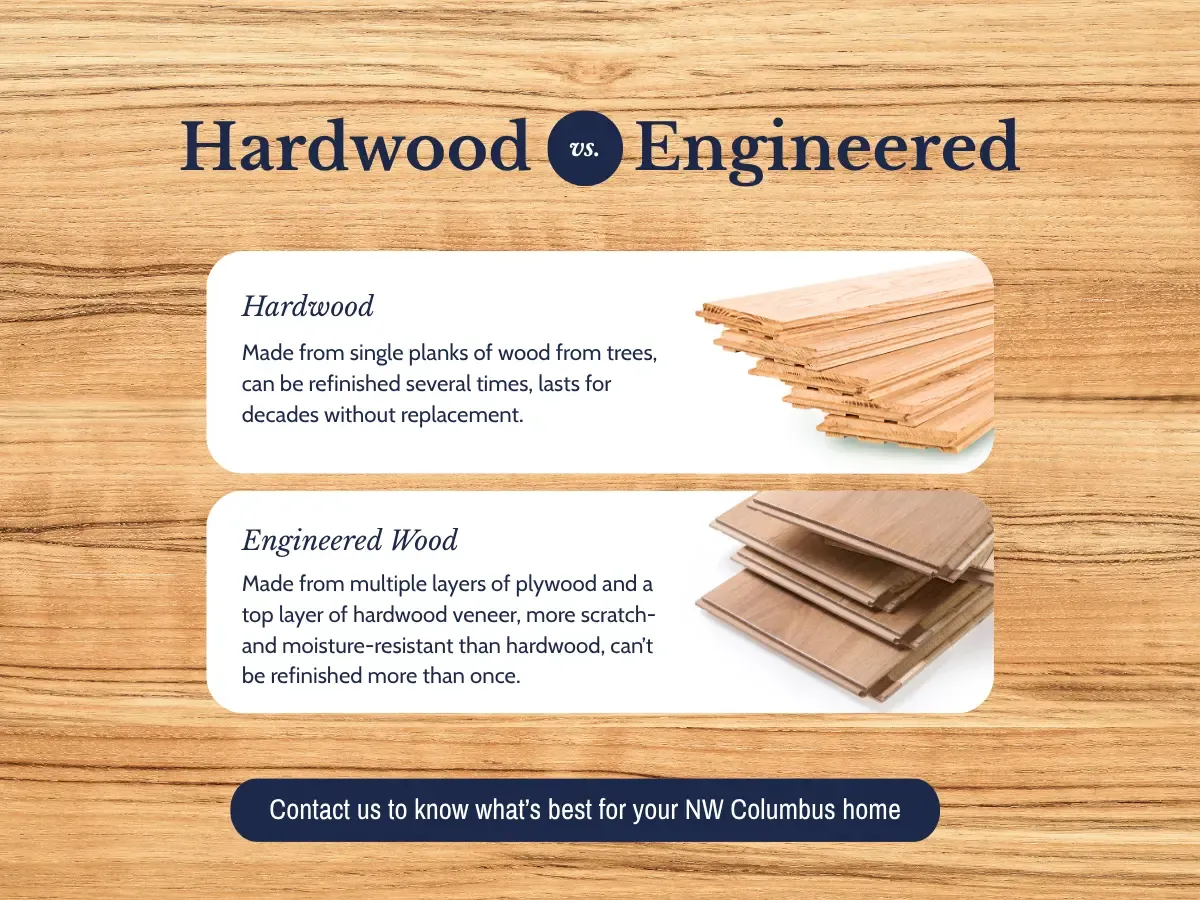
Engineered hardwood is designed with multiple layers that help minimize movement caused by changes in humidity. Solid hardwood naturally expands and contracts as moisture levels fluctuate, making proper installation and indoor humidity control especially important.
That's one reason engineered hardwood in Columbus, Ohio, has become a popular option in newer homes as well as remodeling projects where environmental conditions vary from room to room.
Is Refinishing or Durability More Important?
Durability means different things to different homeowners. Some people are thinking about scratches from pets, while others are more concerned with how the flooring performs after years of everyday use.
When comparing engineered hardwood vs. solid hardwood durability, it's helpful to separate surface wear from structural performance. Both flooring types can be manufactured with the same hardwood species on the surface, so resistance to dents and scratches often depends more on the wood itself than whether the floor is solid or engineered.
One important difference is how each material ages. Solid hardwood offers greater refinishing potential, while engineered flooring emphasizes dimensional stability throughout its life.
How Does Budget Affect the Decision?
Price is naturally part of the conversation, but it helps to look beyond the material alone. When evaluating the cost of solid hardwood vs. engineered, remember to consider installation requirements, subfloor preparation, future maintenance, and the overall scope of your project. Depending on the product and installation method, one option may provide better overall value for your specific home, even if the initial material cost is different.
Rather than focusing only on today's price, think about how the flooring will perform over the years you expect to live in the home.
Should Indoor Air Quality Influence Your Choice?
If indoor air quality is one of your priorities, you've probably come across the term VOCs, or volatile organic compounds. These are chemicals that can be released from certain flooring materials, finishes, and adhesives, particularly when products are new.
If you're researching engineered hardwood vs. solid wood VOCs, it's helpful to understand where VOCs actually come from.
Solid hardwood contains a single piece of wood, while engineered flooring uses multiple layers bonded together during manufacturing. Today, many quality engineered products are manufactured with low-emission adhesives and meet strict indoor air quality certifications. Regardless of which flooring you choose, it's worth asking about certifications and product specifications if indoor air quality is one of your priorities.
Compare Solid and Engineered Hardwood Side by Side
Reading about flooring can help you understand the differences, but seeing the materials side by side often makes the decision much clearer. At Floor Coverings International of Northwest Columbus, OH®, we bring wood flooring samples to you so you can compare colors, finishes, and construction in your own lighting.
Whether you're considering solid hardwood or engineered hardwood flooring in Columbus, OH, we'll explain how each option performs in your space and help you choose flooring that fits your priorities today and for years to come.
Call (614) 972-1900 or schedule your free in-home consultation with our local team when you're ready to compare your options with confidence.