In today's flooring industry, there's a lot of confusion about what’s sustainable and what’s not. Too often we see the term thrown around as a buzzword, rather than holding the value that many homeowners in Reno and the surrounding area are looking for.
So, let’s talk about what environmental flooring really is, explore some options, and discuss how to find the best choice for your home in Reno.
If you’ve been searching for “eco-friendly flooring near me”, you’re probably interested in checking out the beautiful, sustainable flooring samples our team at Floor Coverings International of Reno, NV® can bring right to your home.
Schedule An In-Home Consultation
What Makes Flooring Sustainable?
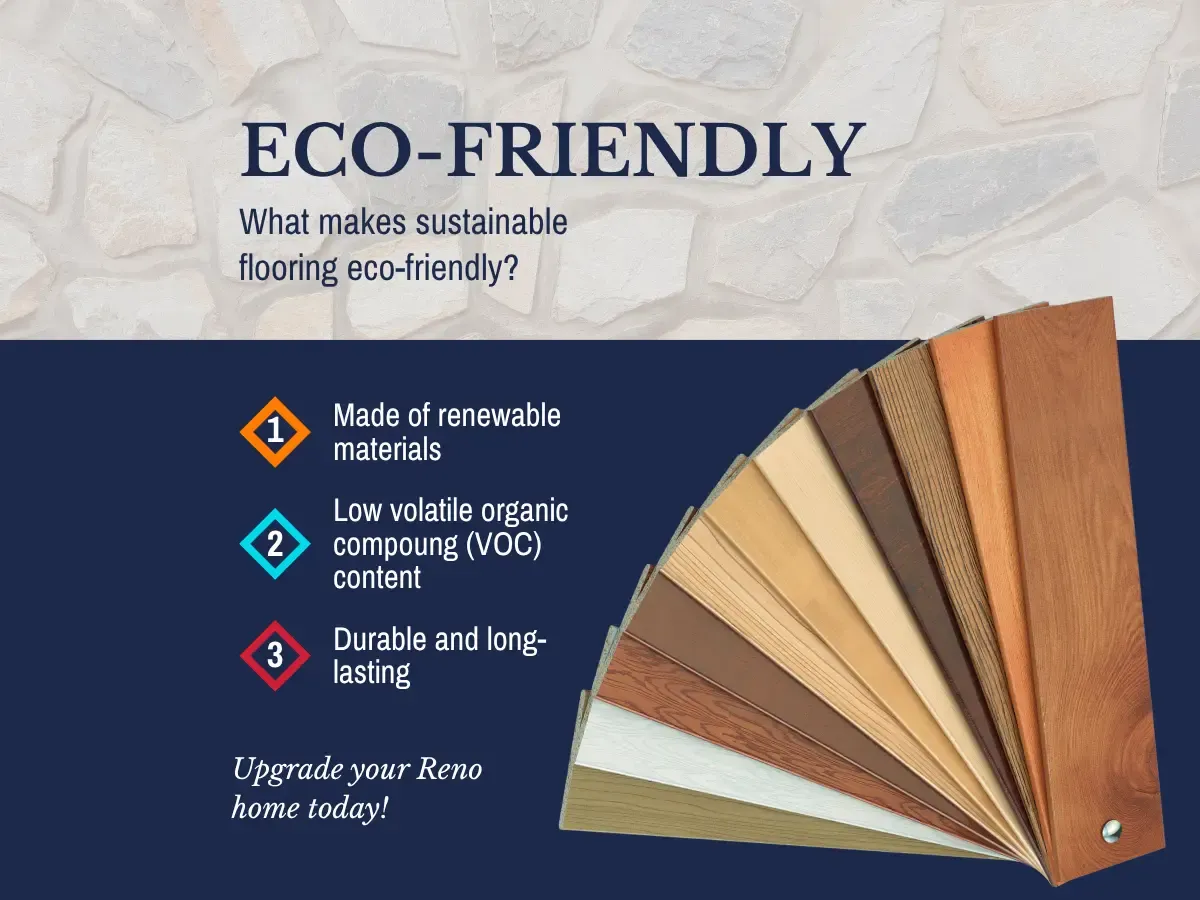
First off, let’s talk about what sustainable flooring is. Many environmental flooring options come from fast-growing sources, like bamboo or cork, but that’s not the only thing that makes a floor environmentally friendly. To find true eco-friendly flooring, it’s important to consider the floor’s full lifecycle. That includes everything from how the materials are harvested to how the flooring performs in your home and what happens at the end of its life.
Here are some key qualities for ecological flooring:
- Made of renewable resources or salvaged materials
- Manufactured with non-toxic adhesives and finishes that keep indoor air quality healthier.
- Built to last. At the end of the day, the most eco-friendly flooring in Reno, NV, and beyond, is the one you don’t have to replace every few years.
Choosing Flooring Options that Make a Difference
Whether you see it as an opinion on how you want to treat your home, or you’ve crafted your lifestyle to have a smaller environmental impact, choosing eco-friendly flooring is a way to have an impact on the flooring industry.
The more there’s a market for sustainable practices, the more it will expand. Non-toxic adhesives become more widely available and affordable when they're in demand. This can mean that your individual choice, multiplied by the choices of neighbors and communities, can drive real, measurable change, and prove that what you put on your floors really does make a difference beyond your own four walls.
Let's look at some flooring options that can help you make a difference.
Bamboo
Unlike traditional hardwoods that take decades to centuries before they’re ready to harvest, bamboo matures in three to five years. Since it grows as a grass, it can regenerate from its own root system without needing to be replanted.
Reno homeowners choose bamboo because it’s:
- Moisture-resistant.
- Stable through our drastic temperature changes.
- Refinishable, depending on the thickness.
- Hypoallergenic with fibers that naturally repel dust mites, pet dander, and other allergens.
As you’re shopping for the right bamboo, look for: Strong sustainability certifications and responsible harvesting practices. With FSC (Forest Stewardship Council) certified flooring, you can be sure the bamboo was responsibly harvested, protecting biodiversity, and the entire supply chain used responsible practices.
Cork
Cork is another option that looks like hardwood but grows and harvests much faster. The material comes from the bark of the cork oak tree and can be re-harvested every nine years as the bark regenerates. Since there's no felling trees, no need to replant, and rapid regenerating material, cork is considered one of the most renewable flooring materials.
Beyond the flooring’s sustainability, homeowners choose cork because it’s:
- Antimicrobial. Thanks to a waxy substance called suberin, cork has a built-in protective barrier against bacteria, mold, and mildew.
- Thermal regulated. Cork helps regulate room temperature to keep the home slightly warmer in frosty winter months and a little cooler through hot summers.
- Quieter than some other options. Cork is full of millions of air-filled cells that absorb sound to dampen loud noises and make the home a bit quieter.
Reclaimed Hardwood
Instead of harvesting new trees from standing forests, reclaimed wood is salvaged from old barns, factories, warehouses, and even railroad trellises that have outlived their original purpose. The dense, tightly grained wood is incredibly durable and full of decades of rich character.
With this eco-friendly hardwood flooring, Reno homeowners can:
- Decrease demand for new lumber.
- Reduce old materials from ending up in landfills.
- Enjoy a floor with decades-old patina, featuring nail holes, weather marks, and color variations that make each plank truly unique.
Natural Fiber Carpet
Since the floors are crafted from materials that grow back year after years, natural fiber carpets are a great option for sustainable floors. Wool is shorn from sheep annually, and sisal, jute, seagrass, and coir are harvested from fast-growing plants that require minimal water or fertilizer. With the right care and maintenance, natural fiber carpets are remarkably durable.
Here's why local homeowners love these natural flooring materials:
- Wool is stain-resistant, naturally regulates temperature, and helps keep indoor air quality safer.
- Jute is soft, comfortable and offers a warm, inviting atmosphere.
- Sisal is exceptionally durable for high-traffic areas and brings natural texture and neutral tones that complement a wide range of interiors.
Recycled Fiber Carpet
Mohawk recycled carpet is a great example of this type of flooring. The production takes materials, such as discarded plastic bottles, fishing nets, and old carpet scraps, that would otherwise clutter landfills and turns them into durable, eco-friendly flooring. By choosing recycled fiber carpet, you can encourage recycling programs and reduce the volume of plastic pollution that ends up in our environment. For example, Mohawk carpet recycled content contains 63 plastic bottles per square yard.
Here are a few of the benefits of carpet with recycled fibers:
- Stain- and fade-resistance. Recycled PET, including floors like Mohawk recycled plastic carpet, are particularly known for holding color beautifully.
- Less carbon emmissions in manufacturing. The recycling process bypasses the energy-intensive stages of crude oil extraction, refining, and polymerization that’s needed for new synthetic materials.
- Better air quality. Recycled fiber carpets are often manufactured with water-based, solvent-free backings and adhesives that emit minimal volatile organic compounds (VOCs).
Note: Some recycled nylon carpets can be difficult to recycle after its life as a carpet.
Making the Right Choice for Your Reno Home
Eco-friendly flooring includes how well it withstands wear in your home. After all, flooring that fails after five years because it cracked from our dry air or temperature fluctuations is anything but sustainable, regardless of how responsibly it was manufactured.
That's why in Reno, it’s important to look for floors that are:
- Stable through sharp temperature and humidity changes.
- Fade-resistant to handle close to 300 days of sunshine every year.
- Forgiving with minor subfloor irregularities, especially for older Reno homes.
- When you work with local experts, like our team, you’ll get professional insight and advice to help you find flooring that fits your home, budget, and works well with our local conditions.
Ready to Find the Best, Sustainable Floors for Your Home?
By assessing the floor's lifecycle, from how it’s made and how it functions in your home all the way to what happens after, you can choose materials that are a beautiful fit for your home and an impactful choice for the environment.
Whether you’re drawn to the renewable nature of bamboo, the warmth of cork, the character of reclaimed wood, or the innovation of options, like Mohawk carpet with recycled fibers, our team at Floor Coverings International of Reno, NV® is here to help you find flooring that you’ll love for years to come.
Ready to start exploring beautiful, natural flooring near Reno, NV? Call (775) 362-7934 or set up a free in-home consultation today.