Hardwood brings warmth and natural character to a home, which makes it a popular upgrade. If you have existing tile, you may wonder whether the new floor can go right over it. Tearing out tile is slow, loud, and dusty.
Often, the answer is yes, with the right type of hardwood. Engineered hardwood can be installed over tile when the tile is well bonded and the floor is flat. Solid hardwood is a different story: it has to be nailed down, and nails can’t go into tile, so the tile needs to come out first.
This article covers what your tile needs to look like, which hardwood works, how the installation is done, and the trade-offs to plan for.
Is Hardwood Over Tile a Practical Option?
Checking the Tile You Already Have
The new floor can only be as stable as the one beneath it, so start by looking closely at your current tile.
-
Solid, intact tile. Every tile should be firmly bonded, with no cracks or loose pieces. Tapping across the floor can help. A hollow sound may mean a tile has come loose from the mortar beneath it. The subfloor under the tile also needs to be sound. Hardwood laid over failing tile can develop uneven spots, movement, and squeaks.
-
A flat, even floor. Each flooring product has its own flatness requirement, and the tile surface needs to meet it. High spots and dips keep planks from sitting evenly, which can open gaps between boards or make the floor feel unstable underfoot.
Which Hardwood Works Over Tile
Engineered Hardwood: The Right Fit
Engineered hardwood has a top layer of real wood bonded to a plywood or high-density fiberboard core. Its cross-layered construction makes it dimensionally stable, so it moves less with changes in humidity. It can be floated or glued down, and both methods work over properly prepared tile.
What About Solid Hardwood?
Solid hardwood is installed by nailing or stapling it into a wood subfloor. It can’t be glued down or floated, and fasteners can’t be driven into tile. If solid hardwood is what you want, the tile needs to be removed first so the floor can be installed on a suitable subfloor.
How the Installation Works
Getting the Tile Ready
Prep work drives much of the finished floor's performance.
-
Clean it thoroughly. All dirt, grease, and residue come off the tile so the underlayment or adhesive can do its job.
-
Correct highs and lows. Any spots outside the manufacturer’s flatness requirement are corrected before installation.
-
Check for moisture. Moisture conditions are checked before installation. This matters most for tile over a concrete slab, since concrete can pass moisture up from the ground. In South Jersey, where summers are humid and many rooms sit on slabs or below grade, this step deserves extra attention.
Installation Method 1: Floating
Floating is a common way to install engineered hardwood over tile. The planks connect to each other instead of to the floor below, either with a click-together locking system or by gluing the tongues and grooves together.
An underlayment goes down first, using the type the flooring manufacturer specifies. It softens sound and, in many products, adds moisture protection. If your tile floor has radiant heat, a specific underlayment is required, so mention it during your consultation.
An expansion gap is left around the edges of the room so the floor can move with humidity changes, and trim covers the gap. Keep in mind that a floating hardwood floor can sound slightly more hollow underfoot than one that’s glued or nailed down.
Installation Method 2: Glue-Down
Engineered hardwood can also be glued directly to tile. For this method, the tile is primed and the grout joints are filled so the adhesive bonds well and the surface stays smooth. No cushioned underlayment is used. The result feels solid and quiet underfoot.
In every case, the flooring manufacturer’s installation instructions govern the prep, underlayment, and method.
Benefits and Trade-Offs
Less Demolition
Leaving the tile in place avoids most of the dust, noise, and debris of a tear-out, so the project is usually less disruptive at home.
Planning for the Added Height
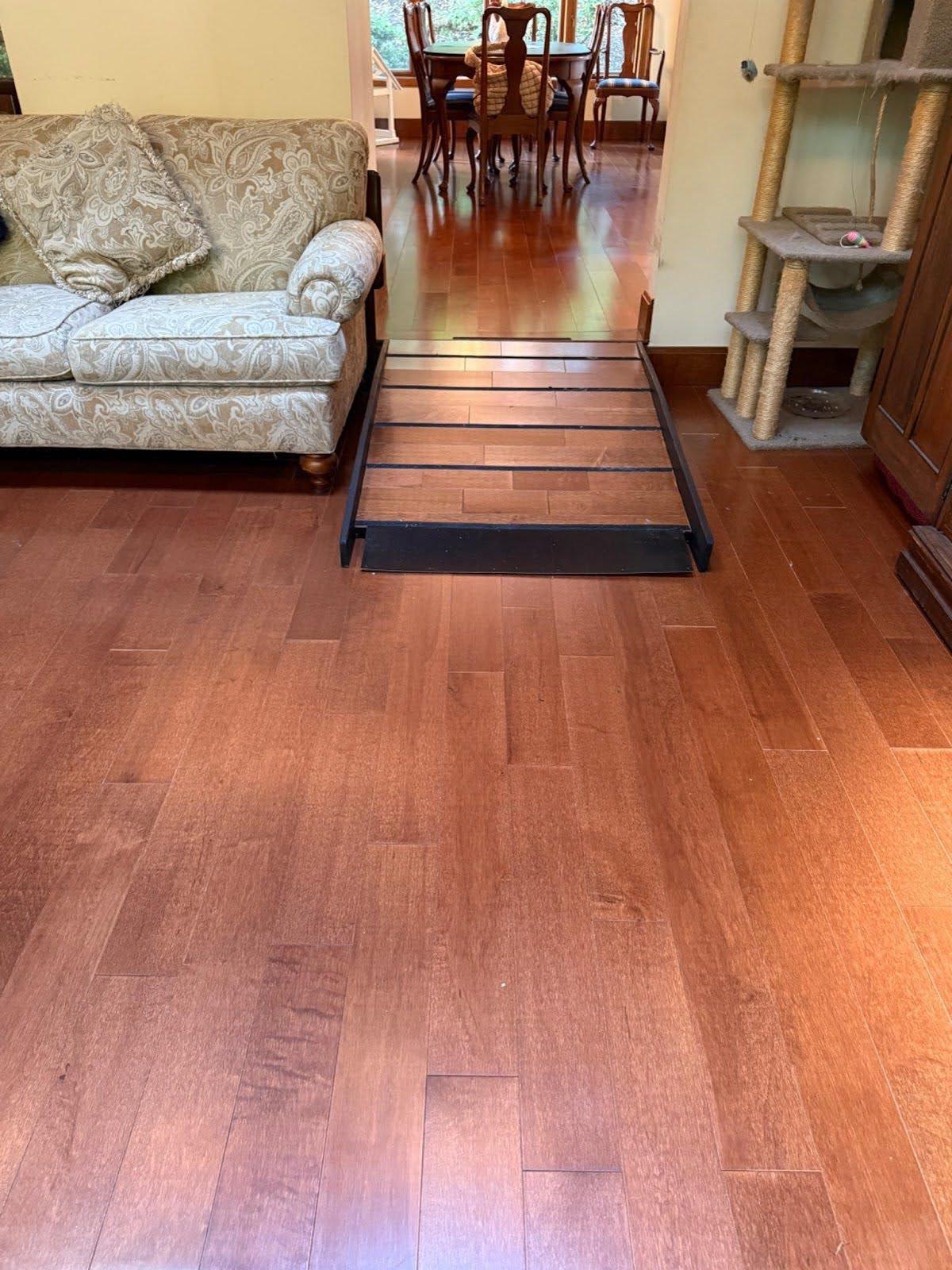
Because the new floor sits on top of the tile, the finished floor will be higher than before. Doors may need trimming. Where the new floor meets other rooms, transition pieces such as reducers create a smooth step between heights. In kitchens, check clearance for appliances like dishwashers. All of this can be measured before you choose a product.
The Bottom Line
Hardwood over tile works when the tile is well bonded and flat, and the hardwood is engineered. With careful prep and the right installation method, you can get the floor you want while leaving the old tile in place. If you’ve set your heart on solid hardwood, plan on removing the tile first.
How Our Cherry Hill Team Can Help
Whether hardwood can go over your tile depends on what’s happening beneath the surface: how well the tile is bonded, how flat the floor is, and how much height your doorways and kitchen can give up. An in-person look is the best way to know whether your tile can stay or should come out.
The local team at Floor Coverings International of Cherry Hill, NJ will look at your existing floor during a Free In-Home Consultation and help you choose hardwood suited to your home and to South Jersey’s humid summers. From prep to installation, our team manages your project from start to finish. Our Mobile Flooring Showroom® brings thousands of options right to your door, so you can compare them in your own lighting, next to your own cabinets and trim.
Schedule your Free In-Home Consultation today. We serve Cherry Hill, Haddonfield, Voorhees, Marlton, Moorestown, and surrounding South Jersey communities.