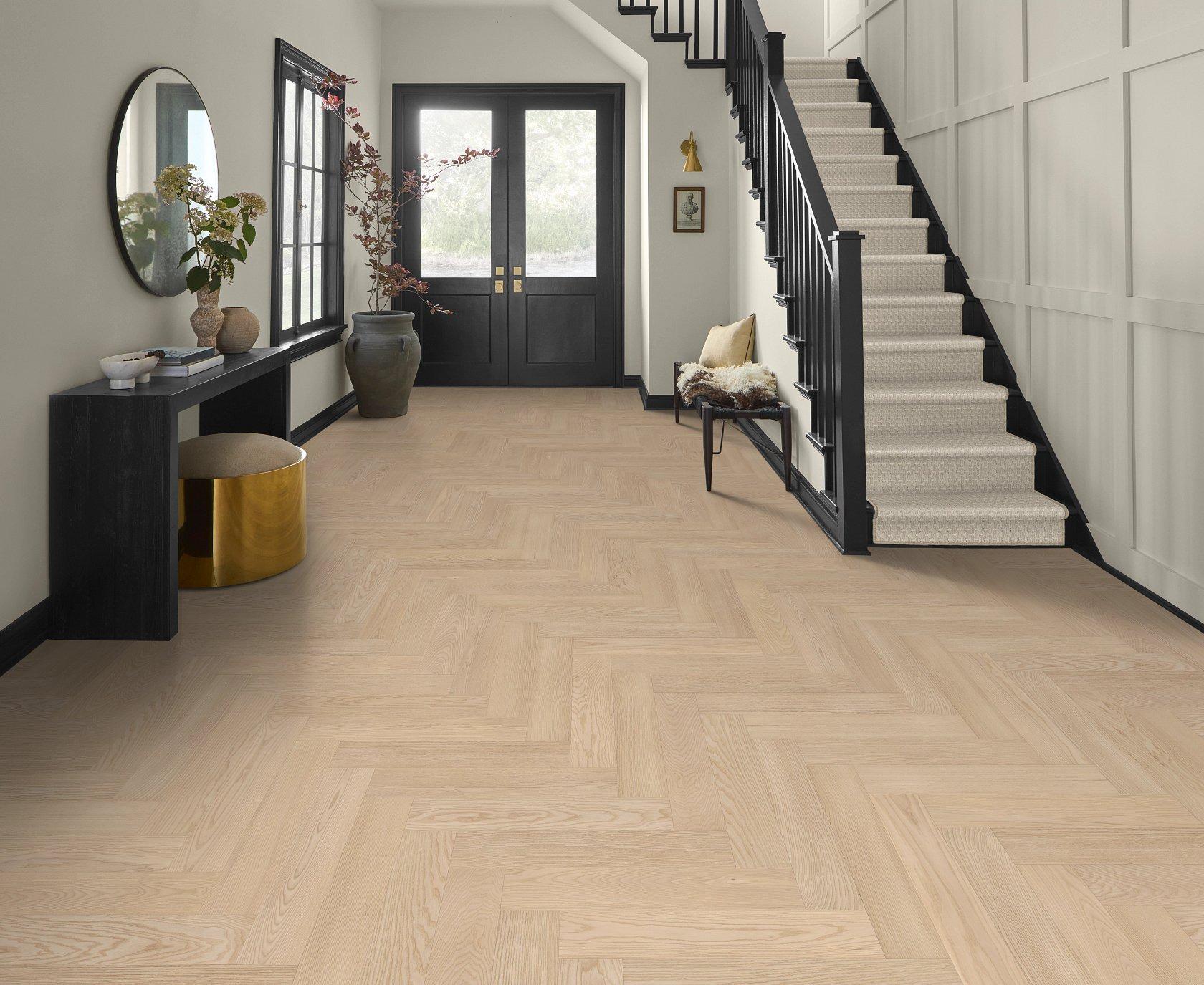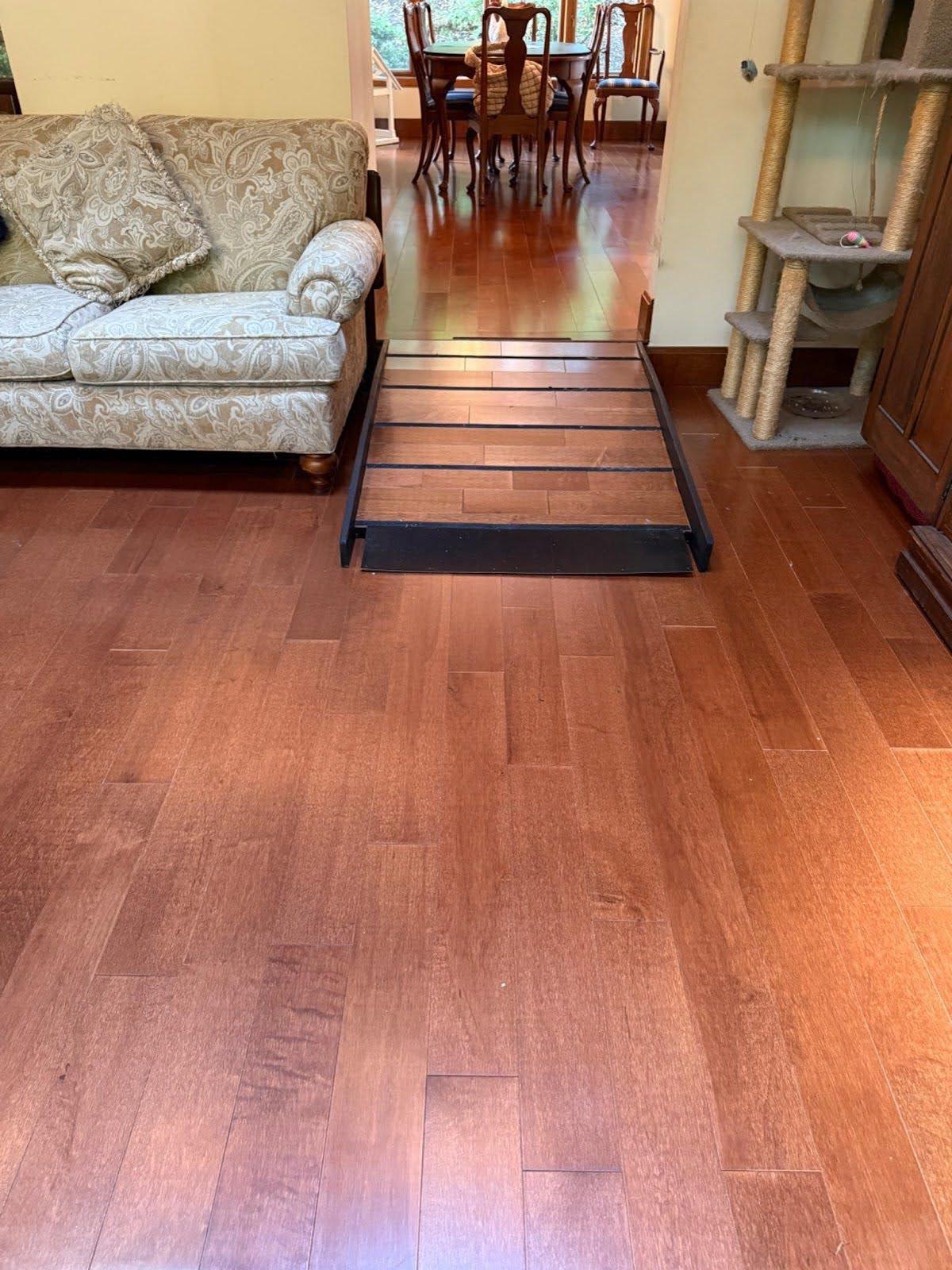
Yes. Hardwood flooring is widely available with visible knots, pronounced grain, and natural color variation. Those characteristics come from the tree itself, and they are a large part of what separates real wood from products engineered to look uniform.
How much variation you end up with depends mostly on the species you choose. Below is what knots and grain actually are, why homeowners look for them, which four species show them most clearly, what you gain by choosing wood with visible character, and what to weigh before you buy.
Key Takeaways
-
Knots and grain are natural features, not defects. They form as the tree grows, and boards milled from real wood carry them in varying degrees.
-
Species drives how much character you see. Hickory and pine lean heavily knotted, walnut shows color variation over knots, and oak falls in between.
-
Visible texture hides everyday wear. Dings and scratches disappear into a knotted surface instead of standing out the way they do on smooth flooring.
-
One sample won't show you the range. Knot size and placement shift from plank to plank, so look at several boards before committing.
-
Care matches any other hardwood floor. Regular sweeping, prompt spill cleanup, and eventual refinishing keep it looking right for decades.
-
Indoor humidity matters in South Jersey. Humid summers and dry heating months make wood expand and contract, so steady indoor conditions help the floor stay put.
What Natural Knots and Grain Mean in a Hardwood Floor
A knot is where a branch once joined the trunk. Grain is the pattern left by the wood fibers as the tree grew. Both show up in the finished board when the mill leaves them in rather than sorting them out.
Flooring that keeps these features looks different from board to board. One plank may have a dark knot near the center and heavy grain lines running its length; the next may be quiet and nearly plain. Manufacturers often group boards into grades that describe how much of this variation to expect, which gives you some control over the look without giving up the natural character.
Why Homeowners Choose Wood With Visible Character
The appeal comes down to what a floor made of real wood can do that a printed surface generally can't.
The Real Thing, Not a Printed Pattern. Knots and irregular grain are evidence the material came from a tree. There is no repeating pattern to notice once the floor is down.
A Farmhouse or Cabin Feel. If you're after a rustic, cottage, or lodge look, heavy knotting and strong grain get you most of the way there before you choose anything else in the room.
A Surface You Can See and Feel. Natural variation reads as texture. Alongside a smooth, uniform floor, a knotted floor has noticeably more depth.
No Two Boards Alike. Because each plank came from a different part of a different tree, the finished floor has a mix that would be difficult to reproduce deliberately.
4 Hardwood Species With Natural Knots and Grain
Species is the biggest factor in how much knotting and grain you see. These four are the ones homeowners ask about most.
Oak: Classic Grain With Smaller Knots
Oak is the default hardwood for good reason — it's hard-wearing, and both red and white oak carry distinctive grain lines with modest knots. It suits traditional and contemporary rooms equally well. Oak is also familiar territory in Cherry Hill, where a lot of the postwar housing stock was built with oak floors that have spent decades under carpet. If you're replacing or matching floors in an older home here, oak is usually the natural starting point.
Hickory: Bold Contrast and Frequent Knots
Hickory is among the harder domestic species and shows sharp contrast between the lighter sapwood and darker heartwood. Combined with frequent knots and strong grain lines, that contrast produces the most dramatic look of the four — rugged and clearly rustic.
Pine: Knotty and Country-Leaning
Pine is technically a softwood, but it remains popular where character matters more than hardness. Pine planks usually carry a lot of knots and an obvious grain pattern, which works well in country-style homes and cabins. It dents more easily than oak or hickory, so it's worth thinking about how much traffic the room sees.
Walnut: Rich Color, Quieter Knots
Walnut runs deep brown with a flowing grain. It typically carries fewer knots than hickory or pine, but its tonal shifts across a single board give it plenty of natural movement. Walnut is the choice when you want something natural and warm without the rustic edge.
What You Gain by Choosing Wood With Natural Character
A Floor That Isn't Repeated Anywhere Else
Mass-produced flooring is designed to look consistent from box to box. Wood with knots and grain goes the other direction — the layout of your particular floor is specific to the boards that went into it.
Built to Last Decades With Care
Durable species like oak and hickory hold up for decades when they're maintained. Knots and grain don't weaken the floor, and in practice the busy surface tends to absorb minor scuffs and scratches that would show plainly on a smoother finish.
A Look That Outlasts Trends
Flooring styles cycle, but natural wood has stayed in favor across a wide range of interiors — country, transitional, and modern rooms included. That makes it a reasonably safe long-term choice if you'd rather not redo the floor when tastes shift.
What to Weigh Before You Buy
How Big the Knots Are and Where They Fall
Knot size and placement change from plank to plank. Some homeowners want large, dark knots front and center; others want them present but subtle. Look at several samples rather than one, since a single board won't show you the full spread.
How Pronounced You Want the Grain
Grain reads differently by species and by cut. Decide early whether you want bold, obvious lines or something quieter, because that choice narrows the species list quickly.
Keeping the Floor Looking Right
Care is the same as for any hardwood floor: sweep or vacuum regularly, wipe up spills promptly, use a cleaner made for hardwood, and plan on refinishing eventually. The one local wrinkle is humidity. South Jersey summers run humid and winter heating dries interiors out, and wood responds to both by expanding and contracting. Keeping indoor humidity reasonably steady year-round is one of the main things you can do to protect a hardwood floor here.
How Our Cherry Hill Team Can Help
Choosing hardwood with knots and grain is mostly a judgment call about appearance, and appearance is hard to judge from a small sample under store lighting. The same oak looks different in a north-facing room than it does in a showroom, and the amount of variation that seems appealing on a single board can read as busy across an entire floor.
Floor Coverings International of Cherry Hill works the other way around. Your local flooring expert brings the samples to you, so you can compare oak against hickory, pine, and walnut in your own rooms, next to your own furniture, in your own light. They can also walk through which species make sense for your traffic levels, what your subfloor will support, and how each option is likely to age in a South Jersey home.
Schedule a free in-home consultation and we'll bring the Mobile Flooring Showroom® to you. We serve Cherry Hill, Haddonfield, Voorhees, Marlton, Moorestown, and surrounding South Jersey communities.