How Wood and Tile Work Together for Beautiful, Functional Spaces
Most homeowners approach a flooring project as a single decision — wood or tile, one surface for the whole house. In a lot of homes, that isn't the best answer. Wood and tile do different jobs well, and using both lets each room get the surface it actually needs.
This article covers where each material tends to perform best, three ways to combine them in a single layout, how to pair colors and finishes so the change reads as intentional, and what a mixed-material floor looks like day-to-day in a Cherry Hill home.
Why Two Materials Often Beat One
It helps to think of a home as a set of different demands rather than one continuous surface. A bedroom asks for warmth and quiet. A mudroom asks for something that shrugs off water and road salt. A single material has to compromise somewhere.
Broadly, rooms fall into two groups: those where comfort and appearance lead the decision, and those where moisture, dirt, and cleanup lead it. Choosing a material for each group — instead of one for all of them — tends to produce a floor that performs better without looking piecemeal, as long as the two selections are coordinated from the start.
Where Each Material Tends to Perform Best
Rooms That Suit Hardwood
-
Living rooms
-
Dining rooms
-
Bedrooms
-
Hallways
-
Home offices
Rooms That Suit Tile
-
Kitchens
-
Bathrooms
-
Laundry rooms
-
Entryways
-
Mudrooms
These aren't strict rules. Plenty of homeowners run tile through a hallway or put wood in a powder room, and both can work! They're a reliable starting point for deciding where the break between materials belongs.
3 Ways to Combine Wood and Tile in One Layout
-
A Patterned Tile Border Between the Two Surfaces. A run of decorative tile can mark the line where one material ends and the other begins. It gives the change a clear purpose, and the same idea works as an accent set into an otherwise uninterrupted wood floor.
-
A Clean Break at the Doorway. Tile through the kitchen and wood in the adjacent living room is one of the most common arrangements, and the doorway between them is the natural place to switch. A transition strip or metal trim finishes the joint. Many of Cherry Hill's postwar homes already have defined openings between the kitchen and the living space, which gives the change somewhere logical to land.
-
A Framed Tile Panel as a Focal Point. Setting a patterned tile section into a wood floor — under a dining table, or centered in a foyer — creates the effect of a permanent area rug. It draws the eye to one spot and makes the mix look like a design decision rather than a necessity.
Pairing Colors, Grout, and Finishes
Start With Undertone, Not Color
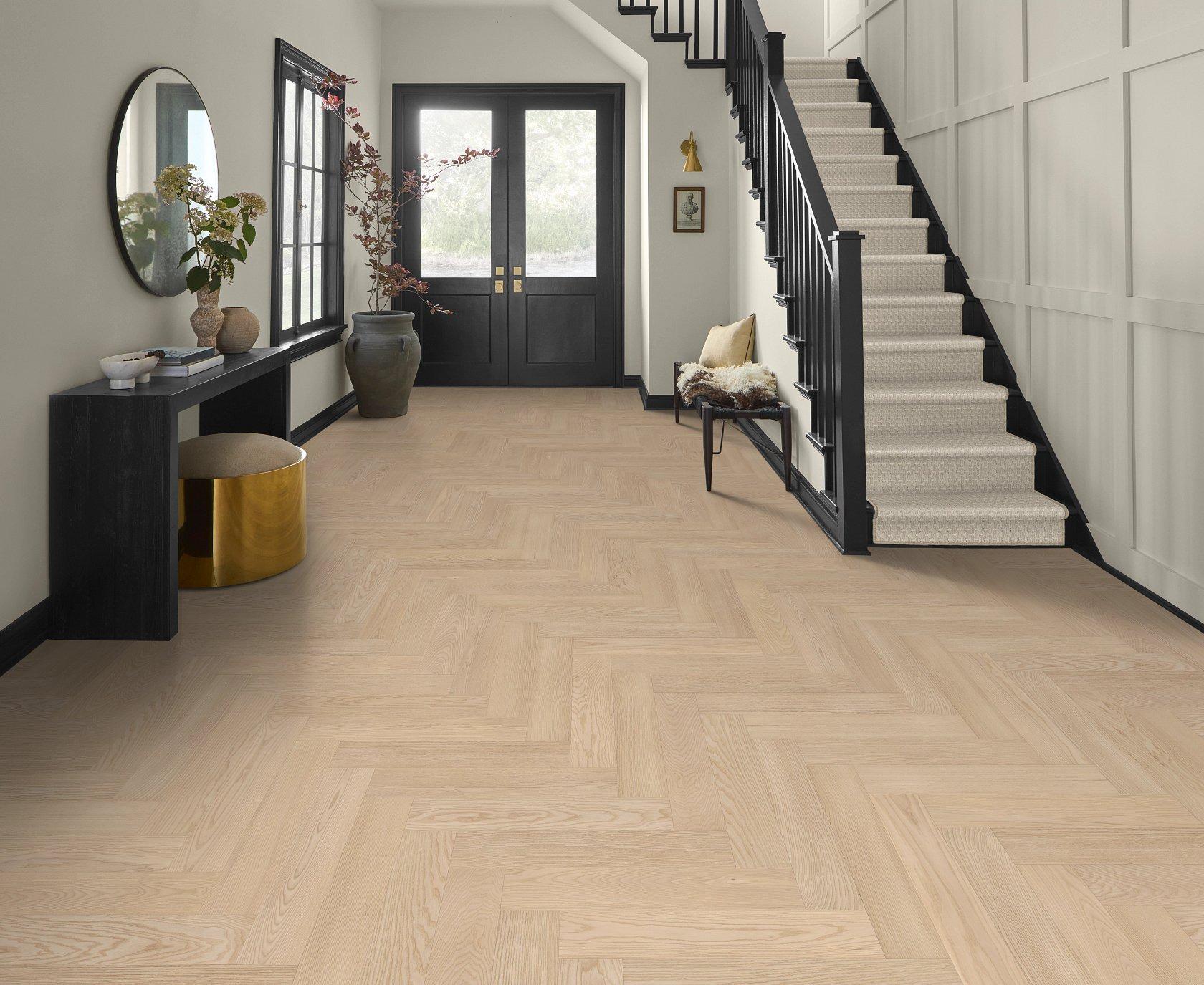
Color pairing does most of the work here. A neutral wood such as white oak gives you room to move in either direction. From there, match the tile to the wood's undertone: cooler wood generally reads well with gray or slate tile, while warmer wood tends to sit better alongside travertine or terracotta. Two materials with clashing undertones will look mismatched even when the colors seem close.
Let Grout and Sheen Do the Quiet Work
Finish choices pull the two surfaces together. A satin wood finish beside a matte tile surface keeps the reflection levels similar, so the eye moves across the change without catching on it. Grout color is the other lever. Grout close to the tile color keeps things calm; high-contrast grout on white tile next to a dark espresso wood floor is a bolder look, and it's worth deciding on deliberately rather than defaulting to it.
How the Combination Holds Up Day to Day
The practical case is straightforward. Tile goes where water is a regular occurrence, and wood goes where warmth and comfort matter more. Tile and grout together stand up to moisture far better than wood does, though how well a tile floor handles water depends on the installation as much as on the tile itself.
Local conditions make the split more useful. Entryways and mudrooms in South Jersey take slush, road salt, and grit through the winter — the kind of wear that shortens the life of a wood floor faster than most homeowners expect. At the same time, humid summers followed by a dry heating season mean wood is going to expand and contract through the year. Neither is a problem, but both are reasons to decide early where the tile stops and the wood starts, and to build the transition with that movement in mind.
How Our Cherry Hill Team Can Help
A mixed-material floor lives or dies on the details — where the break falls, how the two products relate in tone, and how the joint between them is finished. Those decisions are much easier to get right on paper than to revisit once the floor is down.
Floor Coverings International of Cherry Hill helps you plan the layout, select wood and tile that coordinate rather than compete, and execute the transition cleanly. We'll walk the space with you, talk through how each room is actually used, and show you how the pairing looks in place.
Our Mobile Flooring Showroom® brings the samples to you, so you can hold the wood and the tile side by side in your own rooms, under your own lighting, before you commit to anything. We serve Cherry Hill, Haddonfield, Voorhees, Marlton, Moorestown, and surrounding South Jersey communities. Reach out to schedule a free in-home design consultation.