Here in the Cape, restaurant flooring handles a lot, from abrasive sand and saltwater to heavy grease and daily cleaning. Yet, the floors still need to look presentable when guests sit down for dinner. Choosing the wrong material can also cost more than money. It could involve a health inspection, a slip-and-fall claim, or a renovation you didn’t plan for.
In this guide, we’ll break down the best restaurant flooring options for Cape Cod. We’ll cover both the kitchen and dining room to help you find floors that hold up season after season.
If you’re ready to explore reliable commercial flooring for restaurants in Cape Cod, Floor Coverings International of Cape Cod, MA® makes the shopping experience straightforward by bringing samples to your business and explaining the material specs, so you can make an informed decision. Contact us to get started.
Schedule Your Free On-Site Consultation
Why the Front of House and Back of House Need Different Floors
It might seem simpler to choose one flooring for both the front and back of house; however, that would be a mistake. The two spaces have completely different functions and need floors that can handle different levels of wear. For this reason, as we discuss restaurant flooring for Cape Cod, we’ll cover the kitchen and dining room separately.
Restaurant Kitchen Flooring: Extremely Durable, Slip-Resistant Floors
This is a space where you don’t want to cut corners. Commercial kitchen floors need to be slip-resistant despite moisture and grease, durable enough to handle wear from a busy dinner service, and quick and easy to clean. Massachusetts Health codes are specific that the floors need to be smooth, water- and chemical-resistant, durable, and easy to sanitize. This means a failing floor isn’t just a nuisance or an eyesore. It could be a citation waiting to happen.
This leaves a few kitchen restaurant flooring options for Cape Cod eateries, diners, and upscale dining spots.
Epoxy Resin Flooring: The Go-to Choice
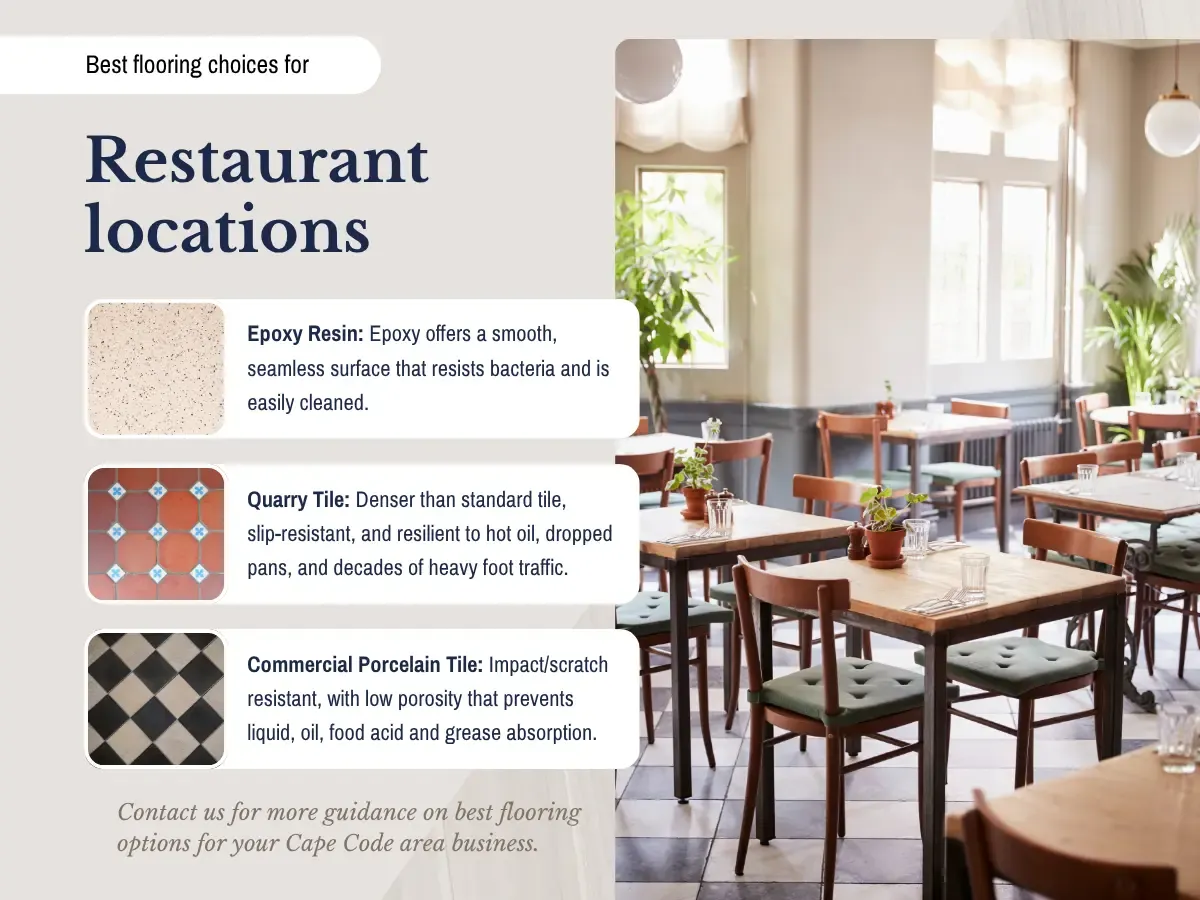
Epoxy has become the default recommendation for kitchen restaurant floors in Cape Cod because it solves two significant problems. First, since epoxy is poured and cured as a single, seamless surface, there are no grout lines or seams to collect bacteria, grease, or food debris. Second, the floors are smooth, non-absorbent, and easily cleanable, which satisfies health code requirements.
In short, epoxy is the ideal commercial kitchen flooring because:
- There are no cracks or edges for bacteria to hide in.
- The floor mops in minutes.
- You can install with slip-resistant aggregate for a safe coefficient of friction, despite a greasy floor.
When you decide to update your restaurant’s kitchen flooring, it’s helpful to plan during a slow period or over a short closure because installation requires 24 to 72 hours of cure time. You’ll also want to expect to recoat every 5 to 10 years.
Quarry Tile: A Solid Alternative
Quarry tile has been the standard commercial kitchen floor for decades, and it’s still a solid choice today. The material is denser than standard tile, naturally slip-resistant, and resilient to handle hot oil, dropped pans, and decades of heavy foot traffic.
This restaurant kitchen flooring has one weak spot, though, which is the grout. If it cracks or wears away, water and food particles can get in. And that’s exactly what health inspectors look for. As long as you maintain the grout, quarry tile can last decades.
Commercial Porcelain Tile: A Classic Option
Porcelain is another reliable option. For back-of-house kitchens and washing stations, you’ll want dense, unglazed porcelain with a textured surface and a high slip resistance rating (the standard for commercial kitchens and food processing areas is R11 or higher).
Commercial-grade porcelain works for kitchens on the Cape because of its:
- Impact and scratch resistance to withstand heavy foot traffic, dropped utensils, and constant wear on a busy kitchen line without cracking or showing wear.
- Water protection with an incredibly low porosity (less than 0.5%) to prevent liquids, oils, food acids, and grease from seeping into the floor.
- Thermal shock tolerance to transition from hot commercial dishwashers to cool ambient temperatures without fracturing.
Similar to quarry tile, grout is still an issue if it’s not properly maintained. Choose epoxy grout for extra durability and moisture resistance, and plan regular grout maintenance to protect the floors over the years.
The Dining Room: Upscale but Durable Floors
Unlike the kitchen, one of the main priorities for the dining room is creating a welcoming atmosphere. That means you want floors that complement the interior and can withstand everything from sandy shoes and spilled drinks to scraping chairs.
Here are a few stylish, comfortable, and sturdy Cape Cod restaurant flooring ideas for the dining room.
Commercial Luxury Vinyl: Your Safest Bet
These floors offer a reliable blend of durability and upscale design. Commercial-grade vinyl flooring for restaurants in Cape Cod has thick, resilient wear layers to hide scuffs and scratches, and high-definition images and embossed textures that realistically resemble natural hardwood and stone flooring.
For many restaurants, LVP is an ideal choice because it’s:
- Stable for our humid coastal climate.
- Waterproof to take regular spills and constant cleaning.
- Wear-resistant to handle guests walking in straight from the beach.
- Styled in convincing wood and stone looks.
Engineered Wood to Add Character
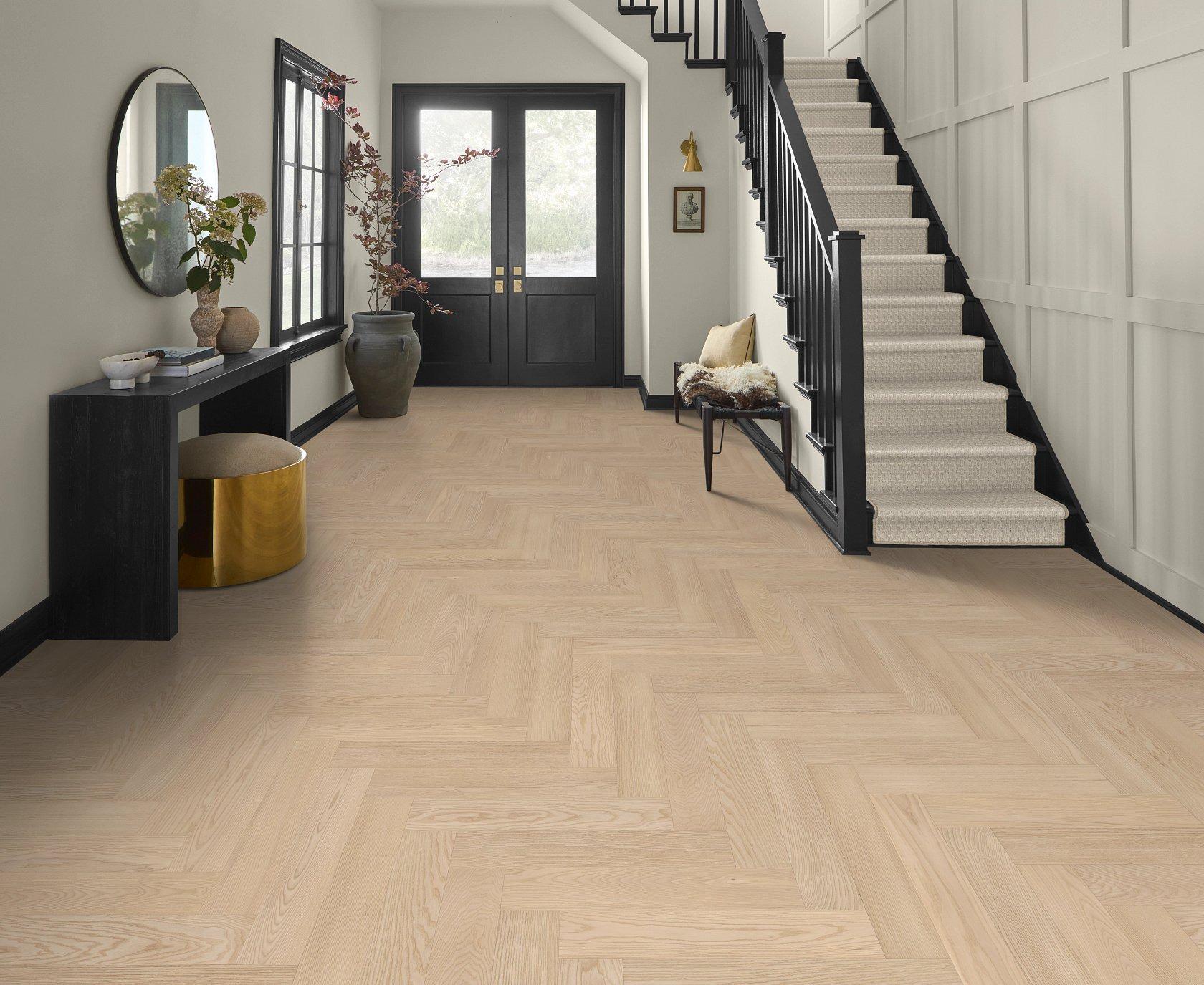
Looking to create more atmosphere in your dining room? Wood floors have a way of bringing rich character to the space with beautifully unique grain patterns and warm wood tones. But here in Cape Cod, traditional solid wood can be a headache. That’s why many restaurant owners turn to sealed engineered options instead. The floors are built with a cross-ply core that minimizes warping from high coastal humidity and salt-heavy air.
Engineered hardwood works well for commercial dining rooms because:
- The floors are more stable than solid wood to handle the coastal climate, spills, and regular cleaning between services.
- It’s treated with UV-cured finishes that are extremely durable, reduce scratching, and protect against sun fading.
- It complements coastal styles with beautiful options like light, white oaks, wide-planks, and matte or wire-brushed finishes.
Local Factors that Impact Your Floors
Before you settle on a material, there are a few Cape Cod specifics worth factoring into your decision.
Moisture: Coastal weather means your floors have to handle high humidity and tracked-in rain from sudden storms – on top of all the moisture your restaurant regularly deals with (spills, mopping, and dishwasher steam). Even the best flooring for restaurants can fail within a year or two without proper moisture preparation. That’s why it’s worth including a proper moisture barrier to protect your investment.
Sand wears floors: Summer guests bring sand in on their shoes, and the fine particles act like sandpaper on LVP and wood surfaces. Large, quality walk-off mats at every entrance will noticeably extend the life of your floor.
Inspectors care about cleanability, not style: Plenty of Massachusetts health violations involve floors. From heavy grime that’s hard to clean and pooling water to broken tiles or deteriorating grout and temporary fixes like cardboard covering slick or damaged flooring. When choosing a material, picture your busiest Friday night and ask whether your staff could get the floor clean in ten minutes.
Ready to Find the Right Floors for Your Cape Cod Restaurant?
There’s not one best flooring for restaurants in Cape Cod. Instead, we recommend choosing different floors for the front of house than for the back. For the kitchen, go for epoxy or quarry tile, prioritizing slip resistance and sanitizing. For the dining room, engineered wood is beautiful if you want rich character and have the budget, and commercial LVP is best for low-maintenance durability.
As a locally owned and operated commercial flooring company, Floor Coverings International of Cape Cod, MA® helps restaurant owners throughout the Cape find and install stunning floors that perform beautifully in busy dining and kitchen spaces.
When you’re ready to start planning your Cape Cod commercial restaurant flooring project, reach out for a free on-site consultation or call (774) 228-5527, and we’ll bring a whole collection of samples and our local expertise with our Mobile Flooring Showroom®.