Hardwood floors are built to last, but even the most durable flooring will eventually show signs of wear. Scratches, water damage, gaps between boards, and everyday aging can leave homeowners wondering whether it's better to repair the problem or start over with a new floor.
The good news is that not every issue requires replacement. In many cases, repairs or refinishing can restore both the appearance and performance of your flooring. The right solution depends on the type of damage, the age of the floor, and how much of the affected area is involved.
If you're unsure which option makes the most sense, Floor Coverings International of Cape Cod, MA® can help you evaluate your existing floors and understand your choices before investing in a long-term solution.
Schedule An In-Home Consultation
Start by Evaluating the Type of Damage
Before deciding whether to repair or replace wood floors, it's helpful to determine whether the damage is cosmetic, isolated, or affecting the floor's overall structure.
Surface scratches, small dents, and normal wear often have very different solutions than widespread moisture damage or movement in the flooring. Older Cape Cod homes may also have hardwood that has been refinished several times, while newer homes may have engineered products with different repair limitations.
Understanding what caused the problem is often the first step toward choosing the most practical solution.
When Repair or Refinishing Makes Sense
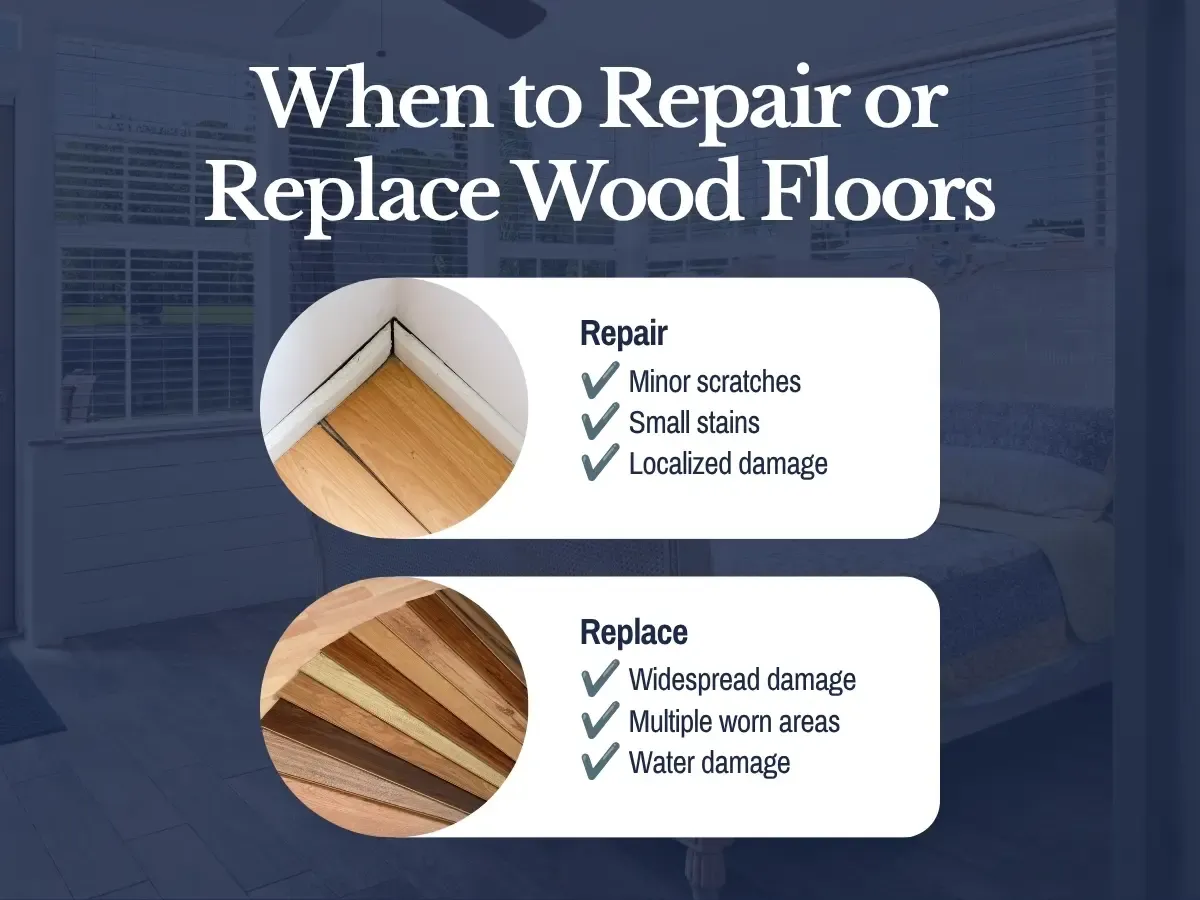
Many common problems can be corrected without replacing the entire floor. If the damage is limited to the surface, refinishing or targeted repairs may restore the floor's appearance while preserving the original material.
For example, homeowners often ask how to repair scratches on wood floor surfaces after moving furniture or years of everyday use. Depending on the depth of the scratch, solutions may range from simple touch-up products to sanding and refinishing the affected area. Knowing how to repair wood floor scratches early can also help prevent minor damage from becoming more noticeable over time.
Similarly, wood flooring scratch repair is often practical when damage is confined to a few boards rather than spread throughout an entire room.
Another question homeowners frequently ask is, how many times can you refinish wood floors? The answer depends on the thickness of the wood and whether it's solid hardwood or engineered flooring, but many solid hardwood floors can be refinished multiple times over their lifespan.
If your floors have simply lost their finish or shine, it may be the time to refinish wood floors rather than replace them altogether.
When Replacing Individual Boards Is the Better Option
Sometimes the damage extends beyond the finish but remains limited to a specific area. In these situations, replacing wood floor boards can restore the floor without the expense of installing new flooring throughout the room.
This approach tends to work well when damage is caused by a dropped object, localized moisture exposure, or a single board that has warped or cracked while the surrounding flooring remains in good condition.
If you're researching gaps in wood flooring repair options, you'll find that the right solution depends on why the boards separated. Seasonal humidity changes may cause temporary movement that doesn't require major repairs, while persistent gaps caused by structural movement or moisture problems deserve a closer evaluation.
Signs It May Be Time for Replacement
Not every floor can or should be repaired. If you're wondering how to repair damaged wood floor areas with extensive deterioration, replacement may be the better long-term solution.
Water damage from leaks, appliance failures, or flooding often leaves homeowners wondering how to repair a water damaged wood floor. Minor moisture damage can sometimes be repaired, but widespread staining, cupping, mold, or structural deterioration may require removing affected sections or replacing the floor entirely.
Before deciding how to repair buckled wood floor damage, it's important to determine what caused the boards to lift. If the moisture source has been resolved quickly, some localized repairs may be possible.
When repair costs continue to add up or multiple issues occur at once, it may make more sense to invest in complete wood flooring replacement.
Comparing the Costs
For many homeowners, the wood floor repair cost is an important factor when deciding between repair and replacement.
Costs vary depending on the extent of the damage, the species of wood, labor requirements, and whether the project involves refinishing, replacing boards, or correcting moisture-related issues.
Homeowners also frequently ask about the average cost to replace wood floors. While replacement generally costs more upfront than repairs, it may offer better long-term value if the existing floor has widespread damage or has already reached the end of its useful life.
Rather than focusing only on the initial price, it's worth comparing the expected lifespan, future maintenance needs, and overall condition of your flooring.
FAQ: Common Questions About Wood Floor Repairs
How do I know whether to repair or replace old wood floors?
The answer is influenced by the amount of damage, the condition of the subfloor, previous refinishing history, and whether the problems are isolated or widespread. A professional evaluation can help identify the most cost-effective option.
How much does it cost to replace wood floors?
The final price depends on the size of the project, the flooring material you select, removal of existing flooring, and installation requirements. An in-home consultation is the best way to receive an accurate estimate.
What is the best way to approach wooden floor repair?
The best approach depends on the cause and extent of the damage. Cosmetic issues may require only refinishing, while deeper structural problems sometimes involve replacing individual boards or larger sections of flooring.
How can I learn how to repair wooden floors?
Many minor surface issues can be addressed with manufacturer-approved repair products, while more extensive damage is often best evaluated by a flooring professional before repairs begin.
When is the best time of year to refinish wood floors?
Moderate indoor humidity levels generally produce the best results because hardwood naturally expands and contracts with seasonal moisture changes. Your flooring professional can recommend the ideal timing based on your home's conditions.
Get Expert Guidance Before You Decide
Choosing between repair and replacement isn't always straightforward. An experienced evaluation can help you understand whether your floors can be restored or whether replacement will provide better long-term value.
If you're unsure which direction to take, Floor Coverings International of Cape Cod, MA® brings our Mobile Flooring Showroom® directly to your home. Your Design Associate will assess the condition of your existing floors, discuss practical repair and replacement options, and help you compare products if new flooring makes the most sense.
You'll receive expert guidance, a free, down-to-the-penny quote, and recommendations based on your home, your budget, and your long-term plans, not a one-size-fits-all solution.
Call (774) 228-5527 or schedule your free in-home consultation today.