Flooring inspiration is easy to find, but a floor that catches your eye in someone else's home may look entirely different in yours. Room proportions, natural light, cabinetry, trim, existing wood tones, and adjoining floors all affect the finished result.
For homeowners, choosing the right flooring often starts with paying attention to what's already working in the house. Floor Coverings International of KC South KS® brings samples to you, making it easier to look beyond a single color or pattern and consider how a new floor relates to the rooms around it.
Schedule An In-Home Consultation
Notice the Details You Want to Keep
You don't have to know the architectural name for your house to recognize its defining features. Maybe the woodwork is something you want to preserve, or built-in cabinetry establishes a strong color direction. Existing hardwood may already connect several rooms. In another home, simple trim and open sightlines may leave more room to introduce a new flooring look.
Looking at home architecture in Overland Park, KS, through these individual details is often more useful than trying to follow a design formula. Take inventory of the permanent or hard-to-change elements you like before introducing another major surface.
That doesn't mean everything has to match. You may decide to coordinate closely with an existing wood tone or introduce a complementary color, grain, or texture instead.
Hardwood Can Work With the Character or Against Expectations
Hardwood offers plenty of room for interpretation. Species, natural variation, plank proportions, stain or color, and finish all influence how prominent the floor becomes within a room.
If your home already has substantial woodwork, look at flooring samples alongside it rather than evaluating the new wood by itself. You may prefer a quieter floor that lets existing details stand out, or a more noticeable grain and variation that gives the room additional character.
Continuity matters, too. Existing hardwood can provide a useful reference point, but you don't necessarily need to imitate the home's original era. A newer hardwood look can still feel intentional when its undertones and proportions relate well to the features you're keeping.
Carpet Changes More Than the Surface Underfoot
Carpet affects a room in ways that have little to do with architectural labels. Its softness can make a bedroom or living area feel more relaxed, while its sound-absorbing qualities can change the experience of a space compared with hard flooring.
Color and texture also influence how much attention the floor commands. A low-key neutral can sit quietly beneath stronger furniture or architectural details. More visible texture can become part of the room's design without relying on a bold color.
Think about where you want a change in feeling between rooms. A deliberate transition from hard flooring in shared areas to carpet in a bedroom, for example, can define the spaces without requiring them to look disconnected.
Wood Looks Don't Have to Come From Hardwood
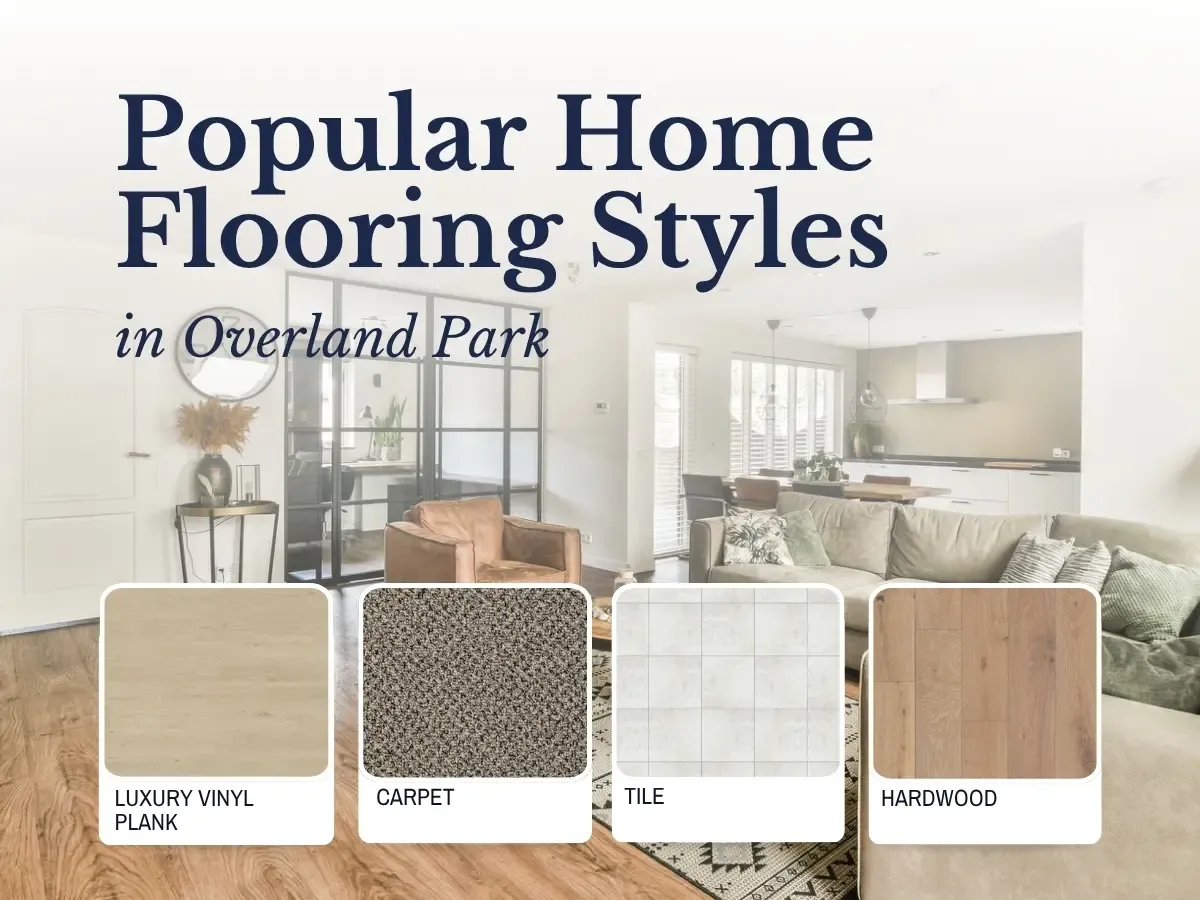
Luxury vinyl and laminate give homeowners additional ways to introduce wood-inspired visuals, but the two categories shouldn't be treated as interchangeable. Construction, maintenance requirements, moisture performance, and other characteristics depend on the flooring category and specific product.
From a design standpoint, pay attention to more than whether a sample resembles oak, walnut, or another wood. Color variation, plank appearance, pattern, and the relationship to nearby materials can have just as much impact on the room.
These floors don't belong to one particular type or age of house. Their suitability depends on the product, where it will be installed, the performance you need, and whether its appearance makes sense alongside the rest of the home.
Your House's Era Isn't a Decorating Rulebook
Searching Overland Park house styles may give you ideas about your home's architecture, but identifying a style doesn't dictate which flooring you should install. You can preserve the character that's already there without recreating every design choice associated with the period when the house was built.
Some homeowners want an update that feels closely connected to existing details. Others prefer a cleaner contrast between older architectural elements and newer finishes.
Instead of asking whether a floor is historically “correct,” look at what it does in the room. Does it compete with the woodwork? Does its pattern overwhelm a smaller space? Does it make sense next to the flooring that will remain? Those questions are more useful than a rigid style rule.
Look Beyond the Room You're Updating
A flooring decision can change how neighboring rooms relate to one another. This is especially noticeable when spaces share long sightlines or when the flooring transition is visible from several areas of the house.
Tile can introduce another visual element when it meets hardwood, carpet, or a wood-look floor. Its size, shape, color, and pattern can affect how noticeable that transition feels, so it helps to view the two surfaces together rather than choosing the tile in isolation.
Existing hardwood deserves particular attention. Adding another wood-look surface nearby introduces a second grain and color, and those elements don't always need to match. Viewing the two surfaces side by side can help you judge how their colors and grain patterns interact.
Across the range of South Kansas City home styles, homeowners may encounter open layouts, divided rooms, existing hard surfaces, carpeted spaces, and any number of finish combinations. Rather than assuming continuous flooring is always preferable, decide where continuity benefits the house and where a material change makes sense for how the next room is used.
Popular Doesn't Have to Mean Trendy
There's nothing wrong with noticing current flooring trends. They can introduce you to colors, plank formats, textures, or patterns you hadn't previously considered. The problem comes when popularity becomes the only reason for selecting a floor.
Permanent finishes provide a useful reality check. Ask whether you like the flooring with your cabinetry and trim, how much variation you want to see across a larger area, and whether another planned renovation could change the surrounding colors or materials.
Practical considerations still count, even in a design-focused decision. Maintenance, traffic, room use, product performance, and budget can eliminate a beautiful floor that isn't a sensible choice for the space. The floor still needs to make sense for the room and the people using it every day.
Ready to See What Flooring Works With the Home You Have?
Our Mobile Flooring Showroom® gives you the opportunity to judge flooring in context. Instead of relying on a sample viewed away from your home, you can see how its color, grain, texture, and scale relate to the woodwork, cabinetry, existing flooring, and proportions of your rooms.
Your Design Associate can help you compare those visual relationships alongside practical considerations such as room use, maintenance preferences, and budget. Once you've identified the flooring you want, Floor Coverings International of KC South KS® can take professional measurements and provide a free, down-to-the-penny quote for your project.
Choose an update that works with the features you want to keep while giving the home the change you're looking for. Call (913) 777-8323 or schedule your free in-home consultation today.