If you’ve been dreaming of warm, beautiful wood floors in your West Florida Panhandle home, you’ve likely pinned a dozen photos, imagined them in your living room, and then talked yourself out of it because everything you read says Florida is no place for wood.
We get it. Between the humidity, hurricanes, and sandy feet, it’s easy to believe your dream floor is off the table. But what if we told you it’s not? Wood floors and Florida can absolutely coexist. The key is understanding why some wood floors don’t work here, and then choosing the right construction, or the right wood-look alternative, for your home and lifestyle.
Below, we’ll discuss why hardwood is controversial in Florida and how to find the best wood floors for Florida homes. We’ll also cover some great alternative wood flooring ideas, if they’re a better fit for your lifestyle.
Want to compare options in person? Floor Coverings International of West Florida Panhandle, FL® offers one-on-one consultations in your home, where we’ll learn your goals, walk through the space with you, and offer samples you can see and feel right in your own space.
Schedule An In-Home Consultation
Why Do Some Claim You Can’t Keep Wood Floors in Florida Homes?
The most common reason people warn against wood floors in Florida comes down to our notorious humidity. Wood is a natural material that absorbs and releases moisture from the air, causing it to expand and contract with seasonal changes.
In the Panhandle, our homes shift from air-conditioned dryness to sauna-level stickiness, often within the same week. When solid hardwood takes on too much moisture, it cups (edges curl up) or crowns (center rises).
Many homeowners have watched a beautiful floor warp after one humid summer and, understandably, determined it’s too risky to install a wood floor in Florida.
The concern is real, but it doesn’t mean all hardwood is out of the question. It’s important to find floors with the right construction for your home’s foundation. Let’s talk about what that means.
Why Your Foundation Matters
Most Florida homes are built on concrete slabs rather than raised wood subfloors. This becomes a challenge for hardwood because concrete allows ground moisture to seep up and potentially damage floors from underneath. Since solid hardwood is one uniform plank, it moves as a single unit and cups or buckles.
But not every wood floor has the same severe reaction. Engineered hardwood’s cross-layered core was specifically designed to handle more moisture contact without warping. But the old warning persists because people rarely distinguish between solid and engineered wood.
What Makes Engineered Hardwood Different?
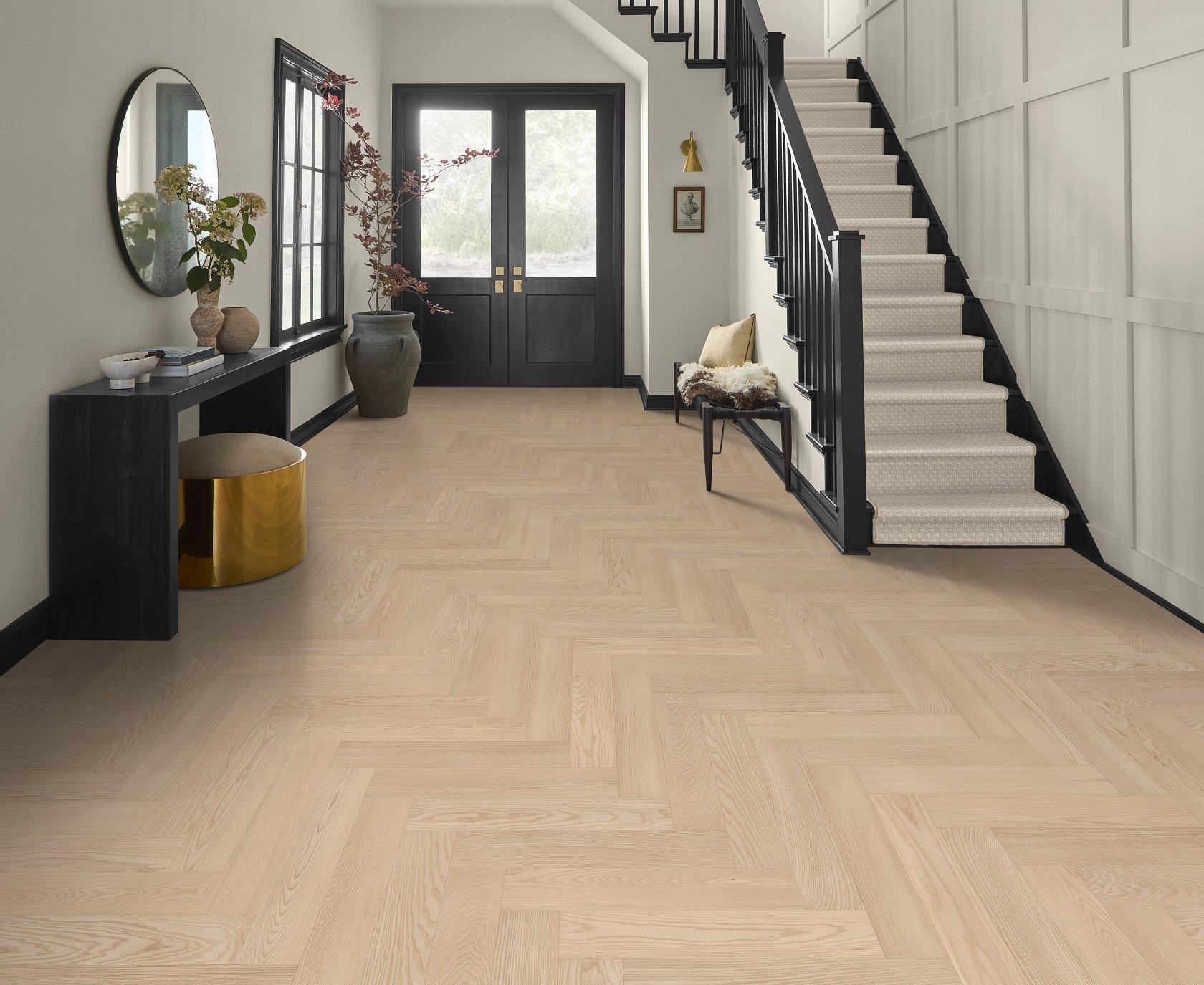
Engineered hardwood is built with a genuine wood top layer (also called a veneer), and when installed, it looks and feels nearly indistinguishable from solid wood. The difference lies in the core. Instead of being one solid board of wood, engineered planks have a cross-layered plywood core that pulls the wood in opposite directions as it expands or contracts, which keeps the surface flat.
When you’re looking for the best wood flooring for Florida homes, engineered hardwood is our answer. Here’s what we look for when we recommend a floor:
- Wood species: The surface wood you choose affects more than how the floors look. Harder or denser species, like red and white oak, maple, or hickory, can help resist surface scuffs and scratches.
- Core type: Engineered floors are available in a variety of core types. We recommend cross-ply plywood cores for the best dimensional stability. The core is made of several layers of paper-thin wood veneers layered in different directions, so as the grain absorbs or releases moisture, the wood is less likely to warp.
- Water-resistant and UV-stabilized finishes: Choosing wood floors with specialized finishes adds another layer of protection, minimizing warping or fading.
- Thick wear layers: Choose a veneer of 3mm or thicker if you want the option to refinish down the road. This small detail can make a big difference in longevity.
Since engineered flooring can be installed with glue-down adhesives or click-lock floating systems, it’s more compatible with installation over a concrete slab than solid wood. However, uncontrolled moisture is still an issue, which is why a good local installer, like our West Florida Panhandle team, will test the concrete moisture and include proper moisture barriers before installation.
Wood Flooring Alternatives for Worry-Free Floors
Maybe your lifestyle doesn’t leave room for climate awareness. This could be a vacation rental that sits empty in September or regular sandy feet, wet dogs, and pool parties. For these types of homes, choosing waterproof wood floor alternatives makes more sense than risking real wood.
Wood floors, even engineered ones, need consistent indoor conditions, ideally with humidity kept between 30% and 50%. Even if you keep the AC cycling when the house is closed up, humidity can drift outside the range. Engineered wood can handle more fluctuation than solid wood, but when there’s no one there to adjust the thermostat or watch for problems, a wood floor alternative, like luxury vinyl plank (LVP), offers more peace of mind.
LVP is an alternative to wood floors that delivers a realistic hardwood look. The floors have embossed textures perfectly aligned with high-definition images and beveled edges that add a touch of realism.
For the best waterproof protection, we recommend SPC vinyl, which has a core that blends limestone and PVC to create a durable, waterproof floor that handles everything from dripping suits on pool days to humidity from sudden storms. This also means you won’t spend hurricane season worrying about humidity levels or come home from vacation wondering if the house feels too damp.
Will it refinish like real wood? No. But it delivers the look and total peace of mind at a fraction of the cost. We’re not talking anyone out of wood, but we’ll match you with the right floor for your lifestyle.
Ready to See and Feel Wood Options in Your Own Home?
The warnings you’ve heard about wood floors in Florida humidity come from a real place. Wood does react to high humidity, concrete moisture, and other water spills. But that doesn’t mean all hardwood is out of the question. It means the type of wood flooring, how it’s installed, and how it’s cared for matters.
Engineered wood is equipped with a durable, cross-ply core that handles moisture and slab installation better than solid wood. Of course, if your home sits empty for long periods or your lifestyle includes a lot of water, an alternative wood flooring, like LVP, might be a better fit.
Our team at Floor Coverings International of West Florida Panhandle, FL® walks you through every step. We’ll help you assess the condition of your subfloor, test slab moisture, and recommend the best type of wood flooring for your Florida home.
When you’re ready to explore the options with a comfortable in-home floor selection, book your free in-home consultation or call (850) 204-9291, and we’ll bring the samples, local insight, and professional recommendations for your Florida wood flooring project.