A Climate-Resilient Hardwood Flooring Solution for Tri-Valley Homes
Summers in the Tri-Valley are hot and dry, while winter brings cooler temperatures and more rain. You might not give those changes much thought when shopping for flooring, but wood responds to the moisture, even when it’s in the air. And some types of wood flooring handle moisture and seasonal changes better than others.
If you're between solid wood floors and engineered hardwood flooring in the East Bay Area, there's a good reason to take a closer look at how it's made. Engineered hardwood has a real wood surface, but its layered construction helps it stay more stable as humidity levels change.
Not sure if engineered hardwood is the right choice? That's something we can help you figure out at Floor Coverings International of East Bay, CA®. We’ll bring hundreds of hardwood and engineered wood flooring samples directly to your home and help you figure out which option is best for your lifestyle.
Schedule An In-Home Consultation
What Is Engineered Hardwood Flooring?
Homeowners appreciate engineered hardwood in the Greater East Bay Area because it offers a real wood flooring construction designed with multiple layers. Unlike solid hardwood, which is milled from a single piece of wood, engineered wood planks feature a genuine hardwood surface bonded to a layered core.
Wood naturally expands and contracts as moisture conditions change. The layered structure of engineered hardwood flooring that East Bay homeowners have loved for years helps limit some of that movement, which can be especially helpful in homes where indoor humidity isn't always consistent, spills are a constant, and moisture is no stranger.
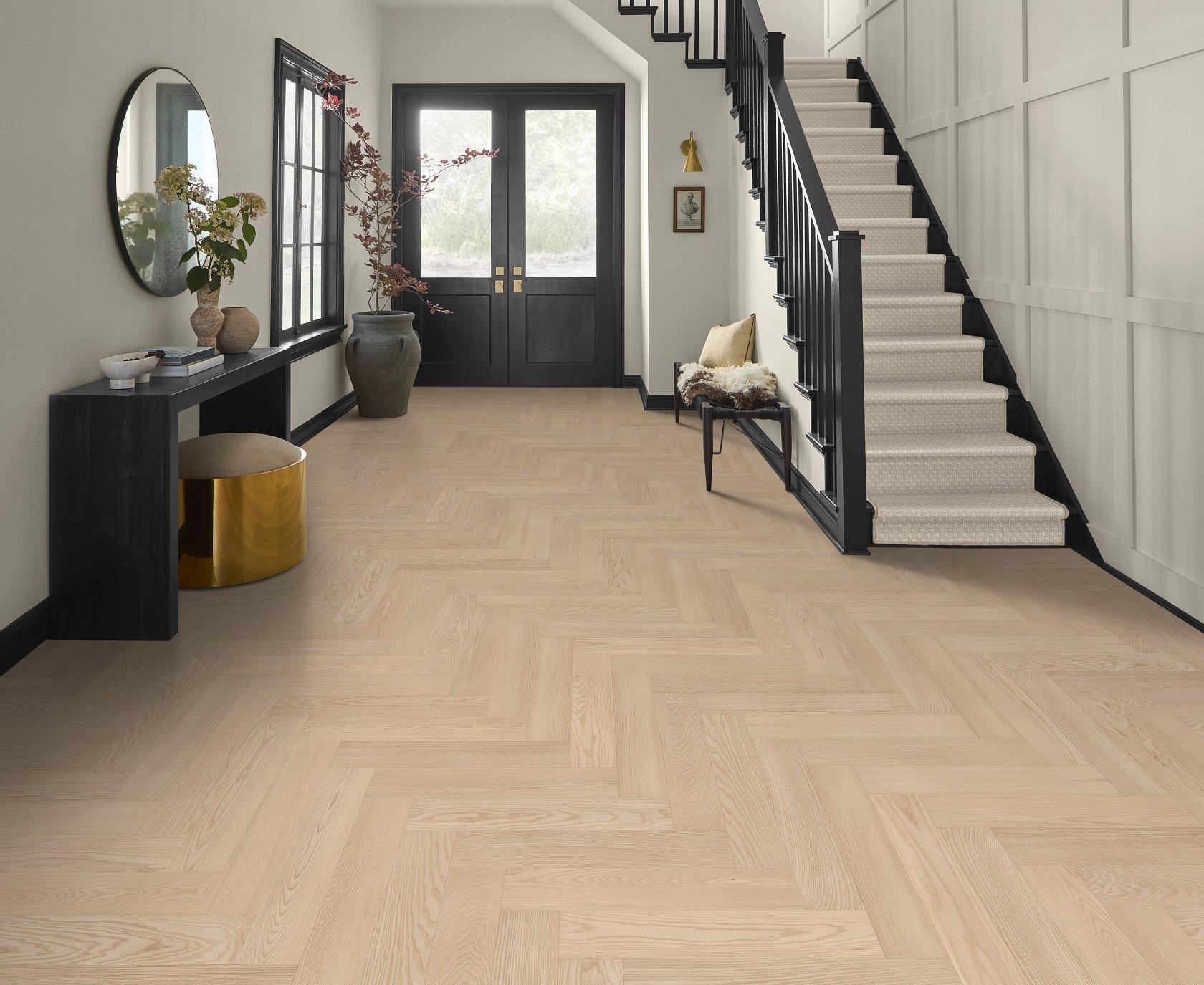
You don't have to sacrifice the look of real hardwood to get that added stability. Engineered wood floors in the Tri Valley area come in a wide range of wood species, colors, plank widths, and finishes, from traditional oak looks to more contemporary styles. With engineered hardwood you even get more style options that what traditional solid hardwood can typically offer.
Engineered vs. Solid Hardwood: Why Construction Matters
What is the difference between engineered and solid hardwood flooring? Both give you real wood underfoot, but they're built differently, and that can affect where and how they're installed.
Solid hardwood consists of one piece of wood throughout the plank. It can often be sanded and refinished multiple times, depending on its thickness and condition. The tradeoff is that it tends to expand and contract more as humidity changes.
Engineered hardwood floors use a hardwood surface over a layered core. The construction of engineered wood flooring generally provides better dimensional stability, although some products handle changing conditions better than others. Some engineered floors can also be sanded and refinished, but that depends on how thick the top layer of real wood is.
So, is engineered hardwood always the better choice? Not necessarily. It depends on where the flooring is going, the conditions in your home, and what matters most to you.
Engineered Hardwood FAQs
How Does Engineered Hardwood Handle the Tri-Valley Climate?
Homes in Pleasanton, Dublin, Livermore, and surrounding communities see plenty of temperature changes throughout the year. Indoor conditions also vary depending on how often you run the heat or air conditioning and how you manage humidity indoors.
Even with its added stability, engineered hardwood still needs the right indoor conditions. Very dry conditions can lead to gaps between planks, while too much moisture can cause swelling or warping. Keeping indoor temperature and humidity within the manufacturer's recommended ranges helps protect your investment.
When comparing engineered hardwood flooring options for East Bay Area homes, pay attention to the manufacturer's recommendations. Not every product responds to changing conditions in the same way.
Is Engineered Hardwood Flooring Waterproof?
The short answer is no. Engineered hardwood may handle humidity changes and the occasional spill better than solid hardwood, but it is not waterproof. Some products have finishes that help protect against routine moisture present in spaces like kitchens and bathrooms. However, water left sitting on the floor can still cause damage, especially if it reaches the seams or core.
For kitchens, entryways, bathrooms, and laundry rooms, check how much moisture the product is designed to handle. Standing water should be cleaned up promptly, and engineered hardwood generally isn't appropriate for areas with persistent moisture problems, like flooding-prone basements.
Does Engineered Hardwood Need to Acclimate?
Yes, it’s almost always recommended to acclimate engineered wood floors, but in low humidity spaces it may not be needed. Some manufacturers require engineered hardwood spend time in the home before installation, while others provide different instructions. The important thing is making sure both the flooring and the room meet the manufacturer's requirements. Leaving a few boxes in the house for a couple of days isn't a substitute for checking those conditions.
Skilled Engineered Wood Floor Installation Throughout the East Bay Area
Professional installers may need to evaluate several factors before installing your engineered hardwood, including:
- Indoor conditions: Temperature and relative humidity should fall within the manufacturer's specified ranges.
- Subfloor moisture: Wood and concrete subfloors may require testing to confirm acceptable moisture levels.
- Product instructions: Acclimation, storage, and installation requirements vary among manufacturers.
- Installation method: Nail-down, glue-down, and floating installations may have different preparation requirements.
Manufacturer guidelines for most engineered wood flooring in East Bay recommend a short acclimation period before installation. However, seasonal humidity changes and San Francisco Bay-influenced weather patterns can impact how engineered wood flooring expands and contracts over time. Our skilled contractors make sure to carefully assess every detail for a lasting installation in your home.
Choosing Engineered Hardwood for Your Home
Finding the best engineered hardwood flooring in Pleasanton, CA, or the East Bay area isn't simply a matter of choosing the thickest plank or the most expensive wood species. You'll also want to look at how the flooring is made, how it's finished, and what kind of care it needs.
Think about where the flooring will be installed and how the space is used. Homeowners in Berkeley and Alameda often gravitate toward wider-plank engineered hardwood with stable core construction because of the San Francisco Bay humidity fluctuations throughout the year. Meanwhile, families in Ruby Hill and Vintage Hills in Pleasanton prefer durable and scratch-resistant finishes for active households, pets, and the Bay Area’s warmer inland climate.
If you're researching eco-friendly flooring in the East Bay Area, there are a few other things worth checking. Look for information about responsible wood sourcing, third-party certifications, indoor air quality, and how long the product is expected to last. These details can vary quite a bit from one product to another.
You don't have to sort through all those specifications on your own. A flooring professional can explain the differences and help you decide which features are worth prioritizing. Our knowledgeable Design Associate will be happy to answer your questions, elevate your space, and provide expert insight during your free in-home consultation. That way, you can make a confident choice for your home.
Explore Engineered Hardwood in Your East Bay Home
A wood sample that looks perfect online or in a showroom might look completely different next to your kitchen cabinets or living room furniture. When you take into account the East Bay’s abundant sunshine, the engineered wood flooring you have in your living room can look completely different from its appearance under showroom lights. That's why seeing flooring in your own space can make such a difference.
At Floor Coverings International of East Bay, CA®, our Mobile Flooring Showroom® brings flooring samples directly to your door. Your Design Associate can walk you through the options, answer questions about installation, and help you find a style that feels right for your home.
From new engineered hardwood flooring in Pleasanton, CA, to wood flooring replacements in the San Ramon, CA, we’ll take professional measurements and provide a free down-to-the-penny quote, so you know exactly what you’ll be getting. Whether you're updating one room or several, we'll help you understand your choices before you commit.
Call (925) 426-8800 today or schedule your free in-home consultation and start exploring engineered hardwood flooring options for your Tri-Valley home.