You can find tile everywhere in Arizona. Nearly every home in North Phoenix has it in the entryway, kitchen, and bathroom – sometimes the entire house. And there’s a reason homeowners keep gravitating toward the material. It’s remarkably resilient to handle high heat, UV-fading, heavy monsoons, and everything else our desert climate brings.
Whether you’re building an addition or repairing damaged floors, knowing what you have helps with a seamless repair or transition. Keep reading to learn what tiles are made of and how to tell if tile is ceramic or porcelain.
Our team at Floor Coverings International of North Phoenix, AZ® helps homeowners throughout the North Phoenix area repair and install beautiful tile floors. When you’re ready to start your project, call us.
Schedule An In-Home Consultation
Built for Desert Climates
Tile has been the default flooring in Arizona for decades, and it’s not just because of tradition or style. The right tile handles extreme heat, intense sun exposure, and sudden humidity spikes without issue. Let’s break down why tile works so well for Arizona homes:
- Naturally cooling. This sparks the question for many: Are tile floors cooler than ambient temperature? The answer is no, not exactly. The reason tile floor temperature feels cool on a hot summer day is because of the material’s thermal conductivity. It absorbs heat quickly from your skin, and your brain interprets the heat loss as cooling.
- Long-lasting durability. The floors can handle everything from pet scuffs to abrasive sand and grit without showing wear. With the right care, the durability of tile flooring can last for decades.
- UV resistance. Tile’s color comes from fired clay and glaze rather than surface dyes or treatments, so intense Arizona sun won’t bleach or fade it over time. West- and south-facing rooms that take the brunt of afternoon sun hold their appearance for decades, unlike carpet, vinyl, or hardwood that degrade under UV exposure.
- Stable through heat and monsoon humidity. From high heat to sudden moisture, tile is sturdy and won’t expand or warp like other floors.
- Waterproof. Tile is one of the most reliable waterproof floors for Phoenix bathrooms, laundry rooms, and entryways.
What Are Tiles Made Of?
Both porcelain and ceramic floor tile in Phoenix, Arizona, and the surrounding area, start with clay; however, what happens after – from refining and firing to glazing – makes the material into completely different floorings.
Porcelain tile uses finer, more refined clay mixed with quartz and feldspar. It’s fired at higher temperatures, typically between 2,200 and 2,500 degrees Fahrenheit, which vitrifies the material to be incredibly dense and nearly impervious to water.
Ceramic tile uses coarser clay and fires at lower temperatures, usually around 1,800 degrees. It’s less dense and more absorbent, which is why ceramic almost always comes with a glaze. The liquid glass coating is applied before firing and gives ceramic its stain resistance and color.
The difference between the two tile types matters in Arizona because of monsoon season. Porcelain is often considered more versatile for floor tiles because its dense structure is waterproof through the entire tile. Ceramic, on the other hand, relies on its glaze for water resistance, and if the glaze chips, the exposed clay can absorb water.
Popular Tile Styles in Arizona
Some Southwest floor tile styles lean into the region’s warmth and texture, while others keep things clean and contemporary. These are the styles Phoenix homeowners reach for again and again:
- Modern large-format tile for clean, seamless styles that fit contemporary Phoenix homes. With fewer grout lines, large tile flooring for homes in Arizona makes open floor plans feel wider.
- Wood-look porcelain for the warmth and character of hardwood without the warping, fading, and moisture damage you would get with real wood in Arizona.
- Earthy and neutral tones with warm beiges, tans, and hues that reflect the desert landscape. Many homeowners in the area choose matte finishes that hide dust and natural stone and limestone looks that complement desert-modern and Southwestern interiors.
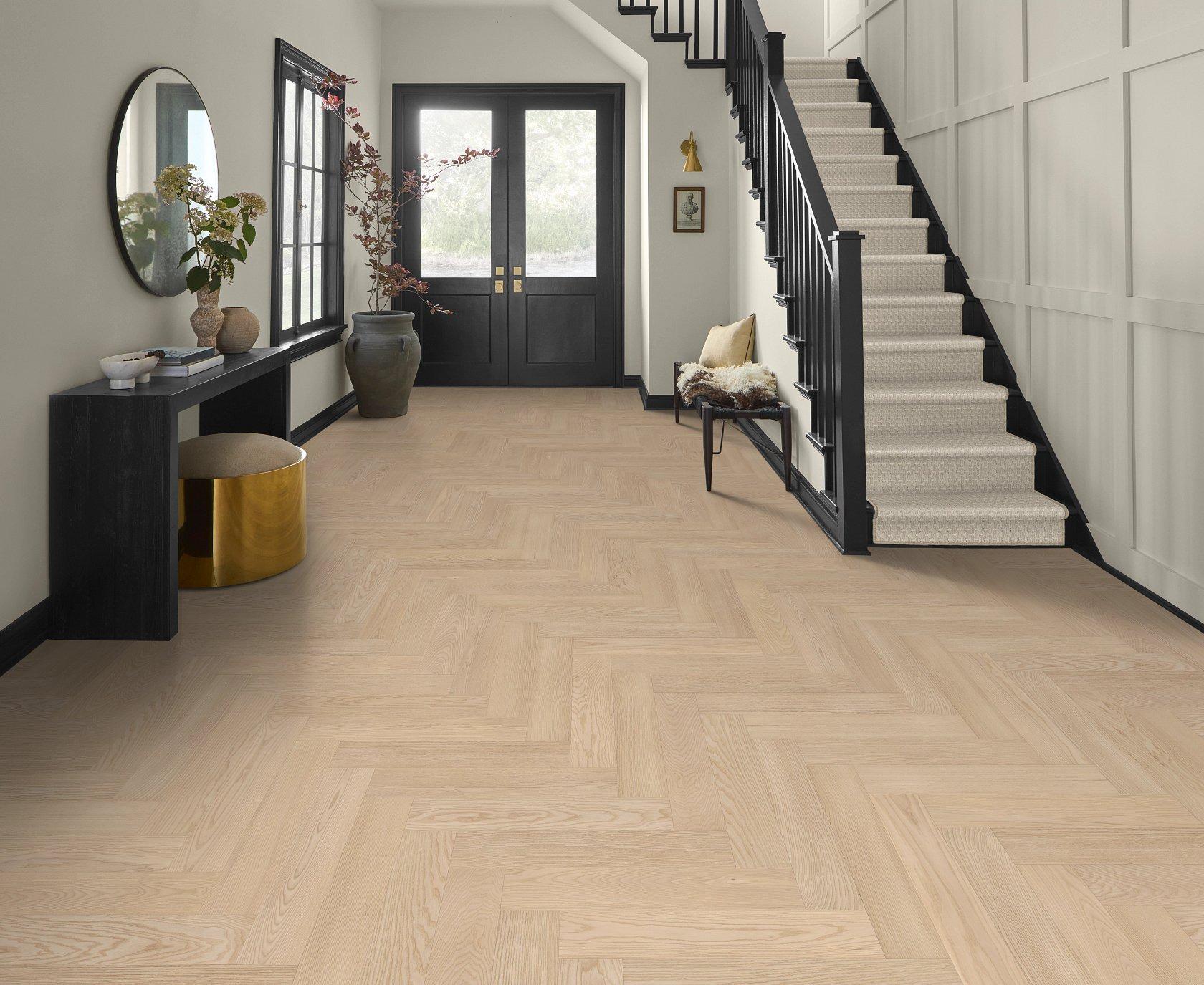
- Herringbone patterns are also popular to add interest in entryways, hallways, or smaller spaces.
What Type of Tile Do You Have?
If you’re unsure whether your floors are porcelain or ceramic, you’re not alone. The differences aren’t always obvious, but they're easy enough to uncover with a closer look. Here’s how to tell what type of tile you have:
- Check the edges. You can often see a different color at the edge or back of glazed ceramic tile. Porcelain is typically “through-body,” meaning the color runs all the way through the tile. This also means if you chip a porcelain tile, the chip is much less noticeable.
- Look at the box, if you still have it. Although some porcelain can be labeled under the broader ceramic category, the packaging will include a PTCA (Porcelain Tile Certification Agency) logo indicating a water absorption rate of 0.5% or less. You might also find the PTCA stamp on the back of spare tiles, if the box has any. If there’s no stamp or logo, it’s likely ceramic.
- Weigh a loose tile. Porcelain is denser and heavier than ceramic of the same size. If you have a spare tile from a closet, the weight difference can be noticeable.
- Chip a corner (carefully). If you’re replacing a tile anyway, look at the broken edge. Ceramic shows a distinct glaze layer over a different colored body, while porcelain is more uniform.
Still not sure? A local flooring pro, like our North Phoenix experts, can identify it quickly. It’s worth knowing, especially if you’re planning to add matching tile or need to make repairs.
Ready to Start Your North Phoenix Tile Project?
Tile is a staple in North Phoenix homes for good reason. It handles heat, dust, and monsoon moisture gracefully. Whether you’re matching existing tile or starting fresh, Floor Coverings International of North Phoenix, AZ® can simplify the search with a friendly consultation and selection of tile samples right in your home. Give us a call at (623) 323-9500 or set up your free in-home consultation to start your Southwest tile flooring project today.