Ready to Renovate Your Historic Home’s Flooring?
Older houses tend to reveal their history one layer at a time, and the flooring is often part of that story. Original hardwood may remain in one room while another has layers of different flooring from decades of renovations. An addition might introduce yet another material. When it’s time to make a change in your historic home, the standard flooring process may not apply.
Older and historic homes in the Birmingham area come in a wide range of styles and architectural designs, from Civil War-era cottages to Spanish Mission styled homes from the 1920s and everything in between. And each home has their own unique characteristics that are worth preserving and challenges to be tackled in a flooring upgrade. As a locally owned and operated flooring company in Birmingham, the experts at Floor Coverings International of Birmingham, AL® know the common styles in the area, the materials that work best, and we help our community keep their older homes up-to-date with top-quality flooring.
For homeowners of historic homes near Birmingham, AL, choosing flooring can start with three questions: Is the existing flooring worth restoring? Does the subfloor need attention? How can unique characteristics be preserved?
Restoring Existing Floors and Hardwood Refinishing
Before choosing a replacement, take stock of the floor you have. Saving floors in historic homes may be worth exploring when older or original flooring remains in suitable condition, but age alone doesn't make a floor historically significant or practical to keep.
Homes evolve. Previous owners may have replaced flooring, covered older materials, or altered rooms for changing needs. Damage can also make preservation impractical. If you're evaluating historic home flooring options, consider the condition, character, and role of the existing material before deciding whether the new floor should preserve a similar look or take the room in another direction.
Floor restoration or refinishing may require services outside the scope of a new flooring installation, so determine what the existing material needs before planning around it. Whether you want a fresh look or you want to preserve the existing hardwood floor stain in your historic home, the Floor Coverings International of Birmingham, AL® team can bring your vision to life.
Evaluate the Subfloor Condition
It’s also a good idea to take a critical eye to the subfloor and evaluate if repairs are needed for floor joists and if leveling is required. Older subfloors often experience sagging, squeaking, and become uneven from years of moisture damage, foundation shifting, pest damage, and aging wood. Some historic homes even lack a traditional subfloor and instead the hardwood will be attached directly to the floor joists.
Make sure you take into account any subfloor repair or replacement needs when planning your project, as they can drastically impact the scope and budget.
Different Floors for Different Rooms
In a historic home, different flooring in different rooms doesn't automatically make the interior feel disconnected. Older homes often have more defined rooms than contemporary open floor plans, giving homeowners room to choose materials suited to each space.
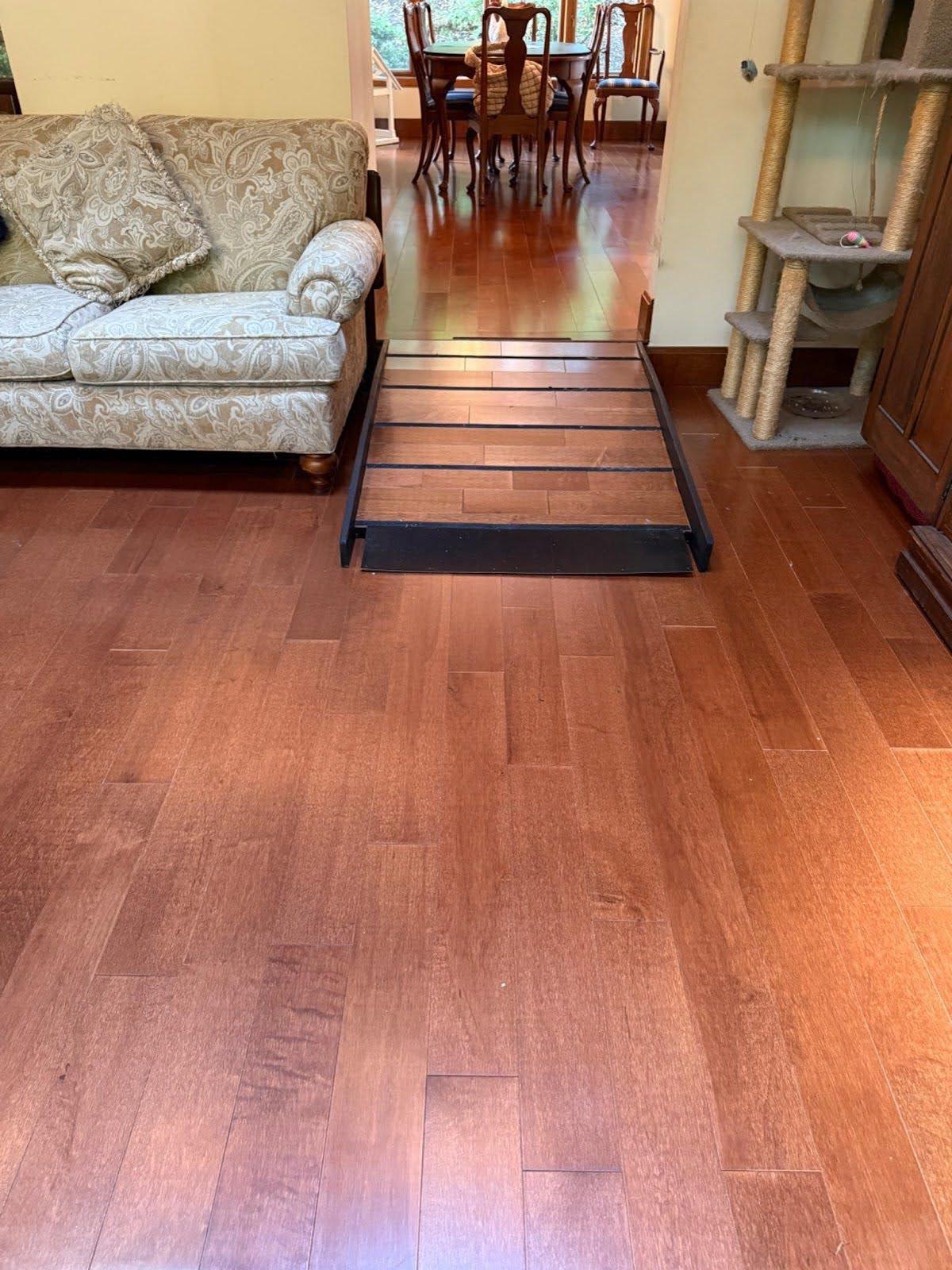
Cohesion can come from something other than an exact match. Compatible wood tones can connect adjoining rooms, while complementary colors, repeated shapes, or thoughtful transitions can establish a relationship between different materials.
This approach also lets function play a role. Flooring appropriate for a bedroom doesn't have to be the same material chosen for a bathroom or another moisture-prone space. Carpet may provide the comfort you want in a bedroom, while appropriate luxury vinyl or laminate can introduce the look of wood with waterproofing features for kitchens, laundry rooms, and bathrooms. The choice doesn't have to be historically traditional if it works for the room and relates well to the rest of the house.
Let Existing Hardwood Provide a Reference Point for New Hardwood
Older hardwood can influence new flooring choices even when you aren't trying to duplicate it. Species, plank dimensions, finish, existing woodwork, and previous renovations can all affect what looks at home in the space.
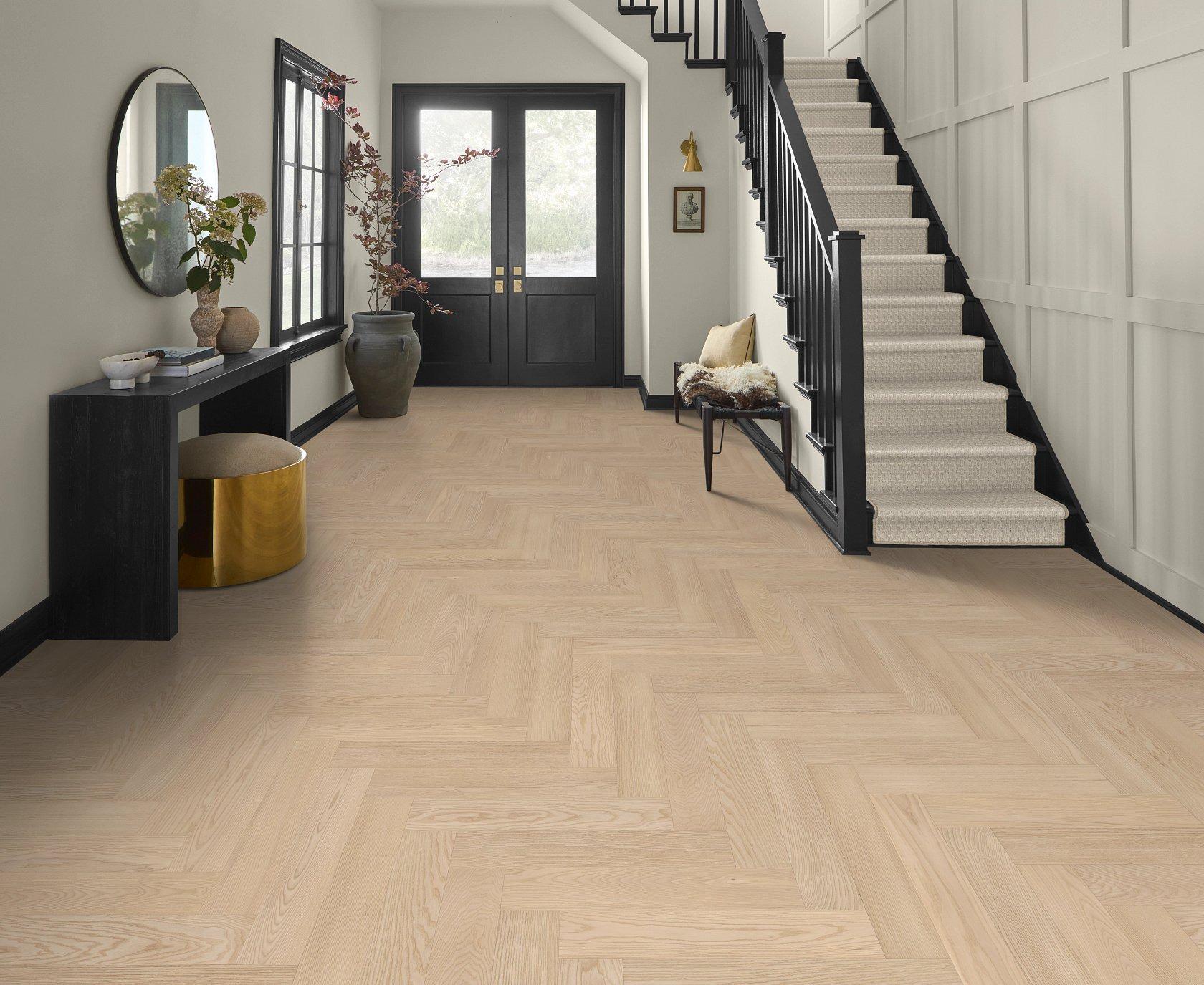
When considering new hardwood floors in historic homes, there's no single color or style that's appropriate simply because it’s what’s already there. You might choose a tone that relates closely to existing woodwork or prefer enough contrast to make the distinction between old and new intentional.
An addition brings another question: how closely should the new flooring relate to the older portion of the house?
How Should You Floor a New Addition?
Deciding what flooring in a new addition to a historic home will work best doesn't necessarily mean finding a perfect copy of the original floor. Wood changes with age, and differences in species, plank dimensions, finish, and construction can make an attempted match more noticeable than expected.
When coordinating hardwood flooring in a historic home and new addition, a complementary approach can sometimes create a more natural transition. A visible but thoughtfully planned transition can work better than an imperfect attempt at continuity.
Engineered flooring for historic homes can also be worth comparing when a homeowner wants a wood-floor aesthetic in a new or updated area. Suitability depends on the individual product, installation conditions, and needs of the space, rather than engineered hardwood being inherently better for an older house.
Give Bathrooms and Kitchens Their Own Character
Tile offers another opportunity to acknowledge a home's architecture without turning the room into a historical reproduction. When exploring historic homes' bathroom tile, consider how scale, color, pattern, and layout relate to the rest of the house as well as how the particular tile performs in its intended application.
Homeowners interested in Victorian bath and kitchen tile for historic homes might be drawn to smaller formats, geometric arrangements, borders, neutral palettes, or patterned designs. But Birmingham's older homes represent more than one architectural period, so a Victorian-inspired look isn't automatically the right choice for every property.
Ceramic and porcelain products can reference older design traditions while still giving homeowners choices suited to modern living. The goal doesn't have to be a historically exact room. You can simply choose details that feel appropriate for your home, family, and lifestyle.
Update the House Without Erasing Its Character
When remodeling historic homes in Birmingham, flooring decisions often sit at the intersection of what should stay and what needs to change. Before selecting something new, identify which existing materials and architectural details give the house its character.
From there, consider where the new floor will meet older materials, whether an exact match is realistic, and what the room requires today. A newer flooring material isn't automatically at odds with an older home. A formal front room, hardworking kitchen, and later addition don't necessarily have to answer those questions in the same way. The house doesn't have to look untouched by time for its character to remain intact.
Ready to Start Planning Your Historic Home’s Flooring Design in Birmingham, AL?
After considering the history of the house, the condition of its existing floors, and the needs of each room, the final choice still has to work for the people living there now. Seeing potential flooring in the home can help turn those considerations into a practical decision.
Floor Coverings International of Birmingham, AL® brings flooring options to you, so you can look at potential choices next to existing woodwork, adjoining floors, cabinetry, and other features you plan to keep. Instead of relying on memory to judge a wood tone, color, or pattern, you can see how it relates to the actual materials around it. And our professional Design Associates will help you make confident decisions with expert insight and recommendations.
Once you've settled on a direction, we'll take professional measurements and provide a free, down-to-the-penny quote for your flooring project.
Ready to start planning? Call (205) 775-8953 or schedule your free in-home consultation today.