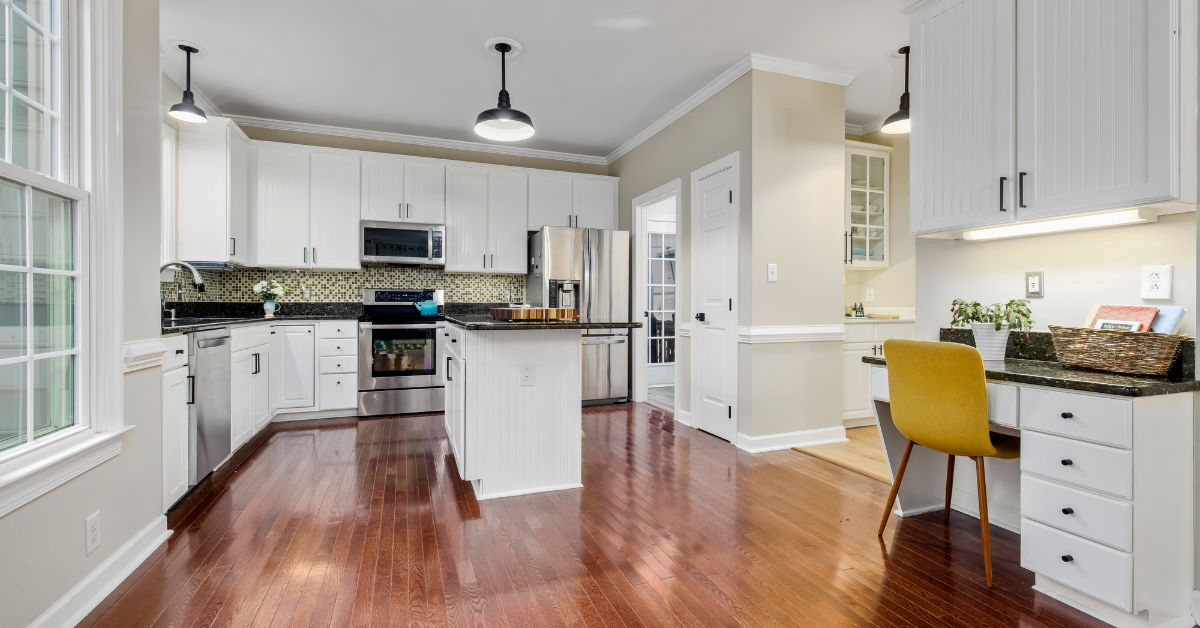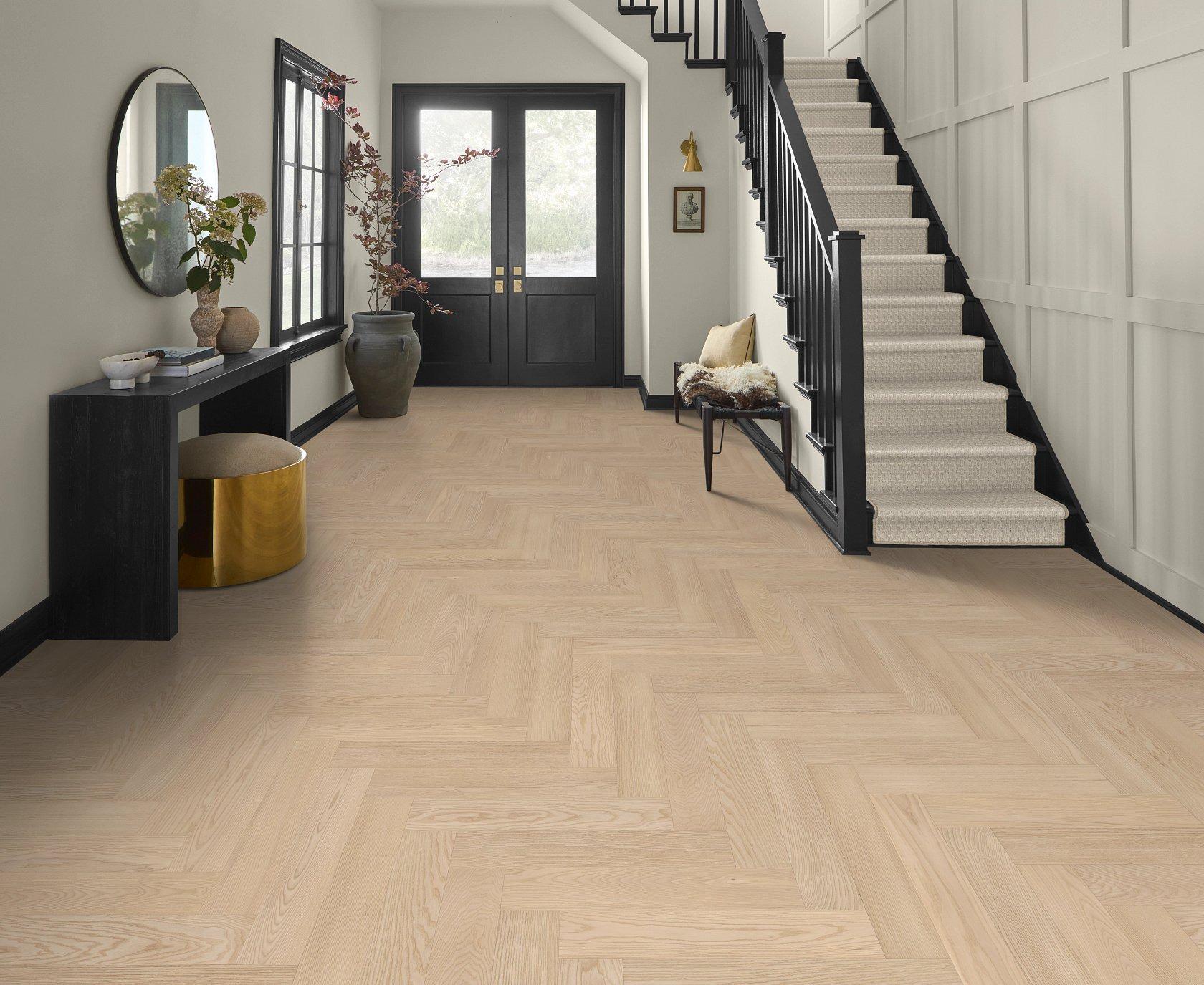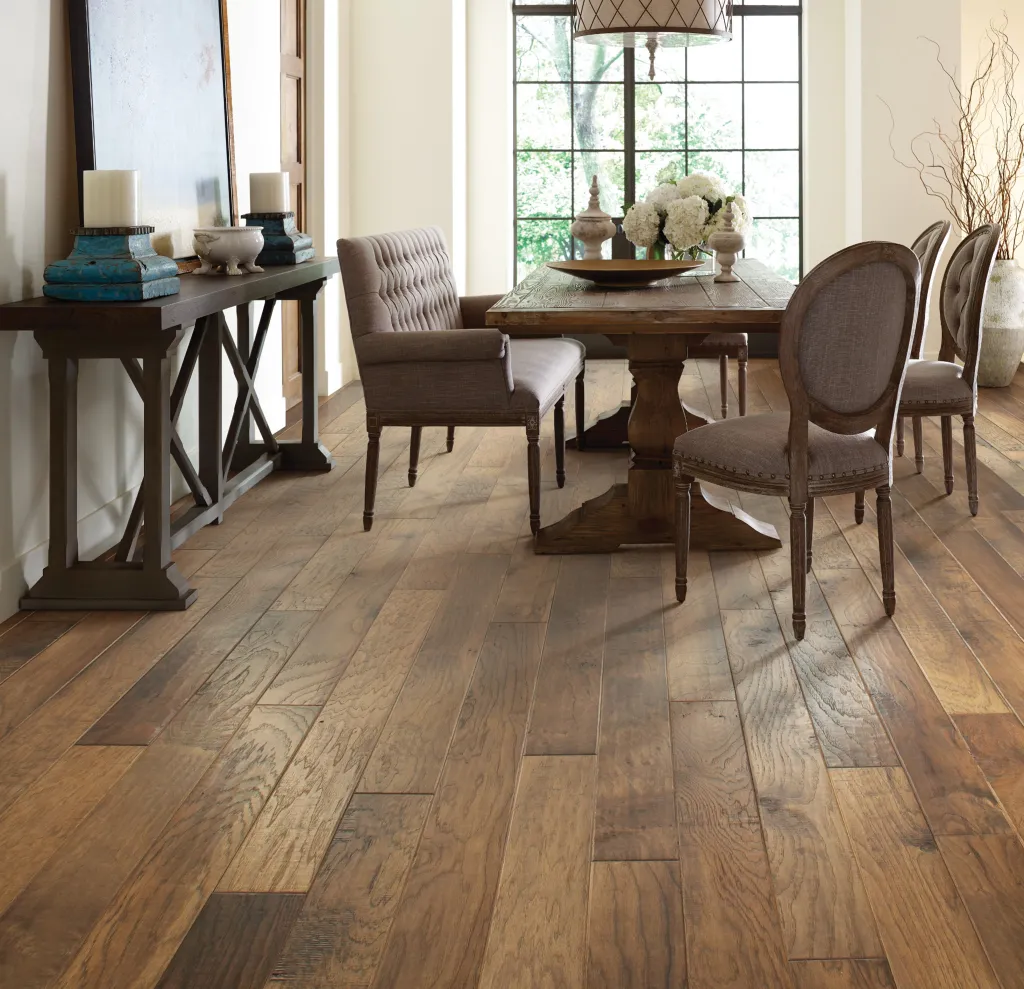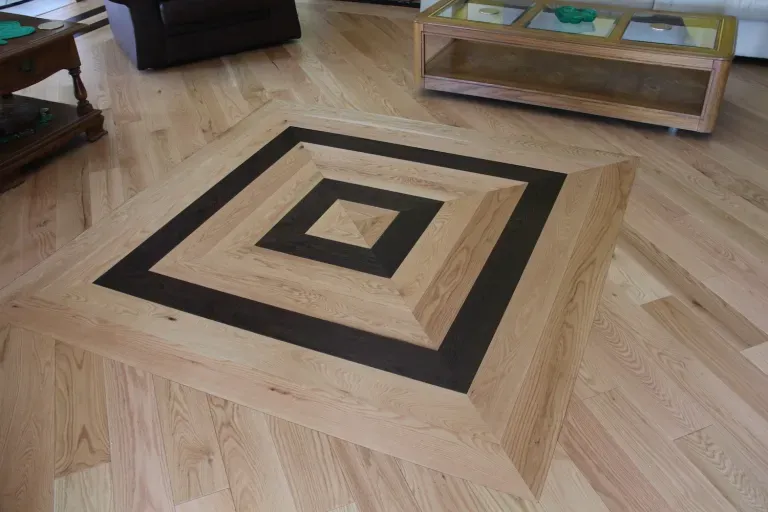
Most homeowners have a lot of criteria when choosing new floors. In addition to achieving the perfect aesthetic and finding durable, long-lasting options, many consumers prioritize sustainable flooring materials. Driven by environmental and health considerations, demand for environmentally friendly flooring has steadily increased as a part of a broader shift in consumer preferences for green products.
Get expert guidance from Floor Coverings International® about the most environmentally friendly flooring options.
Most Sustainable Flooring Options at a Glance
|
Floor |
Summary |
|
Wood |
Long lifespan, best when sourced sustainably |
|
Stone |
Long lifespan, recyclable |
|
Bamboo |
Fast renewable growth |
|
Cork |
Renewable bark harvesting |
|
Rubber |
Best when recycled |
What Makes Flooring Sustainable?
Sustainable flooring options have several characteristics that collectively minimize the environmental impact of flooring materials, from manufacturing to disposal. Also referred to as eco-friendly, environmentally friendly, or green flooring, these products should:
- Be made (partially or entirely) from natural, renewable materials (i.e., materials that are replenished naturally over a relatively short timeframe)
- Emit little to no carbon, chemicals, or other compounds throughout their lifecycles, such as VOCs (volatile organic compounds, some of which are harmful to humans or the environment)
- Be easily recycled, repurposed, or biodegraded (i.e., broken down naturally)
Many homeowners also look for flooring that lasts longer, uses fewer chemicals, and creates less waste over time.
Most eco-friendly flooring materials meet these criteria; however, several other variables influence their overall environmental impact. For example, the practices of one flooring manufacturer may result in more carbon emissions or less ethical sourcing of materials than those of another.
Are Wood and Stone the Most Eco-Friendly Flooring Materials?
Terms like "natural" and "renewable" elicit almost immediate images of solid wood floors or natural stone. These two options are indeed among the most popular (and oldest) flooring materials, but they aren’t the only choices, nor are they necessarily the most sustainable. There are several factors that influence whether they’re a safe environmental choice, including transportation (is the wood transported in ways that have a lower carbon footprint, like waterways or railways?) and sourcing (is the wood harvested from a responsibly managed forest where they regrow the trees?).
|
Flooring type |
Pros |
Cons |
|
Hardwood |
Long lifespan |
Sourcing matters |
|
Stone |
Extremely durable |
Higher upfront cost |
How Environmentally Friendly Is Hardwood Flooring?
Wood floors are made from a natural, renewable source that can also be reused and repurposed. Hardwood floors can be refinished – removing surface damage and applying a protective finish means they last for decades, reducing the carbon footprint of replacement by over 75%. Not all wood flooring is equal, however. The sourcing and manufacturing of wood flooring result in significant differences in sustainability. It’s essential to determine the exact source of the timber, whether it resulted from clear-cutting, and whether the forest will be regrown.
What to look for when buying sustainable hardwood
- Responsibly sourced wood
- Refinishable surfaces
- Low-VOC finishes
- Transportation methods with a lower carbon footprint
How Eco-Friendly Is Stone Flooring?
Stone’s manufacturing process causes little excess carbon emissions, as it is formed by the earth itself. When natural stone flooring is ethically sourced and transportation emissions are minimized, it is an extremely sustainable option. Stone flooring is also long-lasting and recyclable, with its premium price tag being the only hurdle for many environmentally conscious consumers. It’s often a strong fit for kitchens, entryways, and high-traffic areas because of its durability.
Homeowners often overlook the cost of installation and transportation when shopping for stone flooring, so be sure to take them into consideration for the most accurate pricing.
Related: The Elegance of Granite Floor Tiles
Three of the Best Sustainable Flooring Options
While they may not be at the top of your shopping list yet, it’s worth considering bamboo, cork, and rubber. These three environmentally safe flooring options check all the sustainability boxes without sacrificing form or function.
Why Bamboo Flooring Is Eco-Friendly
Often considered one of the most sustainable building materials on the planet, bamboo’s appeal is partially due to its regrowth speed. Bamboo can be harvested every three to five years, compared to hardwoods that take anywhere from two decades to over a century to regrow. It also requires less acreage than hardwood, limited watering, doesn’t contribute to clear-cutting, and is both reusable and recyclable.
There are two main types of bamboo flooring: traditional and strand-woven.
- Traditional bamboo is made by cutting bamboo into strips and gluing them together in layers. It maintains the aesthetic of natural bamboo but is less durable than strand-woven bamboo, making it best suited to low-traffic areas.
- Strand-woven bamboo is made by shredding bamboo into fibers, which are mixed with adhesives and compressed. It loses the appearance of traditional bamboo but is much harder and more durable, making it best suited to high-traffic areas.
The one negative to bamboo is the manufacturing process. Converting bamboo into floor-ready planks is an energy-intensive process, and some companies rely on potentially harmful adhesives.
Best for: Bamboo flooring works well for homeowners who want a hardwood-style look with faster renewable sourcing.
Why Cork Is Eco-Friendly
Like bamboo, cork is renewable, perhaps even more so. Cork is harvested from the bark of a tree, and since cork oak trees can be harvested for over 200 years, it’s an extensively renewable material. This also mitigates emissions from harvesting, and cork requires much less processing than other forms of timber for commercial use. It is reusable, recyclable, and biodegradable.
Cork’s biggest drawbacks are its relatively high costs compared to other flooring options and its limited applications. It is not waterproof, making it a less-than-ideal choice for kitchens, laundry rooms, or areas with high moisture risks. It’s important to limit moisture exposure during cleaning – a damp mop and mild detergent are enough, along with regular vacuuming to remove dust and debris.
Best for: Cork works well in home offices, bedrooms, and lower-traffic living spaces because of its softer feel and sound absorption.
Why Rubber Is Eco-Friendly
Bamboo is wood, cork is bark, and rubber is yet another renewable material from trees – it’s sap. Technically, rubber is a form of natural latex sourced primarily from the Hevea brasiliensis tree. Unlike bamboo and cork, its sustainability credentials depend heavily on whether it is recycled or not.
- Recycled rubber flooring is made from recycled tires and other forms of post-consumer waste. Some types of recycled flooring use adhesives and binding agents that contain volatile organic compounds (VOCs), but most are relatively low-VOC. This is considered the most eco-friendly type of rubber flooring as it has a lower waste impact.
- Natural rubber flooring is made from latex, a renewable resource. However, some rubber plantations contribute to deforestation and use chemicals, including VOCs. Look for sustainably managed sources of natural rubber whenever possible.
Best for: Rubber flooring is often used in gyms, playrooms, and utility spaces because of its durability and comfort underfoot.
How to Choose Eco-Friendly Floor Coverings
Since some options are more sustainable than others, even within the same material category, you can make more eco-conscious decisions by weighing these factors.
Checklist
|
Adhesives |
Look for flooring that doesn’t require glue for installation or opt for low-VOC adhesives if possible. |
✅ |
|
Durability |
Select long-lasting, durable flooring that won’t require frequent replacement. |
✅
|
|
Manufacturing & processing |
Research the material’s energy consumption, chemical use, and other manufacturing inputs, as well as the specific manufacturer’s practices. Don’t forget about transportation, and source domestic flooring options whenever possible. |
✅
|
|
Flooring disposal |
When flooring needs to be replaced, find out how easy it is to recycle or reuse old flooring materials to avoid occupying space in landfills. |
✅
|
Try to take everything into consideration – some homeowners make the mistake of only focusing on the material itself, without accounting for manufacturing, transportation, or durability.
Find the Best Environmentally Friendly Flooring for Your Home
Floor Coverings International® makes it easy to find eco-friendly flooring, working with some of the industry’s most reputable manufacturers to offer you a wide selection of products. Our seamless, stress-free shopping experience allows you to compare sustainable flooring samples in your home’s lighting and daily environment before making a final decision. Schedule a free, in-home consultation today!
FAQs
What is the most sustainable flooring material?
Cork, responsibly sourced wood, bamboo, stone, and recycled rubber are all sustainable flooring materials.
Is bamboo flooring better for the environment than hardwood?
Bamboo flooring is generally more sustainable than hardwood flooring, as bamboo regrows much faster than hardwood trees and can regenerate without needing to be replanted.