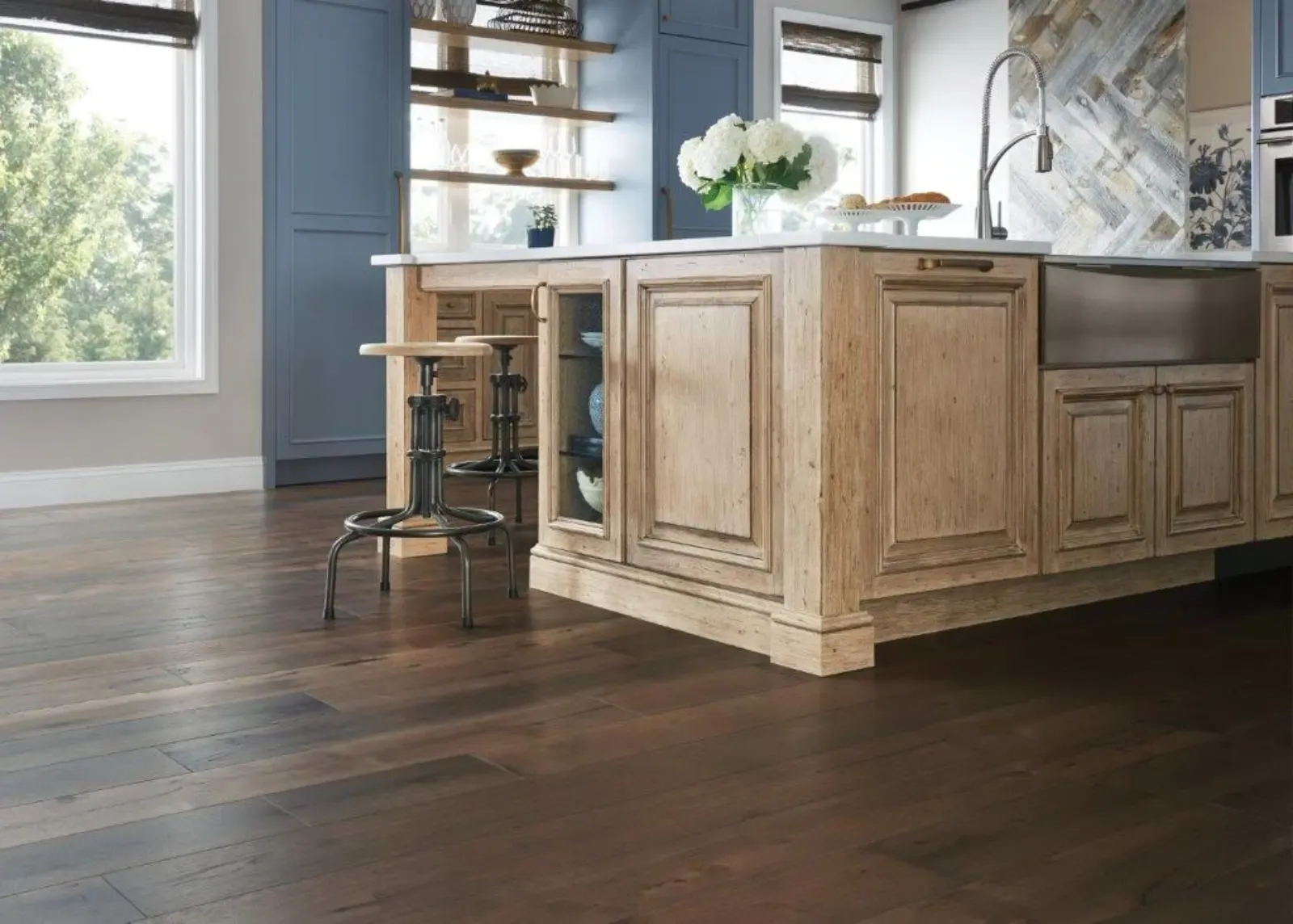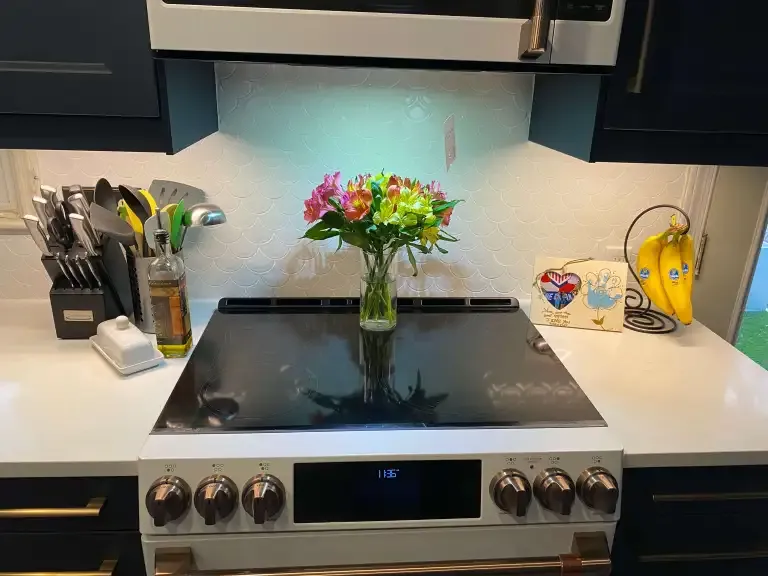
Renovating a kitchen is an exciting opportunity to create a space that’s functional, beautiful, and tailored to your lifestyle. One common question during the process is: Should you install the floor or cabinets first?
While there’s no universal answer, understanding the pros and cons of each approach can help you make an informed decision.
| Benefits of Flooring First | Benefits of Cabinets First |
| Cleaner Finish | Lower Material Costs |
| Easier Future Remodels | Less Flooring Waste |
The best option depends on your flooring type and renovation goals.
That’s where Floor Coverings International comes in. Our locally owned teams combine deep knowledge of the community and climate with years of experience to guide you through the choices that best suit your home, flooring type, and renovation goals.
Scenario 1: Why Install Flooring Before Cabinets
- Pro: Installing flooring first creates a continuous finished surface and can simplify installation because you won't have to cut flooring around cabinets, appliances, or islands. Depending on your kitchen design, it may also reduce the need for quarter-round molding around cabinet bases.
- Pro: Installing flooring first creates a seamless, continuous flooring surface throughout the kitchen.
- Pro: Those who do the next kitchen renovation might be glad you did it this way, as the layout will be flexible since the flooring covers the full space.
- Con: Installing flooring under cabinets wastes some cost because you won’t see that flooring.
- Con: Putting flooring in first exposes your tile, hardwood, or vinyl flooring to dents and scratches during cabinet installation.
Installing flooring first works especially well for long-term remodel flexibility or glued-down flooring installations.
Scenario 2: Why Install Cabinets Before Flooring
- Pro: Installing cabinets first can reduce material waste and cost, as you won’t be paying for flooring that’s covered by cabinets. If your flooring material is expensive, you might be in favor of doing cabinets first.
- Pro: A cabinet-first approach reduces the risk of damaging your flooring during the renovation process.
- Con: Installing cabinets first requires additional precision during flooring installation because the flooring must be cut to fit around base cabinets. Depending on the project, you may also need trim pieces, such as quarter-round molding, to help create a finished transition around cabinet bases.
- Con: Because flooring is installed around the existing cabinetry, achieving a seamless finished look may require additional planning and precision.
- Con: Putting cabinets in first locks you into your kitchen’s footprint. If you ever want to change the layout, you’ll have to redo the flooring entirely, as there will be no flooring present where cabinets or appliances used to be.
Cabinets-first installations are often chosen when working with higher-cost flooring materials or floating floors.
So, How Can I Decide?
Deciding between installing cabinets or flooring first often comes down to your unique renovation needs and the materials you’ve chosen. While these general guidelines provide a helpful starting point, there’s no need to make the decision alone. Your local flooring team can offer tailored recommendations based on your specific project goals and flooring selection.
Local factors like humidity, climate, and your home's conditions can all play a role in determining the best installation approach. By working with one of our Design Associates, you'll receive recommendations tailored to your flooring selection, renovation goals, and local environment.
Checklist: Questions to ask before you decide
- What flooring material am I using?
- Am I planning future layout changes?
- Is moisture resistance important? (Local climate and humidity can impact flooring decisions.)
- Am I prioritizing budget or long-term flexibility?
When to Install Flooring by Material or Type
Installation order can vary depending on type and whether the flooring is floating, glued, nailed, or moisture-sensitive.
Summary
|
Floor type |
Recommendation |
|
Floating floor |
Install cabinets first |
|
Tile |
Install flooring first |
|
Floating vinyl |
Install cabinets first |
|
Glued-down vinyl |
Install flooring first |
|
Laminate |
Install cabinets first |
|
Solid hardwood |
Install flooring first |
|
Floating engineered hardwood |
Install cabinets first |
Floating Floor Considerations
First, what is a floating floor? These floors are not glued or nailed to the subfloor and sit on top of an underlayment. Most use an interlocking system to connect each plank or tile. Floating floor styles are available in various flooring materials, including:
- Laminates: Lightweight and durable
- Luxury vinyl plank: Durable and waterproof
- Engineered hardwood: Durable alternative to solid hardwood (if click-lock installation is available)
- Bamboo: Environmentally friendly
- Cork: Natural insulation
Whatever you do, do not install cabinets on top of floating floors! It restricts the minor movement this flooring requires to adapt to changing temperatures and humidity. Without room to move, floating floors may buckle, separate, or lift over time.
Should You Install Tile Before or After Cabinets?
Tile flooring is typically installed before cabinets because it creates a continuous finished surface and offers greater flexibility if the kitchen layout changes in the future. It’s a great option for moisture-prone kitchens, as tile is non-porous, durable, and easy to clean. Installing tile wall-to-wall also helps ensure appliances sit at the proper finished height.
While tile beneath sinks and dishwashers may provide additional protection if leaks occur, your budget and your Design Associate's recommendations should ultimately guide the installation order, which is influenced by tile durability and water resistance.
Should You Install Vinyl Flooring Before or After Cabinets?
The decision to install vinyl first depends on your type of vinyl.
- Floating vinyl flooring, which is not glued down to the subfloor
- Glued-down non-floating vinyl flooring, which is glued down to the subfloor
Floating vinyl flooring must be installed after the cabinets. This flooring needs space to expand and contract, and the weight of the cabinets does not allow for this, something homeowners sometimes overlook.
Glued-down non-floating vinyl flooring is best installed before the cabinets. Vinyl is very scratch-resistant and should hold up to renovation foot traffic with a little care and consideration.
Should You Install Laminate Flooring Before or After Cabinets?
We recommend installing laminate flooring after cabinets. Laminate is a floating floor requiring room to expand and contract, which it can’t do if cabinets are installed on top of it. Installing it last will also save you money on material costs and make it much easier to replace, making it best for budget-conscious remodels.
Should You Install Hardwood Flooring Before or After Cabinets?
We recommend installing glued or nailed hardwood flooring before cabinets to create a continuous finished floor and make future renovations easier.
However, some engineered hardwood products are floating floors and should never be installed beneath cabinets. Always follow the manufacturer's installation guidelines for your specific flooring product.
It’s important to protect hardwood during cabinet installation so it’s not marked by scratches or dents.
Set Your Renovation Timeline with a Consultation
Every kitchen renovation is unique, and choosing the right flooring is essential to creating a space that fits your lifestyle and vision. At Floor Coverings International, we simplify the process with personalized, in-home consultations tailored to your specific needs. Seeing flooring samples alongside cabinet finishes can make renovation decisions feel much easier before installation begins.
From exploring a curated selection of flooring options to receiving expert recommendations, our Design Associates provide the guidance you need to make confident decisions. Once you’ve made your choice, we’ll take care of the details, ensuring a smooth and stress-free installation experience.
Partnering with your locally owned Floor Coverings International team means you’ll benefit from trusted service and insights specific to your community. Together, we’ll create a kitchen that’s not only beautiful but designed to stand the test of time.
Let’s get started. Contact your local flooring team today.
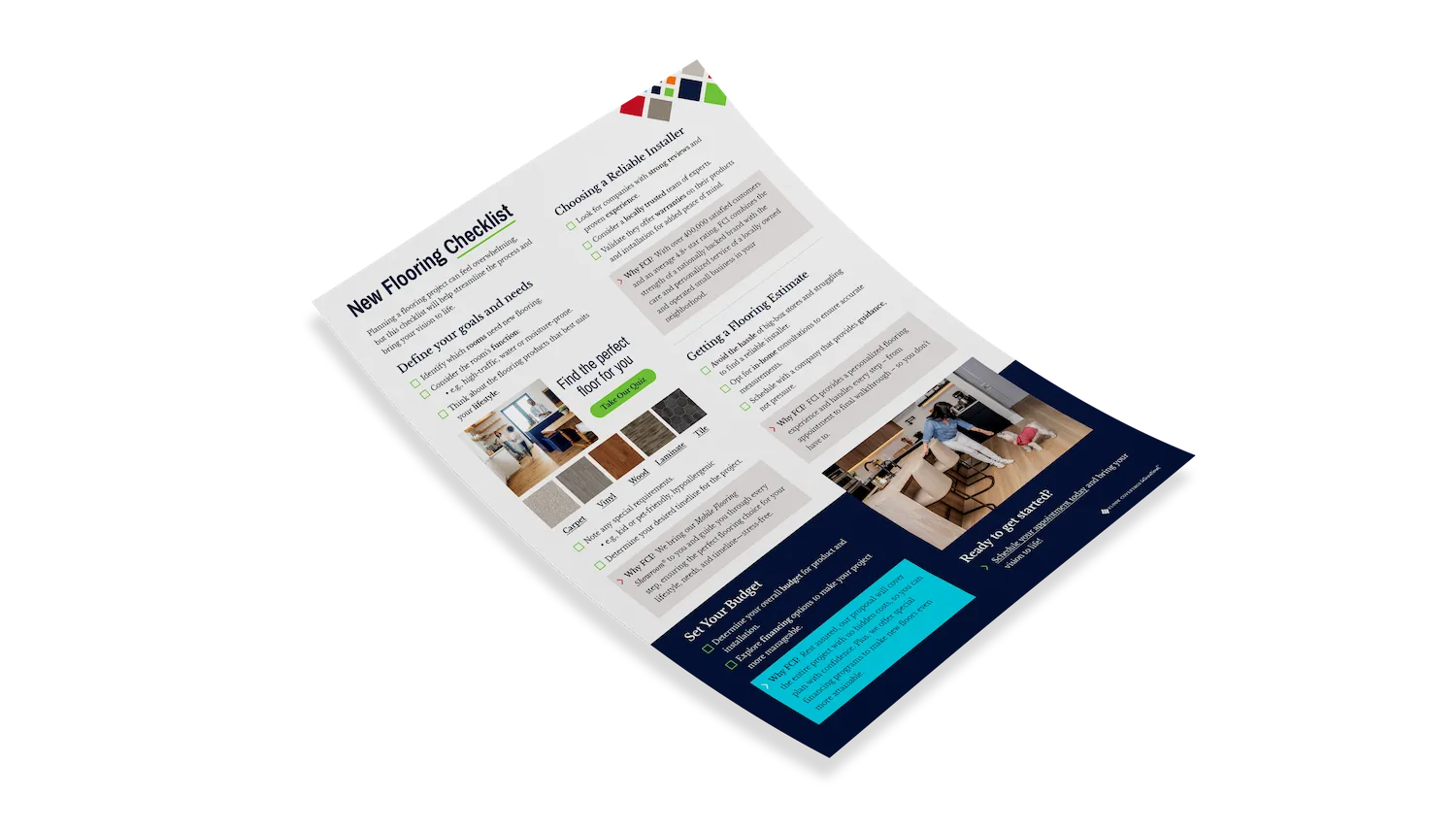
Get Your Free Project Checklist!
Feeling overwhelmed about where to start on your new flooring journey?
Our step-by-step project checklist helps you kick off your project in the most organized way.
FAQs
Can cabinets sit on floating floors?
No, cabinets can’t sit on floating floors. They restrict the minor movement floating flooring requires to adapt to changing temperatures and humidity. Without room to move, floating floors may buckle, separate, or lift over time.
Should countertops or floors come first?
Floors come before countertops. The flooring is either installed before the cabinets or after, then the countertops are added. However, it’s best to select your countertops first so you can find a floor that complements them.