
Beautiful Hardwood, Expertly Maintained
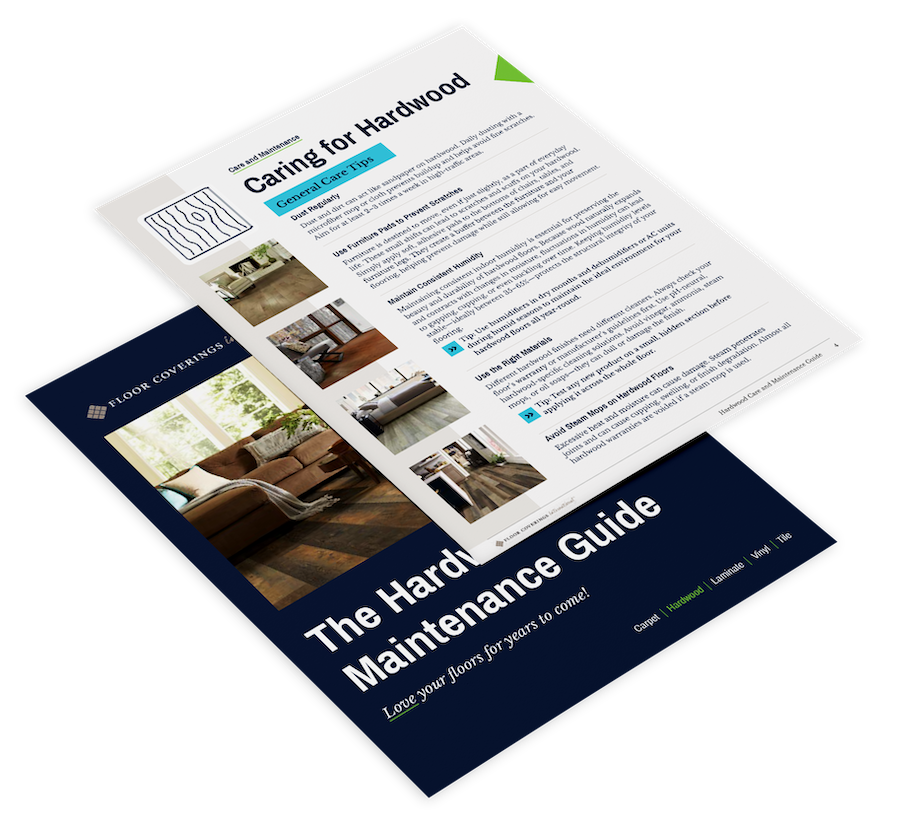
Our Hardwood Care & Maintenance Guide shows you how to protect your floors from scratches, spills, and daily wear—so they stay stunning for years to come.
 Homepage
Our experts are ready to help with your flooring project.
When it comes to classic style, real wood brings natural grain and character no two boards share. Hardwood flooring is one of the most timeless investments you can make in your home, and Floor Coverings International® brings the showroom to you.
With over 300 locations across the US and Canada, our Mobile Flooring Showroom® comes to you. This means you can see our range of solid and engineered wood flooring, including our brand partners Shaw Floors, Mohawk, CALI, and Bruce, in your own home, under your own lighting and alongside your furniture.
Unlike other flooring materials, hardwood may be able to be sanded and refinished, extending its life. With proper care, hardwood is a long-term investment. We offer professional refinishing services at participating locations.
Schedule Your Free In-Home Consultation TodayThe right hardwood flooring for you will depend on your lifestyle, your room, and the kind of aesthetic you want to achieve. Here’s what you should consider before your Design Associate visits.
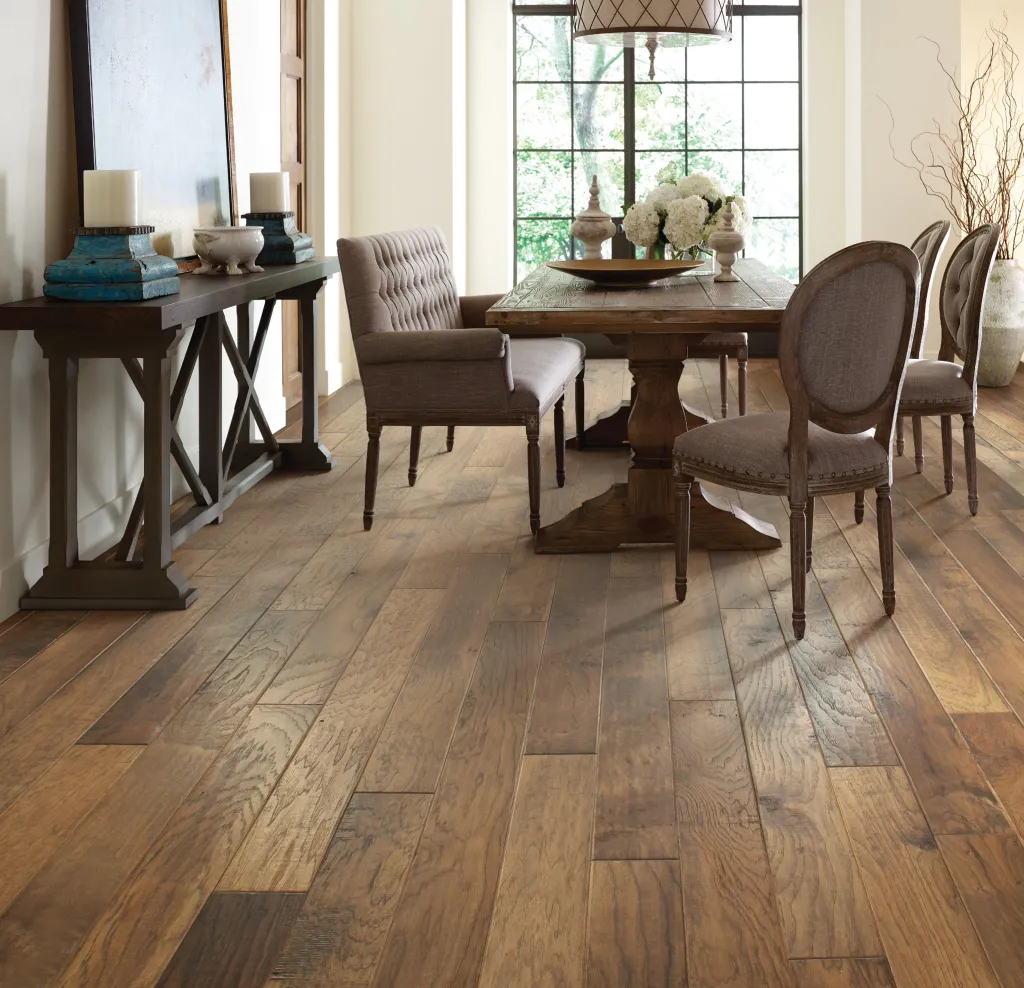
Hardwood is a natural fit for living rooms and open-concept spaces. Looking at individual types of hardwood, we've found that oak, hickory and maple are all very popular wood species for flooring.
Solid wood and engineered wood both work very well in living rooms, although if you have underfloor heating, we'd recommend engineered wood as it's more stable through temperature changes. Your Design Associate will confirm the product is approved for radiant heat.
If your hardwood floors are likely to get a lot of wear or direct sunlight, we'd suggest rotating your area rugs and furniture seasonally to prevent uneven wear.
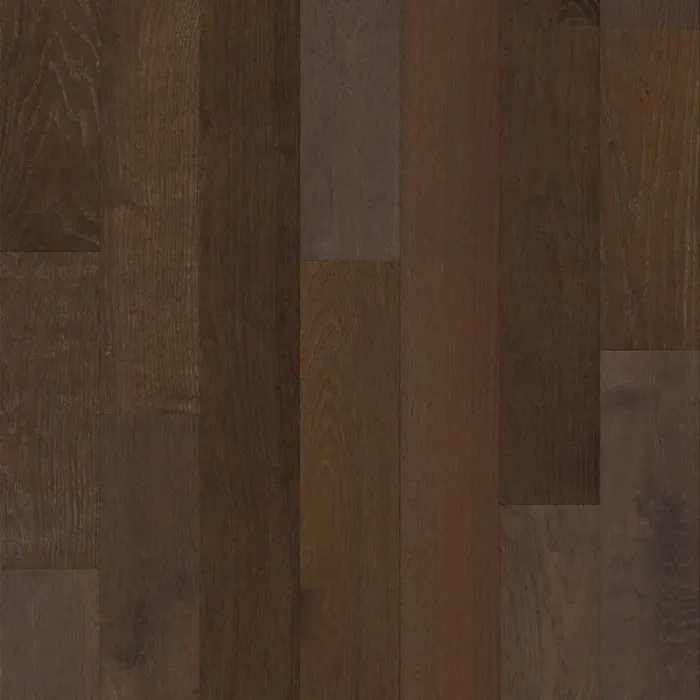
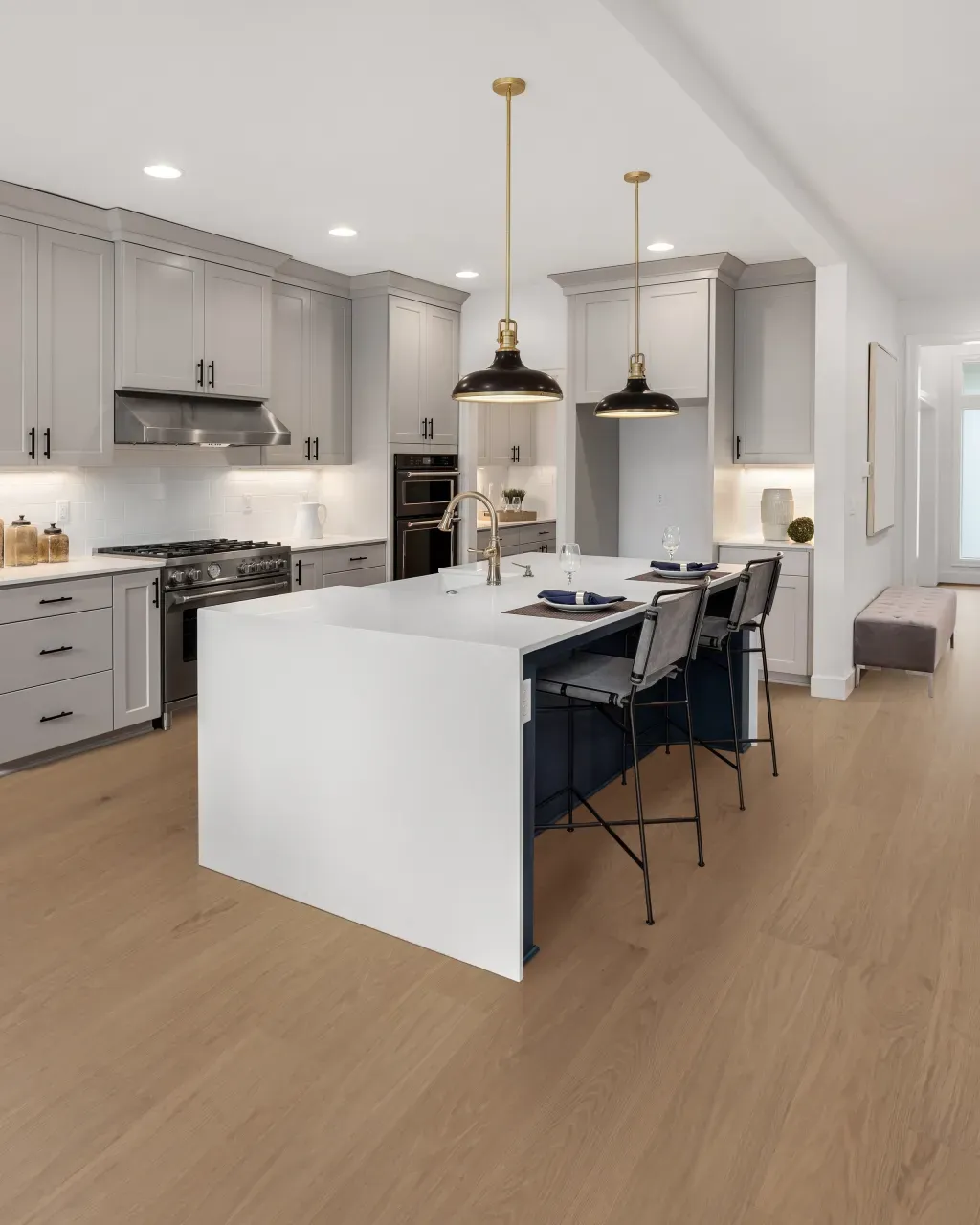
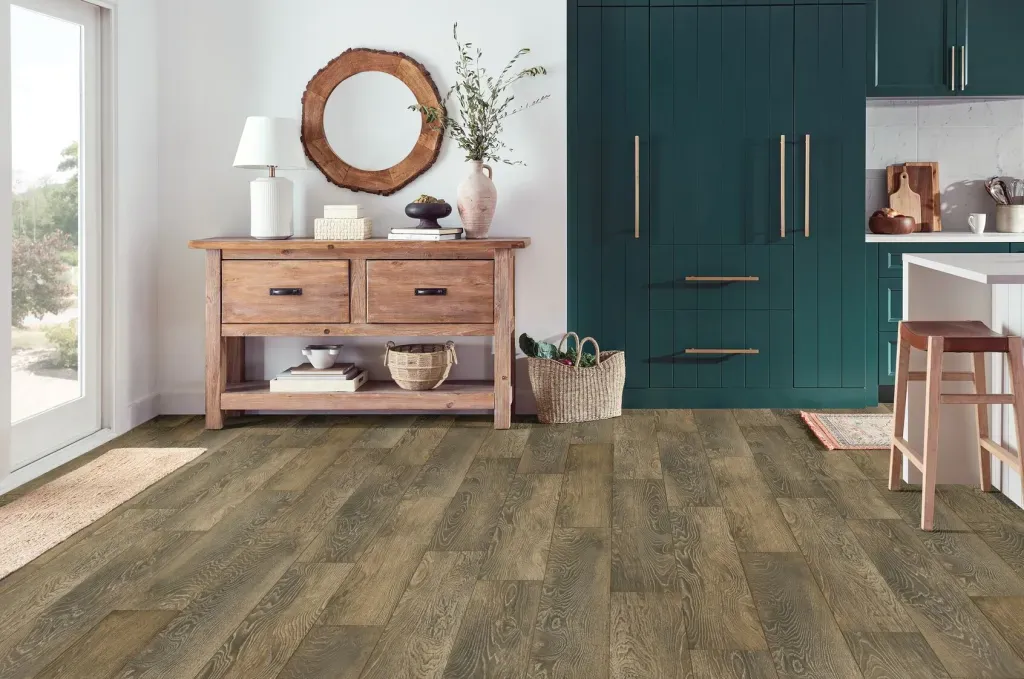
Hardwood floors can create beautiful kitchens but they do need care as they're not waterproof, so any spills should be blotted up promptly with a clean, dry cloth. Darker tones, from naturally dark walnut to stained oak, are particularly popular in modern kitchens for their warmth and drama.
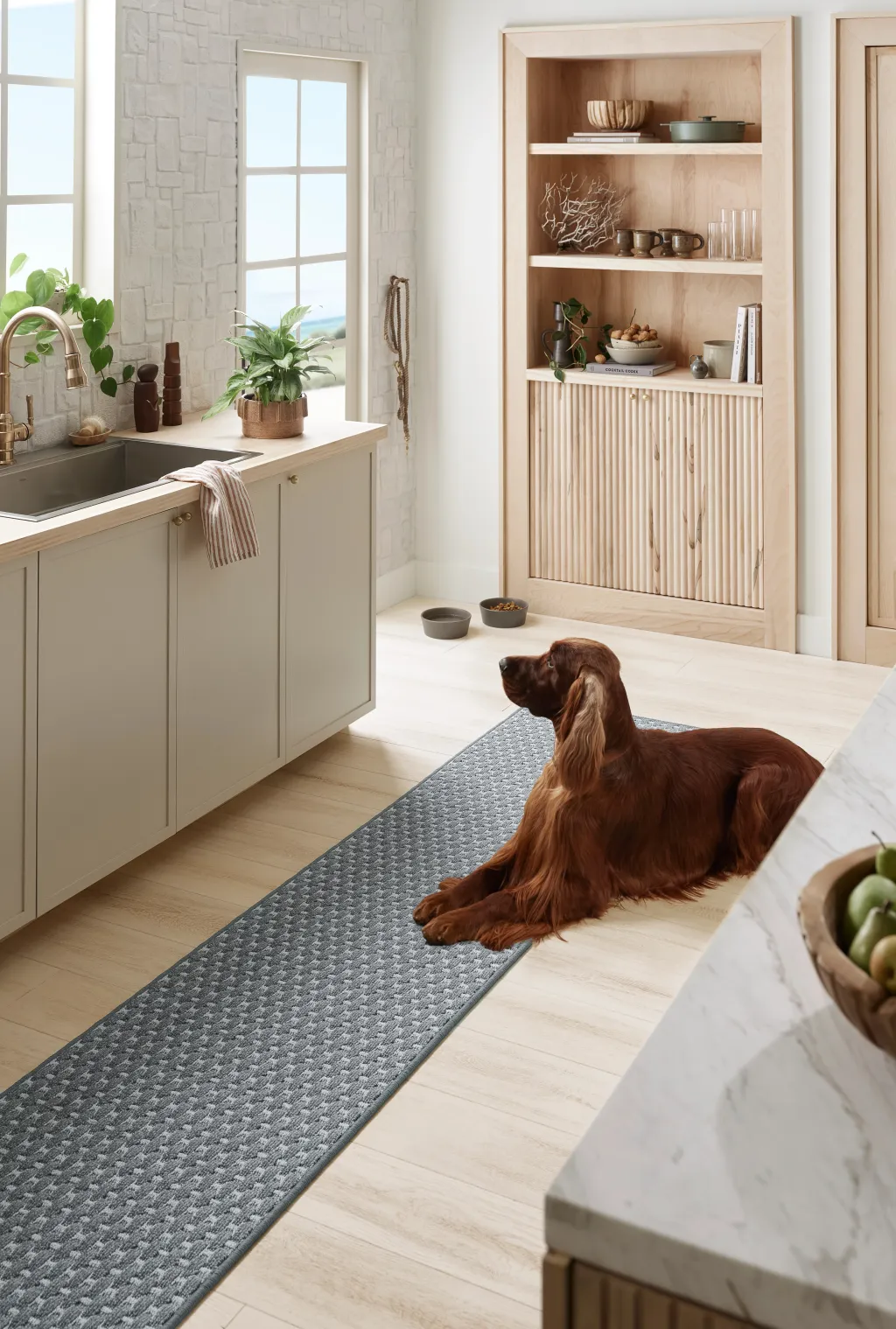
Engineered hardwood is better suited to kitchens than solid hardwood as it's more stable in humid environments. We'd suggest using mats made for hardwood floors (no latex or rubber backing) in front of sinks and dishwashers.
Hardwood floors add warmth and character to bedrooms, and where these rooms are typically low traffic, especially when compared to family rooms or hallways, solid hardwood works beautifully. Softer wood species like pine or American walnut can work well in these lower-traffic rooms, and for extra comfort, we'd suggest a well-placed area rug.
Engineered hardwood is the option for below-grade bedrooms, such as in basements.
Here are some of the many benefits of wooden flooring:
Solid hardwood flooring consists of a single piece of wood and is typically what most people think of when they think 'hardwood floors.' Solid hardwood is a natural material, so it offers plenty of visual variety and can typically be refinished multiple times over its lifetime, making it a great choice for longevity. Solid hardwood floors are best installed in bedrooms, living rooms, dining rooms, and hallways on or above ground level; solid hardwood isn't suited to basements.
Engineered hardwood, on the other hand, is composed of multiple layers of wood, typically a real hardwood veneer over a plywood or fiberboard core. The layered design makes the floor more stable and more resistant to humidity. This structure makes engineered hardwood a good fit for many homes with underfloor heating (check the product's manufacturer guidelines). Engineered hardwood floors are best for living rooms, kitchens, basements, bedrooms and hallways.
Explore our range of solid hardwood and engineered hardwood floors.
Explore Your OptionsHardwood is a long-term investment that can last a lifetime with proper care and periodic refinishing.
The cost of each installation will depend on a number of factors, including how large your floor is, what kind of wood species you opt for, whether you choose solid or engineered hardwood, what subfloor preparation is needed, and what finish type you choose.
Your Design Associate will be able to provide a down-to-the-penny quote based on your material, installation and finishing requirements and preferences.
Schedule Your Free In-Home Consultation TodayParticipating Floor Coverings International® locations provide professional hardwood floor recoating and refinishing services. Recoating is a cost-effective way to restore your hardwood floors to their original beauty, by scuffing the top finish layer to add a fresh coat. Our professionals provide expert application of topcoat to bring out the character of your current flooring.
Full hardwood floor refinishing is also available at participating locations. This is a more involved process that sands your floors down to their bare material, which fixes deep damage and gives the opportunity to refinish in a different color. This process can take several days; your local team will give you a timeline. Not every floor can be sanded: it depends on the floor's construction, the thickness of its wear layer, and how many times it's been refinished before. Handscraped and wire-brushed floors generally shouldn't be sanded.
We recommend recoating every 3-5 years when high-traffic areas begin to look dull or cloudy. In most cases, a recoating will be all that's necessary, unless there are scratches that are deeper than the wear layer, or you want to change your floor's color. Many modern hardwood floors have prefinished aluminum oxide finishes, so we'd advise consulting a Design Associate before any sanding begins.
Find Your Local TeamLVP (also known as luxury vinyl planks) and engineered hardwood are both popular flooring options, but they differ in a few ways. Engineered hardwood is real wood; LVP is a resilient floor with a realistic wood look.
First, engineered hardwood resists moisture better than solid hardwood, but neither is waterproof; LVP with a waterproof core is a strong choice for bathrooms, kitchens, and laundry rooms. Engineered hardwood works well in living areas, bedrooms, and open-plan spaces.
Hardwood has an authentic grain and genuine variation between pieces; LVP offers a realistic wood look with easy maintenance.
Depending on the thickness of its wood veneer and how many times it's been refinished, engineered hardwood may be sanded and refinished one or more times, or only recoated. Refinishing lets you remove deep scratches and apply a different color finish. If LVP is badly damaged, you can replace the affected planks.
Underfoot, LVP and engineered hardwood feel very different – depending on its core, LVP can feel softer underfoot, while hardwood has the natural feel of real wood. Hardwood is generally the higher investment.
Both are excellent choices, and your decision will depend on several factors, including your design preferences, the rooms you're installing the flooring in, and your budget. Your Design Associate can help you decide when they come for your consultation.
The wood species you choose will affect the look, feel, hardness, and price of your floors. Let's take a look at oak, hickory and maple, three of the most popular species of wood for hardwood floors, plus walnut.
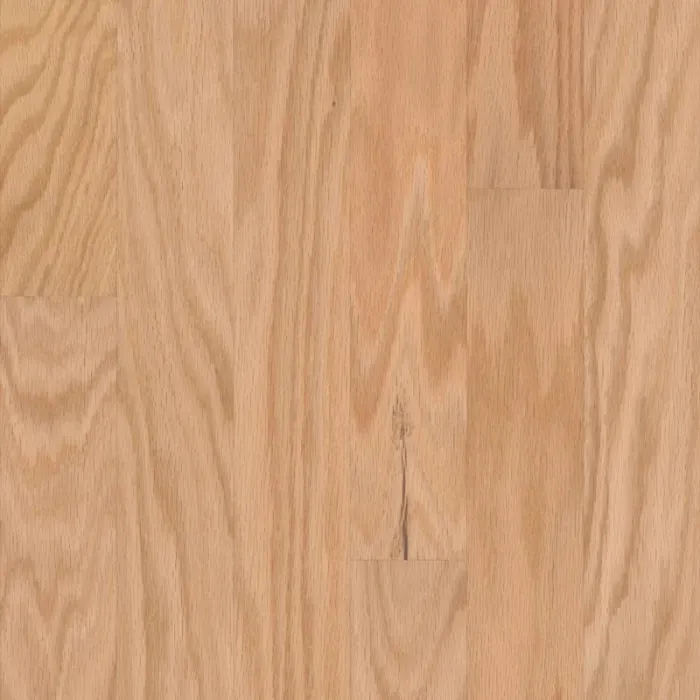
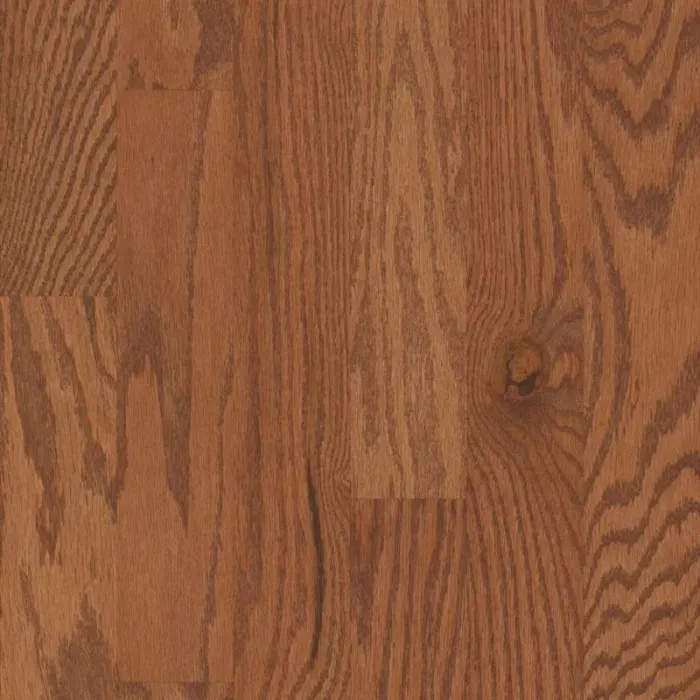
Oak is the most common hardwood species for flooring in the US, thanks to its durability, versatility, and how well it takes stain. It's also available as either white oak or red oak; white oak is lighter, has a more contemporary feel, and is very popular in modern and transitional homes. Red oak has a warmer tone and suits traditional homes better.
Hickory wood has strong grain variation which gives the floor a rustic character. It's also the hardest common American species used for flooring, so is ideally suited to areas with a lot of traffic, including hallways, family rooms and living rooms.
Maple wood has a light color and clean lines, which makes it very suitable for homes with modern or Scandinavian design styles. It’s also very hard-wearing, so it’s ideal for high-traffic areas.
Walnut has naturally rich, dark tones that bring warmth to a space, and its dark color may not show scratches as easily as lighter woods. As it's softer than oak, it's better suited to bedrooms and lower-traffic areas.
If you’re not sure which species is right for you, your Design Associate can bring samples of each to your home. Schedule a consultation today.
If you're looking for a new hardwood floor, you don't have to spend your whole weekend going from showroom to showroom.

On your installation day, our team will handle the details. We'll move your furniture, take away your old flooring, install your new hardwood floor, and leave your home clean and tidy. With more than 300 locations across the US and Canada, getting expert installation from a local team is easy.
Most floor coverings can only be replaced, but with wood floors, you can often choose between replacing them and refinishing them. Refinishing extends their lifespan, removes even deep scratches, and lets you change the finish color.
A hardwood floor may need recoating if high-traffic areas look dull or cloudy (an indicator that the wear layer is deteriorating).
A hardwood floor may need refinishing if:
We recommend having your hardwood floors professionally recoated every 3-5 years as preventative maintenance.
It's time to replace your hardwood floor if:
Not sure whether to refinish or replace? Your local Design Associate can assess your floors in person.
Water isn't good for hardwood floors, as wood naturally expands and contracts with moisture changes, leading to gapping, cupping, and buckling. We'd advise blotting up any day-to-day spillages promptly. When mopping hardwood, never use steam mops, as these can cause long-lasting damage and will void most hardwood warranties. Keeping indoor humidity steady, within your flooring manufacturer's recommended range, also helps prevent gapping and cupping.
For bigger water problems, like leaks or floods, try to dry the area immediately, but if the damage is extensive, replacement may be necessary. Your local Design Associate can look at your floors in person.
Hardwood flooring costs vary depending on the species, whether you choose solid or engineered, the finish, and the square footage. Your Design Associate will provide a down-to-the-penny quote.
Homeowners choose hardwood flooring for many reasons, including its potential to add resale value, its timeless look, and its longevity. Wood floors create an appealing ambiance that's natural and inviting.
Installation costs depend on the size of the space, subfloor preparation required, and the type of hardwood selected. Your Design Associate will provide a down-to-the-penny quote covering both materials and installation.
Solid wood and engineered hardwood are both durable flooring options. Perhaps the biggest difference is refinishing: Solid hardwood floors can typically be refinished several times due to the depth of the wear layer, so damage such as dents or deep scrapes can often be repaired. Engineered wood floors have a much shallower wear layer, though their thickness varies; some can be refinished one or more times and others not at all.
In many cases, yes, and this is one of hardwood's biggest advantages over other flooring types. Full refinishing (sanding back to bare wood) can be done when there are deep scratches or you want to change the color, if the floor's wear layer allows it. Professional recoating is recommended every 3-5 years to maintain its appearance and this service is available at participating FCI locations.
No, hardwood is not waterproof and is not recommended for bathrooms or rooms with high moisture. Engineered hardwood handles humidity better than solid hardwood, but neither should be exposed to standing water. For wet areas, LVP is a better choice.
FCI offers a minimum of 1 year warranty on installation and workmanship, with extended warranties at select locations. Products from the Mobile Flooring Showroom® carry the manufacturer's limited warranty covering manufacturer defects, typically up to 10 years.*
*May vary based on project location or for commercial-grade installations.
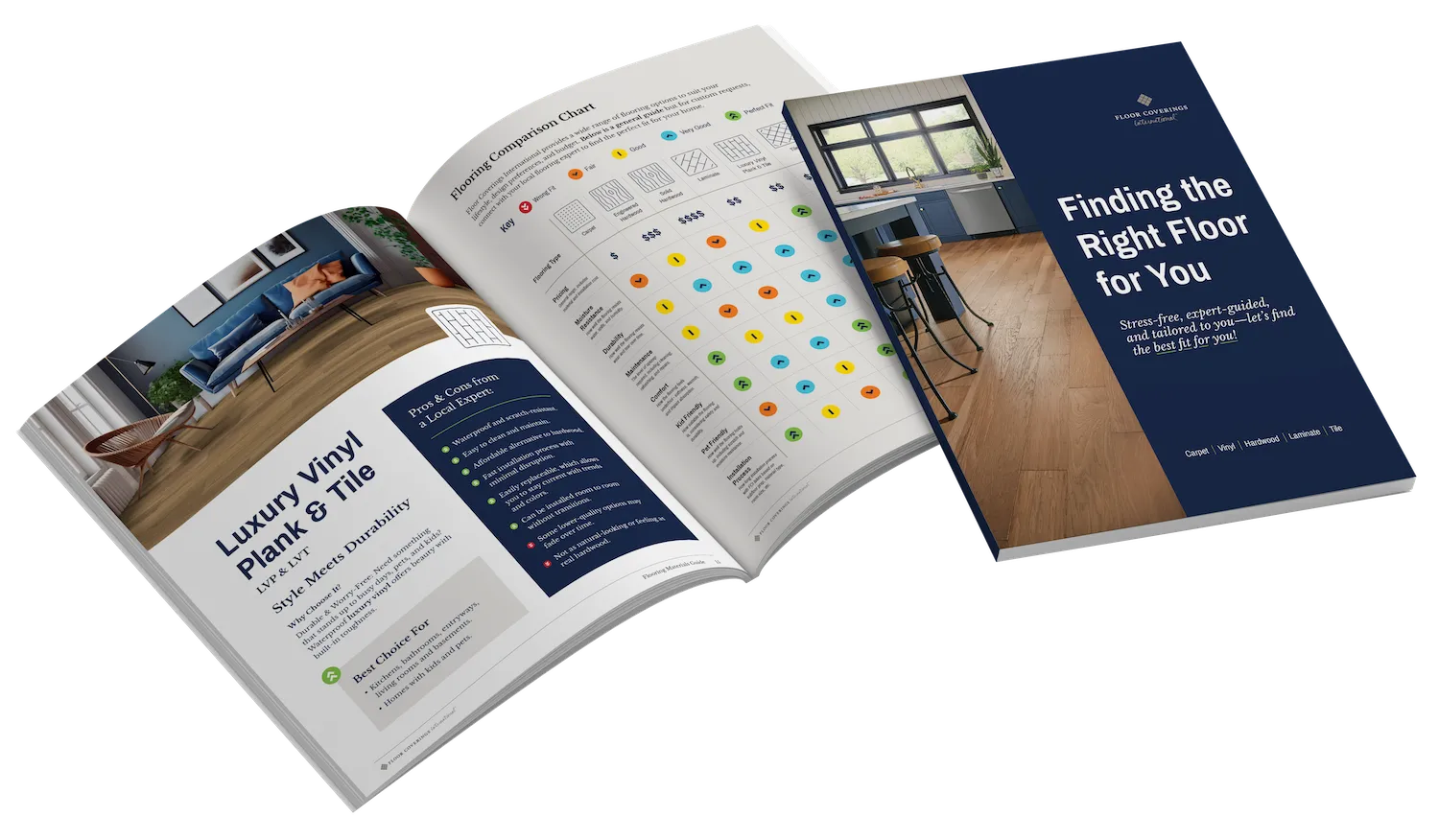
Our Hardwood Care & Maintenance Guide shows you how to protect your floors from scratches, spills, and daily wear—so they stay stunning for years to come.
A Floor That Tells a Story: Creating a Custom Masterpiece in Sandusky, OH
Read Customer StoriesOur expert-guided, easy-to-follow Flooring Guide was designed to help you explore your options with clarity and confidence, all while staying true to your lifestyle, budget, and design preferences.
With 300+ Floor Coverings International® locations across the US and Canada, there’s an FCI Design Associate near you, so you can get expert consultation and hardwood flooring installation locally.
See what homeowners are saying about FCI hardwood flooring.
Schedule your free in-home consultation – we’ll bring hardwood samples right to your door.
Schedule a Consultation