Carpet has the power to make a room feel instantly warmer and more inviting. It softens footsteps, reduces noise, and adds texture that hard surfaces simply cannot replicate. But once you start exploring options, you’ll quickly realize there are many structural and stylistic differences to consider.
To make a confident decision, it helps to understand how carpet is constructed and how fiber height and texture affect performance.
If you’d like to compare options in person, schedule a free in-home consultation with Floor Coverings International® of Plano, TX, and explore samples right where they’ll be installed.
Understanding Carpet Construction
Before choosing a style, it helps to understand how carpet is made and what determines its overall feel and performance.
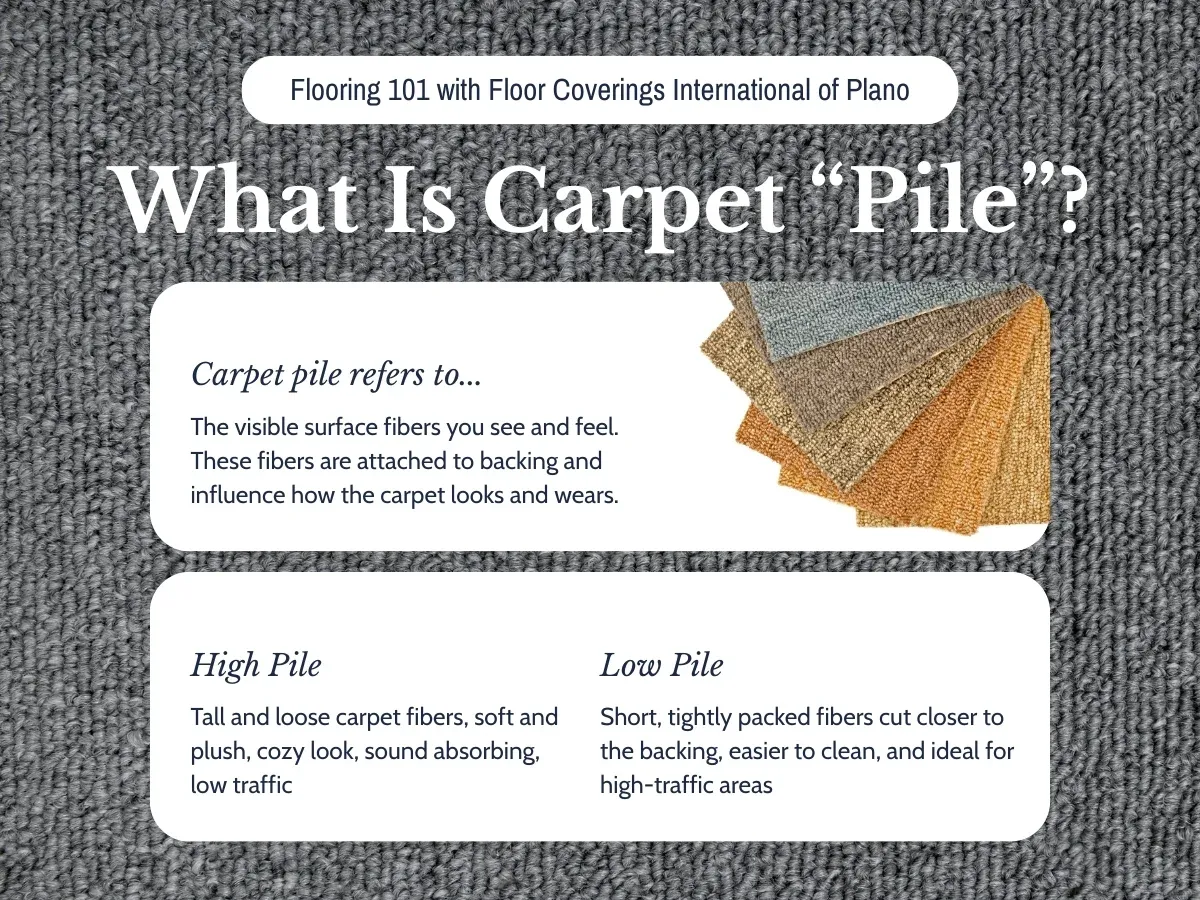
What is carpet pile? It refers to the visible surface fibers that create softness and texture underfoot. These fibers are attached to a backing and may be cut, looped, or a combination of both. The way they’re constructed plays a major role in how the carpet looks and wears over time.
Another important factor to consider is carpet pile height. This measurement tells you how tall the fibers stand above the backing. The overall carpet pile thickness influences how cushioned the surface feels, while pile height carpet specifications help determine how the product performs in busy areas.
When evaluating pile carpeting, homeowners often compare different carpet piles to see which option fits their space best. Even the pile of a carpet in a quiet bedroom may differ from what works well in a hallway or family room. Understanding the different pile types of carpet helps you narrow down which construction style will perform best in each space.
Low, Medium, and High Pile Options
What is low pile carpet?
Low pile carpet meaning refers to shorter, tightly packed fibers that sit closer to the backing. Because the fibers are compact and firm, this style is generally easier to clean and tends to perform well in high-traffic areas.
When comparing low pile carpet vs. high pile carpet, the main distinction is fiber height and overall softness. In a high pile vs. low pile carpet evaluation, shorter fibers typically handle foot traffic more effectively and show fewer footprints.
You may also see the discussion framed as high pile carpet vs. low pile when researching durability. Others reference low vs. high pile carpet when weighing maintenance needs against comfort.
What is high pile carpet?
High pile carpet features longer fibers that create a softer, more cushioned feel underfoot. It refers to carpeting with taller fibers designed to prioritize comfort and a plush appearance.
What is medium pile carpet?
Medium pile offers a balance between softness and durability. It provides moderate fiber height, making it versatile enough for living rooms, bedrooms, or multipurpose spaces. In some situations, homeowners compare low pile vs. medium pile carpet to decide how much cushioning they want without sacrificing resilience.
Popular Styles and Textures
Beyond height, texture defines the finished look. Plush pile carpet features evenly cut fibers for a smooth surface. Plush pile creates a refined appearance that works well in bedrooms and formal living spaces.
When comparing plush cut pile vs. ultra plush cut pile, the difference typically lies in density and cushioning. Some homeowners research plush cut pile carpet vs. ultra plush cut pile to decide how soft they want the floor to feel.
Saxony pile is another common option. A saxony pile carpet has tightly twisted fibers that stand upright for a uniform finish.
If you prefer a surface that hides footprints, textured cut pile carpet offers a more casual look with improved resilience.
Carpet FAQs
What is pile carpet?
Pile carpet refers to carpeting constructed from cut or looped yarn fibers attached to a backing material. Most residential carpet falls into this category.
What should I know about pile carpet?
Understanding pile carpet construction helps you evaluate softness, durability, and maintenance requirements. The height and density of the fibers will affect how the carpet feels underfoot and how well it stands up to daily wear. Higher density often means better resilience over time.
How do pile carpets differ in performance?
Pile carpets vary based on fiber twist, density, and overall construction quality. Tightly twisted fibers tend to resist matting, while looser constructions may feel softer but show footprints more easily. Matching performance to room use is key.
What are the main carpet pile types?
Carpet pile types generally fall into cut pile, loop pile, or a combination of both, and each offers different levels of softness, durability, and visual texture.
What affects the feel of a carpet?
The carpet pile, fiber material, and backing system all contribute to comfort. Fiber density and padding underneath also play a significant role in how soft or firm the surface feels over time.
How do I choose the right carpet for my home?
Evaluating the strengths of different carpet piles ensures you select an option that fits your space and daily routine. Consider how much foot traffic the room receives, whether you prefer a plush or structured look, and how much maintenance you’re comfortable with.
Explore Carpet Options with Local Expertise
Choosing the right carpet for your Plano home is easier when you can see and feel the differences firsthand. Floor Coverings International® of Plano, TX, brings the Mobile Flooring Showroom® directly to you so you can compare textures, colors, and construction details in your own lighting.
Our Design Associates guide you through every step, from understanding pile carpet structure to selecting the ideal finish for your lifestyle.
Ready to upgrade your space? Schedule your free in-home consultation with Floor Coverings International® of Plano, TX, or call (214) 707-4988 today.