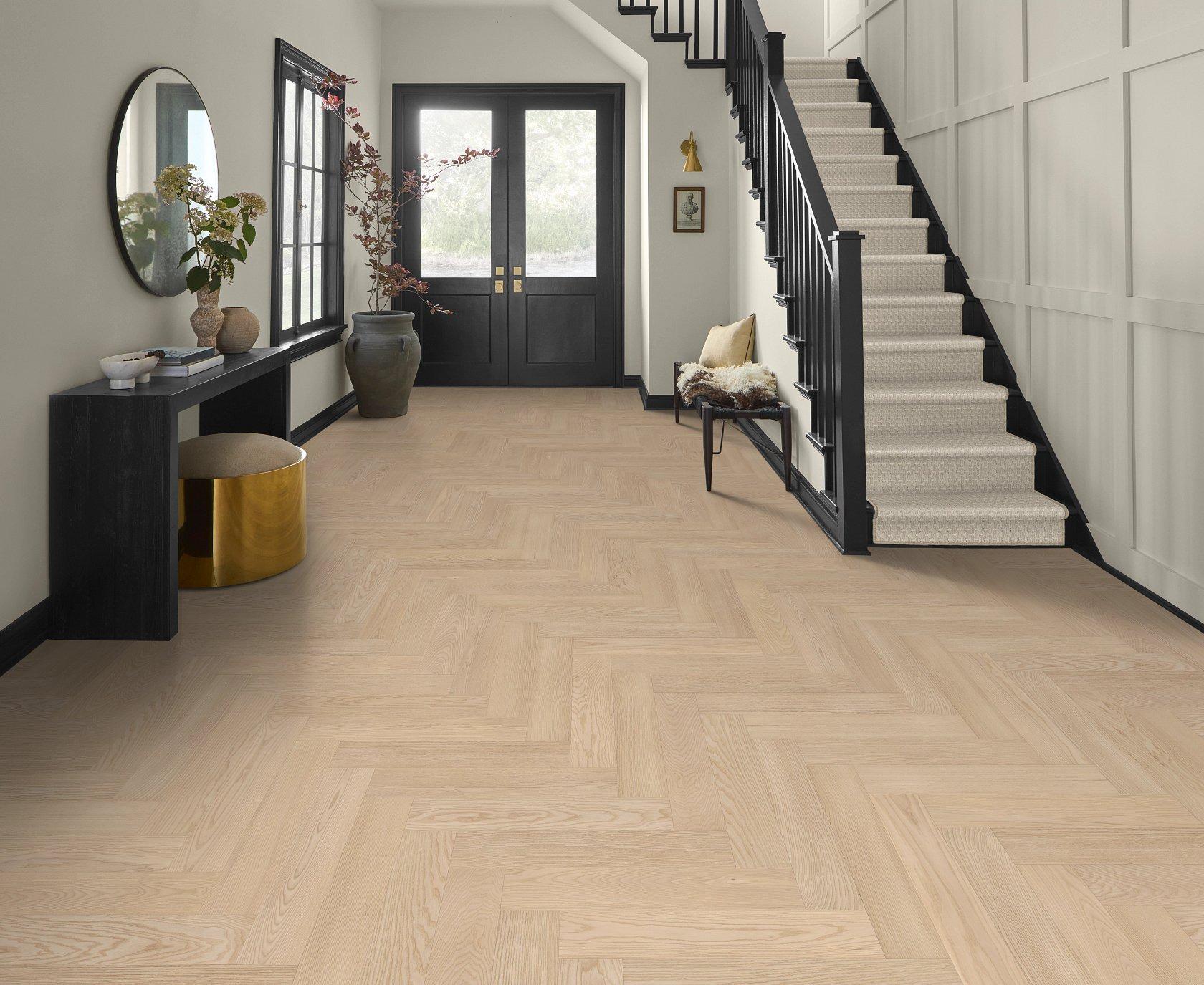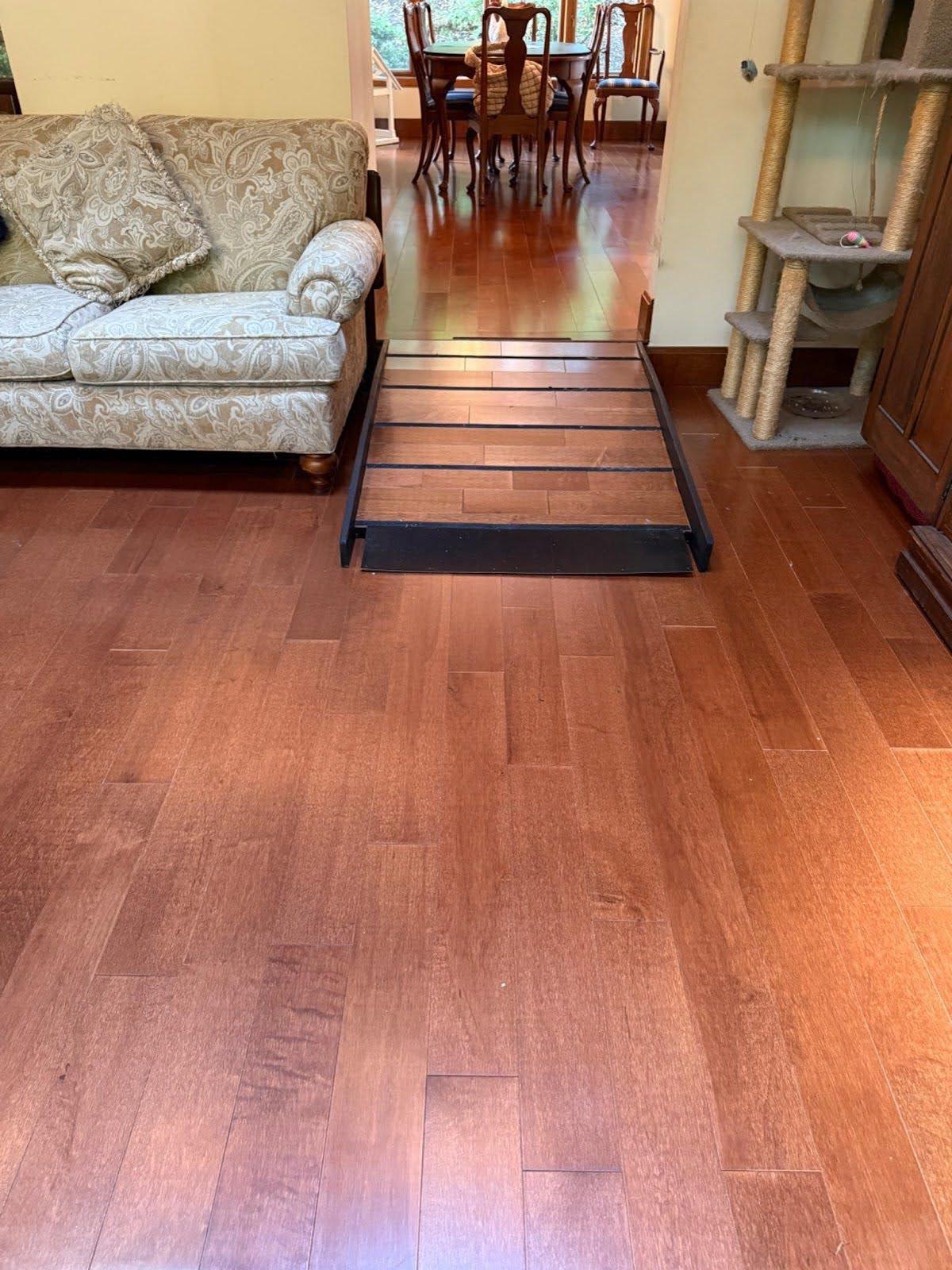
Solid wood flooring is the gold standard, renowned for its rich, warm appearance, and exceptional durability. While certainly a premium option, real wood floors have some drawbacks, particularly in terms of water resistance and humidity. For many Las Vegas-area residents, engineered hardwood floors offer a cost-effective alternative while retaining that treasured wood floor aesthetic.
What Is Engineered Hardwood Flooring?
Engineered hardwood flooring is a manufactured product comprised of several layers of real wood pressed and bonded into a single plank. Made from blended wood, each layer has a specific function:
- Top layer: The surface layer is made of a thin veneer of real hardwood. Most engineered hardwood flooring products are categorized by the composition of the surface layer, giving homeowners the choice of oak, maple, hickory, or other species, as well as stains and finishes.
- Core layer: Depending on the product, the core layer of engineered wood flooring is made from plywood or high-density fiberboard (HDF). They are glued together with the grain of each layer crisscrossing the layer above and below it.
- Backing layer: The bottom layer is usually the same material as the core and adds stability to the plank.
Engineered hardwood is not the same as laminate. A common misconception is that engineered hardwood is the same as laminate or vinyl flooring. Much of this confusion stems from the prevalence of luxury vinyl plank (LVP) flooring, which mimics the appearance of real wood but is made from a PVC-based vinyl material. There are also laminate sheets and tile products that look like wood.
Engineered hardwood is real wood. It’s all wood, just not a single, solid piece. The glue and manufacturing process introduce some additional compounds, but it’s still primarily sourced from trees.
Advantages of Engineered Wood Flooring
The multi-layered construction of engineered wood offers several benefits that make it a smart alternative to wood flooring and other materials.
- Stability: The cross-ply construction of engineered hardwood makes it less prone to warping, cupping, or gaping in high- and low-humidity environments, an important consideration in the Las Vegas desert. It’s also more water-resistant than hardwood, though it’s not a great fit for bathrooms or basements.
- Versatility: Engineered hardwood can be produced in wider and longer planks than real wood, offering more design considerations. Wider planks, for example, can make smaller spaces feel more expansive.
Disadvantages of Engineered Wood Flooring
As noted before, it’s still wood, and has similar potential drawbacks as solid hardwood flooring.
- Fading: Like solid wood, engineered products may fade over time if exposed to direct sunlight.
- Water damage: While more resistant to humidity and moisture than solid wood, engineered wood will still absorb water, and the gaps between planks may allow water to seep into the subfloor.
Engineered Hardwood Flooring FAQs
Beyond composition and construction, homeowners want to know how well the material holds up to the rigors of daily life.
Can you refinish engineered hardwood?
Not often. The surface layer of most engineered wood flooring products will allow for one or two refinishes – or none at all. This is often the biggest reason homeowners opt for hardwood floors over engineered.
Does engineered hardwood scratch?
Yes. While engineered wood is generally more resistant to scratching than solid hardwood, the material’s scratch-resistance largely depended on the composition and thickness of the surface layer. Walnut, hickory, and other hardwood species tend to hold up better to wear and tear, although the finish and other factors also play a role.
How do you clean and care for engineered hardwood floors?
Routine sweeping or vacuuming followed by a damp mop is all it takes to keep your floors looking their best. For deep cleaning using cleaners designed for engineered hardwood is generally recommended but be sure to avoid excess moisture.
How thick is engineered hardwood flooring?
The thickness of engineered hardwood flooring can vary depending on the product and manufacturer. Most options fall between 3/8-inch and 3/4-inch thickness.
How much does engineered hardwood cost?
As with any flooring, pricing can vary greatly depending on the quality, brand, and features. However, engineered hardwood is typically considered more cost effective than traditional solid hardwood floors. For more specific pricing, ask our Design Associates to show you all of the options.
The Home of Engineered Wood Flooring in Las Vegas
Partner with a skilled team that knows how to install engineered hardwood flooring with care and close attention to detail. Floor Coverings International® of Las Vegas West is your go-to source for quality engineered wood flooring. We offer an expansive array of products from leading manufacturers, offering a convenient, stress-free experience from start to finish. Find the right engineered hardwood floors for your living room, bedroom, or favorite space with expert guidance from the most trusted contractors in the Las Vegas area.
Schedule your free in-home consultation with us today!