Luxury vinyl plank (LVP) and luxury vinyl tile (LVT) are popular flooring options designed to mimic the look of natural wood while offering impressive durability and moisture resistance. Long considered the top hard surface alternative to solid and engineered wood floors, vinyl is a fixture in many homes. Thanks to significant improvements in durability and water resistance, however, laminate flooring products are increasingly popular.
Understanding the Basics of Laminate and Vinyl
Many homeowners’ comparisons of new flooring options eventually come down to LVP vs. laminate. Both materials provide the appearance of wood with easier maintenance than traditional hardwood, but they’re constructed differently and can perform differently depending on where they’re installed in the home.
Before comparing performance, it helps to understand the materials themselves.
What is laminate flooring?
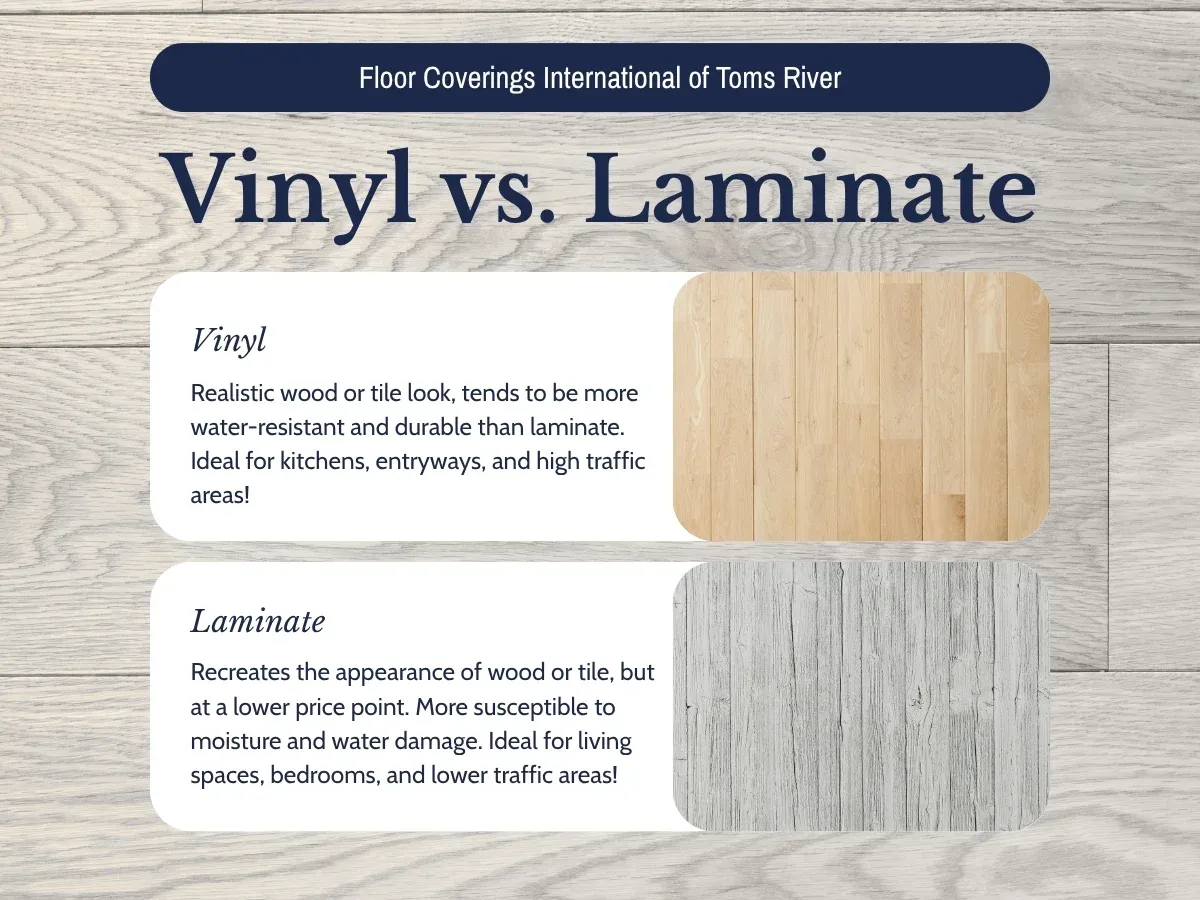
Laminate is a layered product with a photographic design layer that mimics natural materials like wood or stone. A durable wear layer protects the surface from scratches and everyday wear.
What is vinyl flooring?
Vinyl flooring is made from resilient synthetic materials designed to resist moisture and heavy use. Because of its layered waterproof construction, vinyl flooring can work well in kitchens, bathrooms, and basements.
When comparing laminate or vinyl plank flooring, both products provide realistic wood visuals, but their internal construction is what truly separates them.
Read More: What Is the Best Flooring for a Kitchen?
What Is the Difference Between Laminate and Vinyl Flooring?
Homeowners frequently research the difference between vinyl and laminate flooring when narrowing down flooring options.
Here are a few key distinctions to consider:
- Water resistance. Luxury vinyl flooring is typically fully waterproof, while laminate is usually water-resistant.
- Material composition. Vinyl uses synthetic layers, while laminate has a fiberboard core.
- Comfort underfoot. Laminate can feel slightly warmer, while vinyl tends to feel softer.
- Durability. Both products resist scratches and wear when properly installed.
It’s worth reiterating that the biggest difference between vinyl and laminate flooring is the type of core, with LVT and LVT products typically using more resilient cores. However, there are some waterproof laminate flooring options on the market.
LVP vs. Laminate: Installation and Maintenance
When comparing LVP vs. laminate flooring, these two flooring options are very similar.
- Both vinyl and laminate floors benefit from underlayment, which helps create a smoother surface and improves sound absorption. Most underlayment comes pre-installed on the underside of the flooring, but not always. Your Design Associate will help you determine if pre-installed vinyl or laminate underlayment is a good option for your space.
- Maintenance is also relatively simple for both materials. Routine sweeping and damp mopping are usually enough for everyday care.
- When deciding between vinyl or laminate flooring, installation location often becomes the deciding factor. Areas with higher moisture exposure may benefit from vinyl, while laminate works beautifully in living rooms and bedrooms.
Explore Modern Flooring Options in Toms River
Homeowners throughout Ocean County are discovering how versatile modern flooring can be.
Floor Coverings International® of Toms River brings flooring samples directly to your home with the Mobile Flooring Showroom® so that you can compare colors and textures in your own lighting and layout.
If you're ready to explore the right flooring for your home, call (848) 315-3001 or schedule your free in-home consultation today.