Engineered wood and vinyl flooring share some important aesthetic characteristics but far more differences than similarities. Both are certainly versatile and effective flooring options for many areas of the home, with distinctive features making engineered wood and vinyl smart, lower-cost alternatives to solid wood flooring.
Learn more about the difference between engineered wood and luxury vinyl flooring, the best applications of both materials, and why one might be the better option to suit your needs.
Vinyl Floors or Engineered Wood: How Are They Similar?
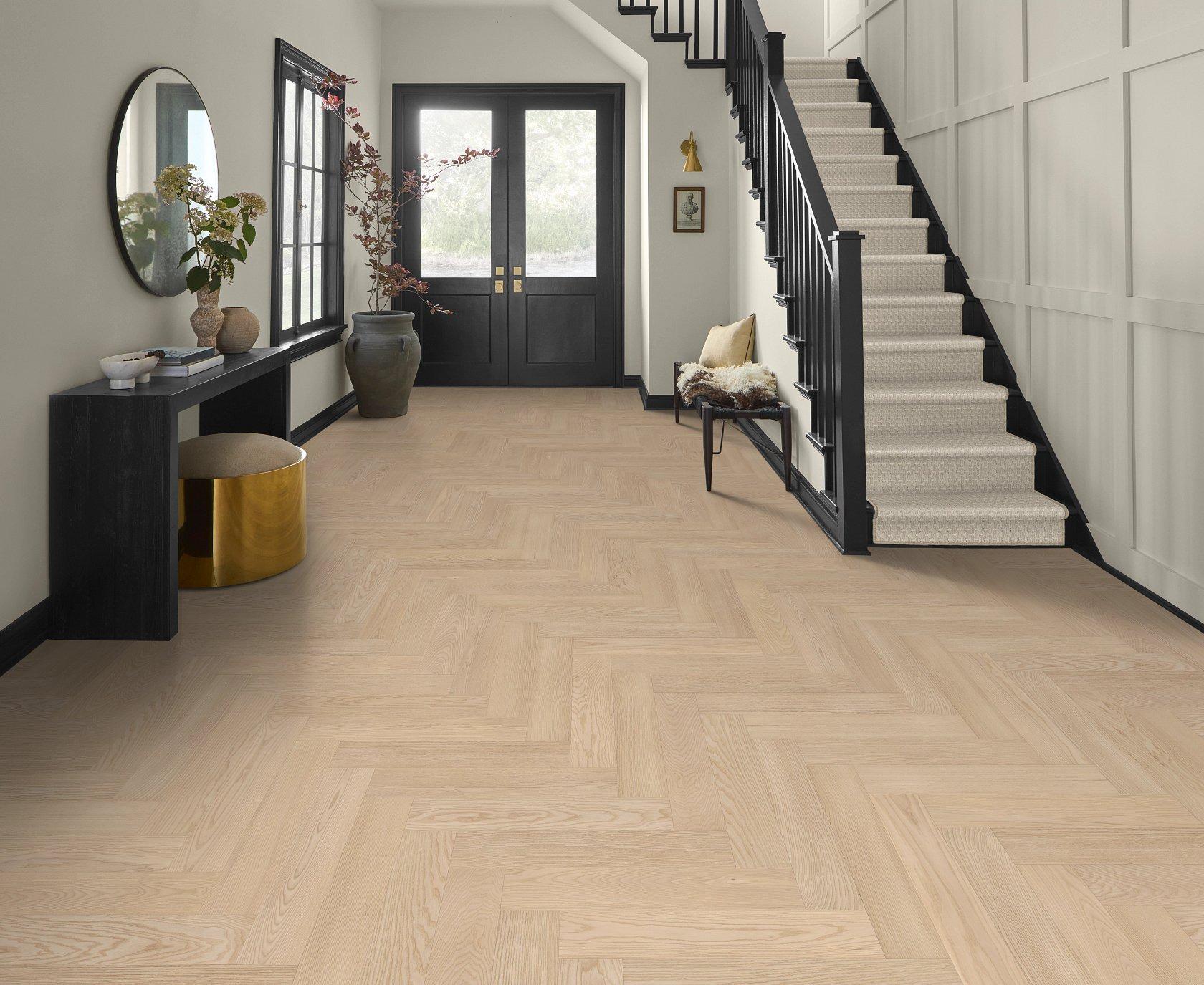
Perhaps the most important shared characteristic of engineered wood and vinyl is that both realistically mimic the look and feel of solid wood flooring at a lower price point.
- Engineered wood looks like wood because it is real wood. The top layer is typically a solid wood veneer (think maple, oak, or hickory), with compressed wood particle board underneath. The sublayers are bonded, heated, and compressed, which improves their water resistance and makes them less likely to warp or cup than real wood.
- Vinyl flooring, and more specifically luxury vinyl plank flooring, uses a print layer (sometimes called an image layer) to show a high-definition image of real wood species. The print layer is incredibly detailed, featuring grain patterns, knots, and natural color variations.
Both materials mimic the look of real wood while surpassing “the real thing” in terms of water resistance. Vinyl flooring is also more scratch, dent, and stain-resistant than solid and engineered wood flooring, making it a superior option for high-traffic areas or parts of the home with high moisture or leak risks.
Engineered Wood Flooring vs. Luxury Vinyl: What’s the Difference?
These otherwise similar materials are very different once you get beneath the surface.
Engineered wood flooring is made from cross-laminated layers of wood glued together and pressed at high pressure to prevent cupping in humid environments. Some engineered wood flooring products also use a High-Density Fiberboard (HDF) or Stone Plastic Composite (SPC) core to provide additional stability.
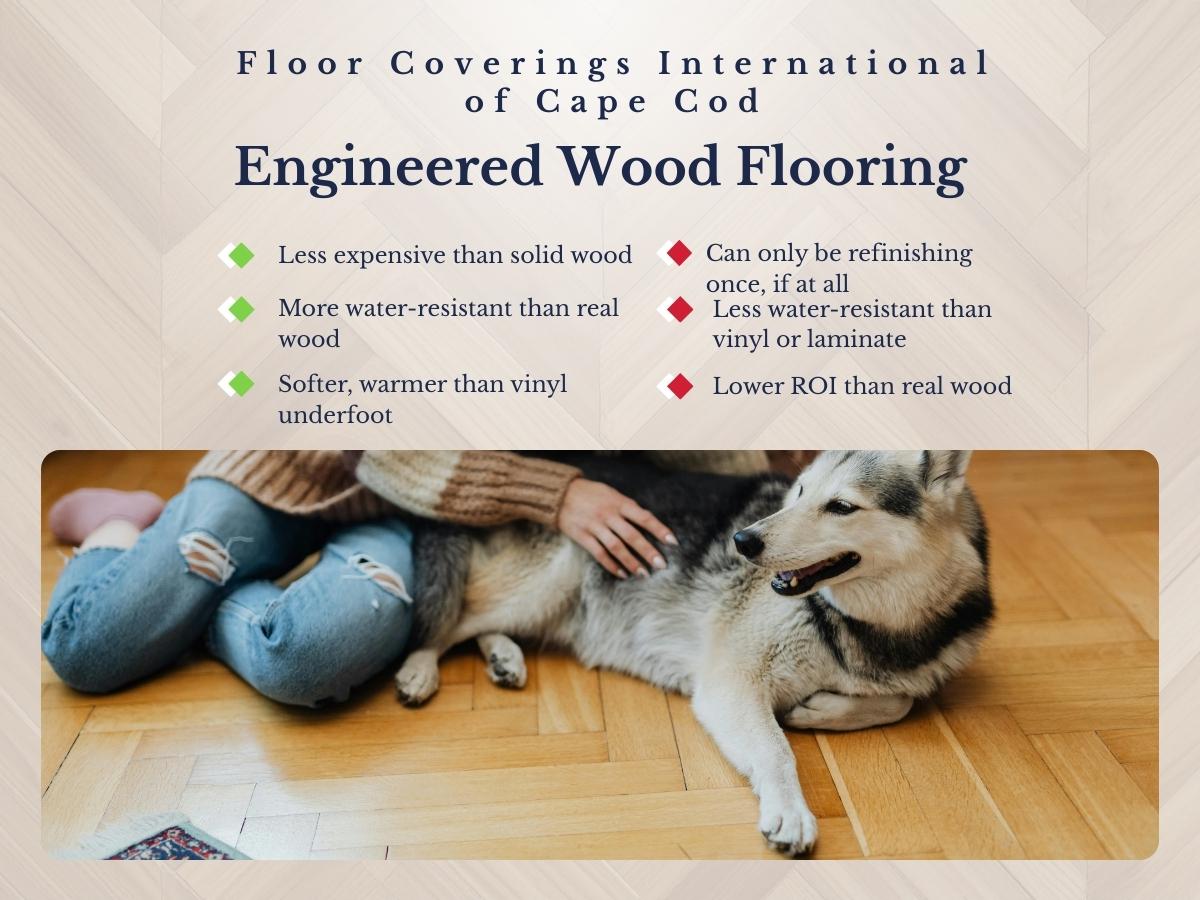
Each plank is then topped with a real wood veneer made from the desired tree species and protected by a wear layer. Because the veneer is relatively thin, most engineered wood floors can only be refinished once or twice, if at all, which means they have shorter lifespans than hardwood floors.
Engineered wood floors are primarily made from natural materials.
Vinyl flooring is made from polyvinyl chloride (PVC) and a mix of resins and stabilizing chemicals. Luxury vinyl products typically use a Stone Plastic Composite (SPC) or Wood Plastic Composite (WPC) core, which offers rigidity, dent resistance, and water resistance.
Vinyl flooring’s wear layer is a clear plastic coating, usually 6 to 20 millimeters thick.
Vinyl floors are made from plastic and petroleum-based materials.
Is Vinyl Flooring Better Than Engineered Wood?
Any comparison of vinyl plank flooring and engineered wood should focus on a few key priorities.
- Water-resistance: Vinyl flooring is generally better than engineered wood in terms of moisture and water resistance. It’s a better pick for any area of the home with consistent high humidity (think bathrooms) or a high risk of leaks and spills, such as basements or laundry rooms.
- Longevity and ROI: Engineered wood floors tend to last 30-40 years, and sometimes longer if the product can be refinished. They also have a higher return on investment (ROI) and increase home resale value more than vinyl in most cases.
- Appearance: Engineered wood’s surface layer is real wood, making it the closest approximation of solid wood flooring. It’s also softer underfoot, warmer, and quieter than vinyl. Vinyl is about as close as you can get to hardwood flooring while using synthetic materials.
If you’re still debating, here’s how these flooring options stack up.
Engineered Wood vs. Luxury Vinyl Plank
|
Feature |
Luxury Vinyl (LVP) |
Engineered Hardwood |
|---|---|---|
|
Best For |
High-moisture areas (Basements, Kitchens) |
Main living areas, Bedrooms |
|
Cleaning |
Very easy (Can use most cleaners) |
Needs specific wood-safe cleaners |
|
Installation |
DIY Friendly (Click-lock) |
Moderate to Professional (Nail/Glue/Click) |
|
Price |
Generally lower ($2–$7 per sq. ft.) |
Generally higher ($5–$15 per sq. ft.) |
|
Pet Friendly |
Excellent (Scratch & accident proof) |
Moderate (Species dependent) |
Is Engineered Wood More Expensive Than Vinyl Plank?
Engineered wood flooring is generally more expensive than luxury vinyl plank. While your project costs may vary, engineered flooring is typically $8 to $15 per square foot (installed), while LVP is between $3 to $8 per square foot. Contact our team for an accurate, down-to-the-penny quote today!
Find the Perfect Flooring for Your Cape Cod Home
Floor Coverings International® of Cape Cod offers an expansive collection of vinyl and engineered wood flooring to Cape Cod-area homeowners. We bring national resources and local expertise to every project, providing expert recommendations, transparent pricing, and a truly stress-free experience that you’re sure to love. Get help deciding between engineered wood and vinyl, plus guidance every step of the way. Call (774) 228-5527 or schedule your free, in-home consultation today!