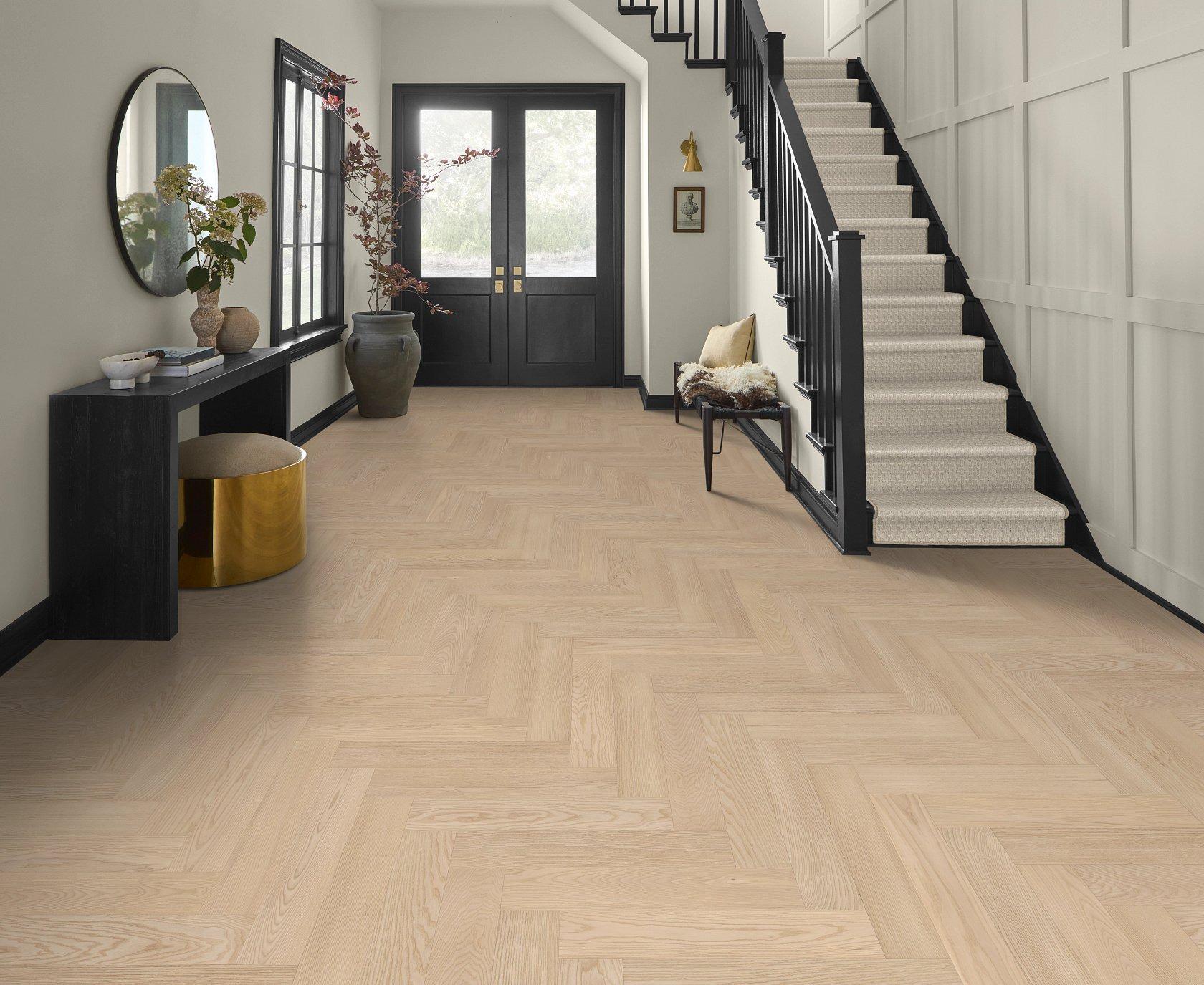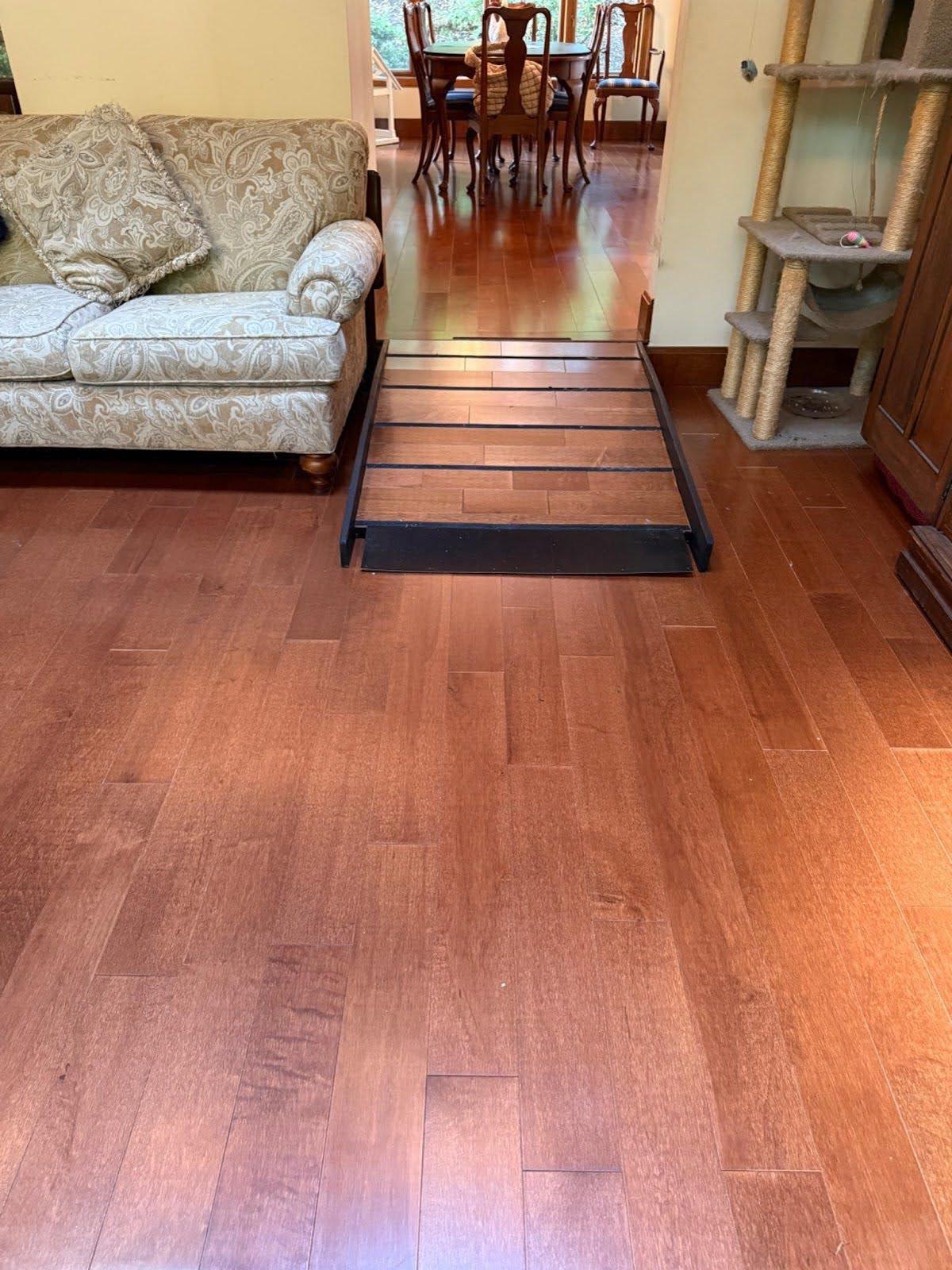
Along Florida's Emerald Coast, homeowners often ask about engineered hardwood because of the region's humidity. While no wood flooring is waterproof, many engineered hardwood products are designed with layered construction that may provide greater dimensional stability than some solid wood products. That's one reason engineered hardwood is frequently considered for homes throughout Pensacola, Destin, Gulf Breeze, Navarre, and surrounding communities.
Schedule An In-Home Consultation
Engineered Flooring: Made from Real Wood
One of the most common sources of confusion is the construction beneath the surface. Is engineered hardwood flooring real wood? Yes. Engineered hardwood has a real-wood surface layer. What distinguishes it from solid hardwood is what lies underneath.
That surface is supported by multiple layers rather than a plank made of solid wood throughout its thickness. The composition and specifications vary by manufacturer and product, so two engineered floors that look similar from above may not be constructed exactly the same way. Understanding that distinction becomes important when questions turn to refinishing, installation, moisture performance, and approved applications.
“Engineered” Doesn't Describe a Particular Look
Engineered hardwood isn't one visual style. Depending on the products available, you'll find different wood species, colors, finishes, textures, plank dimensions, and other design details. That means appearance is only one part of the comparison. If you're looking for the best engineered wood flooring for your home, review the product beyond the sample's color and grain.
Useful details to compare include:
- Wood species and overall appearance
- Plank construction and wear-layer specifications
- Manufacturer-approved applications
- Installation requirements
- Care and maintenance instructions
- Warranty information
- Budget
Start With the Plank When Comparing Solid and Engineered Wood
When researching wood flooring vs. engineered options, homeowners often encounter lists of pros and cons, but construction provides a more useful starting point. A solid hardwood plank is wood throughout its thickness. Engineered hardwood combines a real-wood surface with layers underneath.
Neither description tells you by itself which floor belongs in your home. Instead, the construction can affect product specifications, installation requirements, maintenance instructions, and manufacturer-approved applications. If you're deciding between solid and engineered hardwood, comparing specific products can tell you more than treating either flooring category as universally better.
Installation Depends on the Specific Floor
There isn't one engineered wood floor installation method that applies to every product. Depending on the flooring and project conditions, manufacturer requirements can differ, including which installation methods and subfloors are appropriate.
Installation planning is especially important in the Florida Panhandle, where homes may have concrete slab foundations, elevated coastal construction, or varying indoor humidity levels. The flooring manufacturer's requirements and the conditions within the home help determine the appropriate installation approach.
Engineered Wood Floors in the Florida Panhandle: FAQs
Can Engineered Wood Floors Be Refinished?
Some can, but the answer depends on the particular floor. Factors can include the thickness of the real-wood wear layer, the condition of the flooring, whether it has been refinished before, and manufacturer guidance.
Because sanding removes material from the wood surface, homeowners shouldn't assume that every engineered floor is a candidate for traditional refinishing. The specific flooring should be evaluated before deciding how to address a worn or damaged finish.
Can You Restain Engineered Wood Floors?
That possibility also depends on the floor. Changing the stain color generally involves more than applying a new color over the existing finish, and the processes needed may not be appropriate for every engineered product.
The flooring's construction, surface condition, and manufacturer information should be reviewed before deciding whether a finish change is appropriate.
Is Engineered Wood Flooring Waterproof?
Engineered construction doesn't automatically make a hardwood floor waterproof. Individual products may have particular moisture-related features, specifications, or warranties, but those don't apply automatically to every engineered hardwood floor.
Whether you're updating a condo near Destin's beaches, renovating a cottage in East Hill, or replacing flooring in a newer home in Pace or Navarre, product specifications should always be matched to the home's conditions and the manufacturer's recommendations.
Ready to Take a Closer Look at Engineered Wood in Florida’s Panhandle?
Two engineered hardwood samples can both have the look you want while differing in ways you can't see from the surface. During an in-home consultation with Floor Coverings International of West Florida Panhandle, FL®, ask about the construction, wear-layer specifications, approved applications, installation requirements, care instructions, and warranty information for the floors you're considering.
The Mobile Flooring Showroom® brings engineered hardwood samples directly to homes throughout Pensacola, Destin, Gulf Breeze, Navarre, Fort Walton Beach, Niceville, and surrounding Florida Panhandle communities, making it easier to compare products in your own lighting and space.
Once you've narrowed the options, professional measurements and a free, down-to-the-penny quote can put real project details behind the cost question.
Call (850) 204-9291 or schedule your free in-home consultation today.