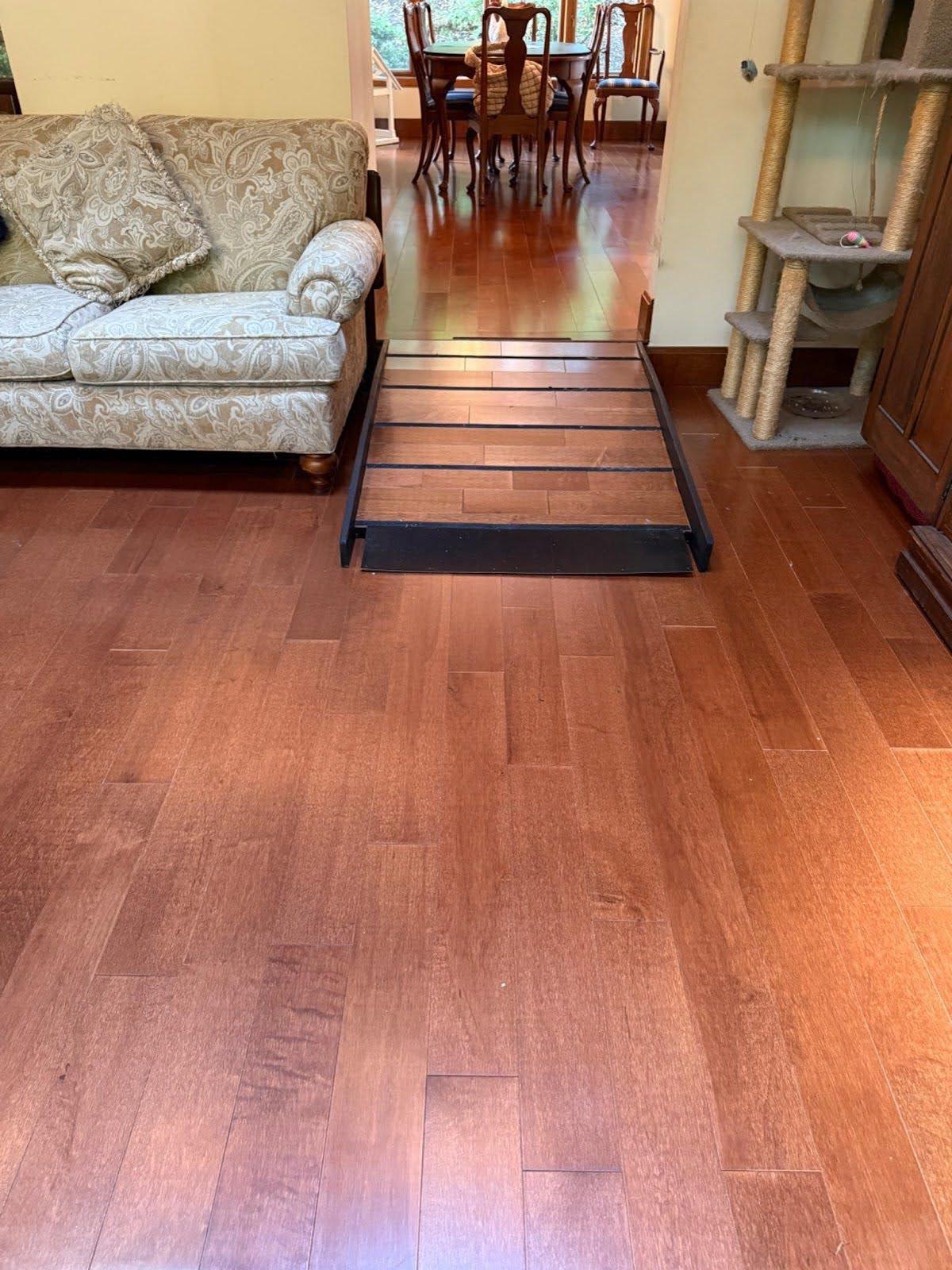
No matter what type of subfloor you have or surface flooring you choose, preparation is crucial for ensuring a successful project. Without careful floor prep, your new floors are more likely to shift, bounce, or fail prematurely. Fortunately, understanding how different types of subfloors interact with finish flooring is the first step toward resilient, long-lasting floors.
In this flooring installation prep guide, we’ll walk through the basics of our preparation and installation process and provide a handy checklist to prepare for your floor installers.
How to Prepare for New Flooring Installation
The entire flooring replacement process really starts with a thorough subfloor assessment. Before you settle on a new flooring material or style, Floor Coverings International® of St. Petersburg will evaluate your space’s subflooring for a few factors.
Level: First, we’ll determine if the subflooring is level and flat. Level means the flooring is parallel from wall to wall, while flat implies the flooring doesn’t have significant dips or waves. The subfloor surface should be within 3/16th of an inch over a 10-foot radius to safely accommodate new flooring. If it isn’t flat, it may require repair.
Moisture: Nothing damages floors like moisture. It’s important to inspect all types of flooring for moisture emission or content.
· Concrete subfloors: Calcium chloride testing or an electronic moisture tool will measure moisture levels.
· Wood subfloors: Moisture is often visible, with darkened wood or signs of wet-and-dry cycles.
Our floor removal and prep services include this initial assessment, as well as expert recommendations for any subfloor repairs to ensure your new finished flooring lasts.
Read More: The Best Flooring for Hot, Humid Climates
The Floor Prep Process
After the initial assessment, we undertake any necessary steps to protect your new flooring. Every project is different, and your home may not need all of the steps below. Still, these are relatively common in most residential flooring projects.
Flooring Subfloor Preparation by Type
Concrete subfloor preparation usually includes:
· Grinding down high spots with a diamond-cup grinder to ensure the flooring is level.
· If a concrete subfloor has numerous dips or waves, most contractors use a self-leveling underlayment (SLU). This liquid fills in low spots before hardening, leaving a smooth surface.
Wood subfloor preparation requires:
· Checking the structure only uses screws, not nails. Nails loosen and creak over time.
· Sanding ensures any high seams are flattened, and all plywood joints are flush.
· Depending on the finish floor material, underlayment is used to provide a clean, non-porous surface. (More on underlayment in a bit.)
Cleaning Subflooring
Both kinds of subflooring require careful cleaning to remove debris and dirt. In some cases, we’ll use a primer to prevent the subfloor from soaking up moisture from the leveling agent.
Acclimation
Once the subfloors are prepped, the new flooring must be acclimated to the space. The flooring acclimation process allows new materials to equalize with the home's temperature and humidity, reducing the risk of expansion or contraction after installation.
It’s a point that bears repeating; for any flooring, subfloor prep is the single best way to prevent issues during and after installation. For residential or commercial floor prep services in St. Petersburg, Treasure Island, or surrounding communities, contact our team today.
Preparing Subfloor for Laminate Flooring
Laminate is a floating floor, which means it is very susceptible to any dips or peaks. If left unaddressed, low spots will cause the floor to flex, leading to squeaking and possibly snapping.
In addition to the steps above, floor prep for laminate floors includes a few important steps:
· Underlayment: Most laminate floor products have a pre-attached pad, but not all. Ask your Design Associate to recommend the right underlayment for your subfloor and laminate. If you’re installing laminate on a concrete floor, you’ll need to use a vapor barrier to prevent moisture from reaching the laminate. You might also consider a foam or felt underlayment to absorb sound.
· Gaps: During installation, we’ll leave a ¼” to 3/8” expansion gap to allow for seasonal expansion and contraction as humidity changes.
Preparing Subfloor for Tile
Tile floor prep is especially demanding because the material is incredibly rigid. If the subflooring moves or has a low spot, the tile will crack. After completely removing any debris and adhesive from the subfloor, preparing for tile installation is all about grout.
· Mortar: Your installer will lay a bed of thin-set mortar. This will attach to the backer board on the tile flooring.
· Final measurement: Before installation begins, we will lay out tiles to ensure there are no gaps and that the surface is completely flat.
Carpet Subfloor Preparation
There’s only one chance to address squeaky carpet flooring, and that’s during prep. Use 2.5” wood screws to ensure the subflooring is completely attached to the floor joints, ensuring that sections do not bend or flex.
· Seal the wood: Use an oil-based primer to seal the wood, which prevents odors from contaminating your new carpet and carpet pad.
· Use new tack strips: Tack strips prevent the carpet from shifting over time. Replace any tack strips that are worn, rusted, or missing teeth.
· Choose a pad: Ask your Design Associate to recommend the right carpet pad. Thicker pads are softer underfoot and soften footsteps, but may be more expensive.
Preparing Subfloors for Hardwood Floor Installation
· Wood flooring expands and contracts as humidity levels change, which makes your floor prep even more important.
· Thickness: Hardwood flooring is heavy and rigid. Make sure your subfloor is at least ¾ inch thick to support your new floor’s weight.
· Extra acclimation: Wood flooring needs five to seven days to properly acclimate, a bit longer than most other flooring materials.
· Moisture: Instead of a waterproof barrier, look for a vapor barrier that allows the wood to breathe. We typically use 15-pound felt paper to protect the wood while it releases moisture as humidity levels change.
· Baseboards: It’s usually necessary to remove baseboards before installing hardwood floors. This leaves a ¾ inch expansion gap around the perimeter of the room once the flooring is installed. Don’t worry, the gap won’t be visible after we reinstall your baseboards.
Your Checklist to Prepare for Our Floor Installers
Our teams are highly skilled and trained to focus on the details, but there are a few things you can do to help ensure a smooth, timely install. We’ll offer regular updates throughout the floor preparation and installation process so you know what to expect and when, so you can tackle these easy tasks before we arrive.
· Clear a path. Consider moving vehicles out of the garage or driveway so our team can park as close as possible to the installation area. This allows us to move heavy materials more easily – and safely!
· Keep the HVAC running: Leave your HVAC running as normal during the acclimation process so the flooring adjusts to your home’s real, everyday temperature.
· Make space: Remove any furniture and area rugs, and unplug electronics in the room. It’s often a good idea to remove anything hanging on walls, as it may fall due to the vibration of tools and equipment.
· Designate a trash area: Create a designated area for trash and waste, especially if you haven’t rented a dumpster.
Trust St. Petersburg’s Floor Prep Pros
Beautiful flooring starts with careful floor preparation and the expertise of an experienced flooring contractor. Floor Coverings International® of St. Petersburg takes the guesswork out of preparing your subflooring, providing professionally installed floors that withstand daily wear and tear. For superior results and a stress-free experience, call (727) 353-1978 or schedule a free, in-home consultation today.